What Is Heritability and Why It Matters in Cattle Genetics
Defining Heritability: The Genetic Influence on Traits
Heritability is a key genetic concept that describes how much of the variation in a particular trait within a cattle population comes from genetic differences between individuals. It’s expressed on a scale from 0 to 1 — or 0% to 100% — indicating the degree to which traits like milk production, growth rate, or disease resistance are influenced by genetics rather than environmental factors.
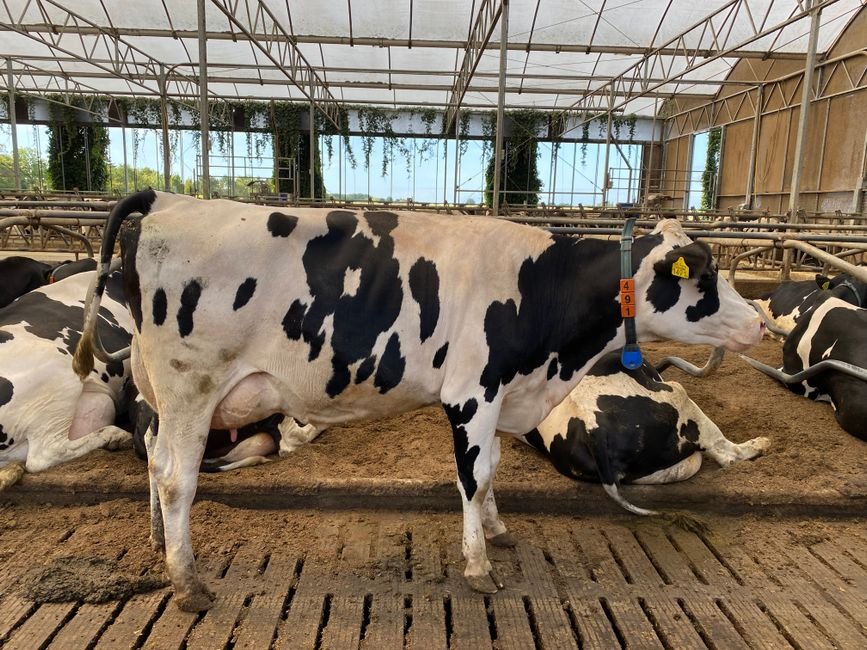
Take Holstein dairy cattle as an example. The heritability of milk yield typically sits between 0.25 and 0.40. This means that genetics account for 25% to 40% of the variation in milk production among cows. The remaining variation—60% to 75%—is shaped by factors such as feed quality, housing conditions, health, and overall management. Traits with higher heritability tend to respond better to selective breeding since genetics play a larger role in their differences.
Differentiating Heritability from Other Genetic Concepts
Heritability is often mixed up with other genetic terms, but it occupies a specific role in quantifying how much genetics affect trait variation. The following table breaks down key related concepts:
| Genetic Concept | Definition | Relation to Heritability | Example in Cattle |
|---|---|---|---|
| Heritability | Proportion of phenotypic variation caused by additive genetic variance within a population | Measures genetic contribution to trait differences | Milk yield heritability of 0.30 means 30% of variation is due to genetics |
| Genetic Correlation | Measure of the extent to which two traits share genetic causes | Indicates how selection on one trait affects another | Positive genetic correlation of ~0.7 between weaning weight and yearling weight |
| Breeding Value | Predicted additive genetic merit of an individual for a specific trait | Derived using heritability estimates and pedigree/genomic data | A bull’s estimated breeding value (EBV) for average daily gain |
| Genetic Drift | Random fluctuations in allele frequencies in a population over generations | Independent of heritability but affects genetic diversity | Change in coat color allele frequency in a small cattle herd |
Knowing heritability lets breeders focus on traits where genetic selection will be most effective, while recognizing that traits heavily shaped by environment often need management strategies.
Key Traits in Cattle Influenced by Heritability
Growth and Weight Gain
Growth rate and weight gain are examples of traits with relatively high heritability in beef cattle, often ranging from 0.30 to 0.50. This means that 30% to 50% of the differences in traits like weaning weight and yearling weight come from inherited additive genetic effects. Angus cattle, prized for their ability to convert feed efficiently and grow rapidly, frequently achieve average daily gains (ADG) over 1.5 kg. These performance levels tie closely to genetics, allowing breeders to select parents that consistently produce calves with superior growth. This focused selection accelerates genetic improvement over generations.
Milk Production and Quality
In dairy breeds, milk yield and its components—such as fat and protein percentages—show moderate to high heritability. For Holsteins, milk yield heritability is typically around 0.30, while fat and protein percentages range from 0.35 to 0.45. This suggests selective breeding can effectively improve both the quantity and quality of milk. Somatic cell count (SCC), a key indicator of udder health and mastitis resistance, has lower heritability, usually between 0.10 and 0.20. Though genetic gains in SCC progress more slowly, incorporating it into breeding programs is crucial for enhancing milk quality and lowering disease risks.
Disease Resistance and Longevity
Disease resistance and longevity are complex traits with generally low heritability, often less than 0.20. For example, resistance to bovine respiratory disease in feedlots has heritability estimates from 0.05 to 0.12. Johne’s disease resistance falls between 0.07 and 0.15, while longevity, measured as productive lifespan or stayability, ranges from 0.10 to 0.18. Despite their low heritability, these traits are important for economic sustainability, reducing replacement costs and improving lifetime productivity. Using multi-trait selection that includes these characteristics, along with good management, supports gradual genetic improvement.
How Heritability Is Measured in Cattle Populations
Estimating Heritability: Statistical Methods and Models
Estimating heritability requires statistical models that break down the total observed variation in a trait into genetic and environmental components. The animal model, a form of linear mixed model, is widely used. It accounts for fixed effects like herd, year, season, and management, as well as random effects including additive genetic influences. This approach relies heavily on detailed pedigree information to estimate the additive genetic variance accurately.
Two common methods to calculate heritability are:
- Restricted Maximum Likelihood (REML): This technique estimates variance components by maximizing the likelihood of the observed data, adjusting for biases common in older methods like ANOVA. REML handles unbalanced data well, which is typical in commercial cattle records.
- Bayesian Methods: These incorporate prior information and hierarchical models, improving estimates for traits with limited or low-heritability data. They also support complex analyses involving multiple traits.
More recently, genomic data have been added to these models. By substituting pedigree-based relationship matrices with genomic relationship matrices derived from dense SNP genotyping, researchers achieve more precise heritability estimates. This is especially beneficial for traits with moderate to low heritability.
Recent Findings on Heritability Estimates for Important Traits
| Trait | Heritability Estimate (h²) | Reference/Study Context |
|---|---|---|
| Milk Yield | 0.25 – 0.35 | Large-scale REML analyses of Holstein populations in North America (e.g., US Dairy Herd Improvement Program) |
| Growth Rate (weight gain) | 0.30 – 0.45 | Feedlot studies on Angus and Hereford breeds with detailed performance records |
| Feed Efficiency (Residual Feed Intake) | 0.15 – 0.30 | Genomic-enhanced models using SNP data in Angus and Hereford cattle |
| Fertility (e.g., days to first service) | 0.05 – 0.15 | Bayesian analyses across multiple dairy breeds including Holsteins and Jerseys |
| Somatic Cell Score (mastitis indicator) | 0.10 – 0.20 | Genomic prediction studies using commercial herd data in dairy cattle |
These findings highlight that production traits usually have moderate heritability, making genetic selection effective. On the other hand, traits tied to reproduction and health tend to have lower heritability, reflecting strong environmental influences and a need for complementary management and genomic tools to capture genetic variation accurately.
Applying Heritability Knowledge in Breeding Programs
Selecting for Traits with High Heritability
When heritability exceeds about 0.4, traits respond well to selective breeding since additive genetics explain a large share of the variation. Carcass weight in beef cattle is a great example, often showing heritability between 0.50 and 0.60. Choosing bulls with high estimated breeding values (EBVs) for these traits reliably produces offspring with better carcass quality and yield.
To make the most of selection on high-heritability traits, breeders should:
- Collect accurate phenotypic data: Consistent, standardized measurements of traits like weaning weight or milk yield improve data quality and selection accuracy.
- Use EBVs and Genomic EBVs (GEBVs): Combining performance records with pedigree and genomic data boosts prediction accuracy, especially for traits such as yearling weight (heritability around 0.4).
- Apply strong selection intensity: Selecting only the top-performing sires and dams maximizes genetic progress within a few generations.
Managing Traits with Low Heritability: Environmental Effects
Traits with heritability below 0.2, like fertility (0.05–0.15) and feed efficiency (0.10–0.20), are largely shaped by environment and management. Genetic progress through direct selection is slower and less predictable. Therefore, optimizing environmental factors is crucial alongside genetic tools.
Key approaches include:
- Improving nutrition and herd health: Balanced diets rich in minerals and vitamins, combined with proactive disease control, tend to boost reproductive success and feed efficiency more than genetics alone.
- Tailoring management practices: Adjusting calving seasons to favorable conditions and enhancing housing to reduce stress lowers environmental variance affecting these traits.
- Using genomic selection carefully: Identifying beneficial alleles with genomic data can support progress, but it must be paired with effective management to realize gains.
Challenges and Limitations in Using Heritability for Cattle Breeding
Genetic vs. Environmental Interactions
Heritability estimates describe the share of observed trait variation due to additive genetics within a certain environment. They don’t separate genetic effects from the environment itself, so these estimates depend heavily on context. Factors like nutrition, climate, disease exposure, and management practices can greatly influence traits such as growth, milk production, and fertility.
For example, an estimate of 0.4 heritability for milk yield means genetics explain 40% of variation in a specific population under defined conditions. If cows experience widely varying feed quality or housing, environmental variation increases, possibly lowering the apparent heritability. Two herds with identical genetics but different management may show quite different heritability values because of this.
Breeders should thus interpret heritability estimates within consistent environmental settings. Values calculated from one herd or region may not directly apply elsewhere where conditions differ.
Misconceptions and Overreliance on Heritability
Heritability is often misunderstood as a fixed property of traits or a direct predictor of individual performance, which can lead to poor breeding decisions. Common misunderstandings include:
- High heritability means fast improvement: While traits like stature (heritability ~0.5–0.6) respond quickly to selection, low-heritability traits like fertility (≤0.1) require sustained management improvements as well as genetics.
- Heritability equals genetic determinism: Even at 0.5 heritability, environmental factors explain half of the variation—ignoring management severely limits gains.
- Ignoring genetic correlations: Selecting based only on one trait’s heritability can unintentionally affect other traits negatively. For instance, increasing milk yield without monitoring fertility risks harming reproductive efficiency.
Focusing solely on heritability numbers without blending phenotypic, genetic, and management data often slows progress or causes unintended results. Effective breeding balances genetic potential with environmental optimization.
Future Directions: Integrating Genomic Tools with Heritability Data
Genomic Selection and Marker-Assisted Breeding
Genomic selection is revolutionizing cattle breeding by using dense panels of DNA markers—like single nucleotide polymorphisms (SNPs)—to predict genetic merit more accurately than pedigree data alone. This technology captures genetic variation influencing complex traits throughout the genome.
Marker-assisted breeding targets specific genes or quantitative trait loci (QTL) linked to economically important traits such as feed efficiency, disease resistance, or carcass quality. For example, SNPs associated with resistance to bovine respiratory disease help breeders select animals with favorable alleles, speeding up improvement beyond what phenotype-based selection allows. Research shows genomic selection can boost breeding value prediction accuracy by 15% to 30%, especially for traits with low to moderate heritability where traditional approaches struggle.
Enhancing Accuracy of Heritability Estimates Through Genomics
Adding genomic data sharpens heritability estimates by more precisely reflecting genetic relationships among individuals. Genomic relationship matrices, built from high-density SNP genotypes, replace or supplement pedigree-based matrices, better accounting for random inheritance and actual genetic sharing.
| Aspect | Pedigree-Based Heritability | Genomic-Enhanced Heritability |
|---|---|---|
| Data Source | Family lineage records and phenotypic measurements | High-density SNP genotypes combined with phenotypes |
| Relationship Accuracy | Expected relatedness values (e.g., 0.5 for parent-offspring) | Actual genomic sharing accounting for Mendelian sampling variation |
| Heritability Estimate Precision | Moderate; influenced by pedigree errors and missing data | Higher precision; reduces bias and improves prediction accuracy |
| Application | Best in well-recorded populations with detailed pedigrees | Useful across diverse populations, including crossbred and admixed cattle |
For example, genomic-enhanced heritability estimates for milk yield in Holsteins can rise from roughly 0.25 using pedigree data to around 0.35 when incorporating genomics. This improvement helps breeders make earlier, more confident selection decisions, accelerating genetic progress in both dairy and beef programs.