
Understanding Lactation Stages in Dairy Cows
Lactation in dairy cows is commonly divided into four stages: early, peak, mid, and late lactation. Each stage has distinct nutritional demands due to the cow’s changing physiology and milk production levels. A well-planned feeding schedule tailored to these stages optimizes milk yield, supports cow health, and improves overall farm profitability.
Understanding these stages also helps in managing health risks and reproductive efficiency. For example, early lactation is critical not only for milk production but also for recovery from calving stress and metabolic balance. Meanwhile, late lactation sets the foundation for the next lactation cycle by allowing the cow to regain body condition and prepare for the dry period. Nutritional management throughout these stages is thus essential to achieving long-term herd productivity and sustainability.
The Four Key Lactation Stages
- Early Lactation: From calving up to 60 days postpartum. Milk production rises rapidly, peaking around 40-60 days.
- Peak Lactation: Typically between 30 and 90 days in milk (DIM), with maximum milk output.
- Mid Lactation: Approximately 90 to 200 DIM, where milk production gradually declines but feed intake stabilizes.
- Late Lactation: Beyond 200 DIM until dry-off, milk yield decreases significantly, preparing the cow for the dry period.
Each stage is characterized by distinct metabolic and hormonal changes that influence nutrient partitioning — for instance, early lactation mobilizes body fat reserves, while late lactation focuses more on replenishing those reserves. Hormones such as prolactin, growth hormone, and insulin-like growth factors also fluctuate during these stages, affecting milk synthesis and tissue metabolism.
Why Adjust Feeding Based on Lactation Stage?
Milk production, energy requirements, and nutrient priorities vary markedly by lactation stage. For example, during early lactation, cows experience negative energy balance as output exceeds intake capabilities, making energy-dense rations critical. In contrast, late lactation cows require less energy but more fiber to maintain rumen health and prepare for dry-off.
By matching feed quality, quantity, and composition to these changing needs, farmers can achieve:
- Higher milk yields and better milk components (fat, protein)
- Improved reproductive performance
- Reduced metabolic disorders such as ketosis and milk fever
- Efficient feed utilization and lower costs
Research has demonstrated that cows fed according to lactation stage-specific guidelines show up to a 15% increase in milk production efficiency compared to those on a one-size-fits-all diet. Additionally, targeted feeding reduces nitrogen and phosphorus excretion, supporting environmental sustainability by minimizing nutrient runoff.
Furthermore, stage-specific feeding impacts reproductive metrics such as days to first ovulation postpartum and conception rates. Early lactation energy deficits are linked to delayed estrus and lower pregnancy rates, underscoring the importance of nutritional management during this critical period.
Feeding Guidelines by Lactation Stage
Early Lactation (0-60 Days in Milk)
This stage is the most nutritionally demanding. Energy intake often lags behind the rapid rise in milk production, leading to negative energy balance. Nutritional focus should be on energy-dense, highly digestible rations, with enough protein to support milk synthesis and body tissue repair.
- Energy: Aim for 1.60-1.70 Mcal of Net Energy for Lactation (NEL) per kg of dry matter to meet peak production demands.
- Protein: Total digestible protein (TDN) around 16-18%, with rumen degradable protein (RDP) balanced to support rumen microbes.
- Fiber: At least 28-30% Neutral Detergent Fiber (NDF), primarily from high-quality forages, to maintain rumen health but avoid limiting energy density.
- Feed Intake: Encourage intake of 3.5-4.0% of body weight in dry matter daily, although intake may be limited immediately post-calving.
Example Ration: A diet consisting of 50% corn silage, 30% alfalfa hay, and 20% concentrate mix (corn, soybean meal, minerals) often meets these needs for a Holstein producing 35-40 kg milk/day.
In addition to macronutrients, early lactation diets often include supplemental fats, such as rumen-protected fats, which provide extra energy without disrupting rumen fermentation. Studies have shown that supplementing 3-5% protected fat in the diet during early lactation can improve energy balance and increase milk fat concentration.
Moreover, feeding strategies such as increasing the frequency of feeding (3-4 times per day) can help overcome reduced dry matter intake immediately after calving, supporting rumen stability and improving nutrient absorption.
Attention should also be paid to feed particle size, as finely ground forages can increase energy density but risk rumen acidosis, while long fiber is needed to promote rumination and saliva production for buffering.
Peak Lactation (30-90 Days in Milk)
During peak lactation, cows sustain their highest milk outputs, often 40-45 kg/day in high-producing herds. The feeding strategy should maintain high energy density and optimal protein levels to prevent body condition loss.
- Energy: Maintain 1.65-1.75 Mcal NEL/kg DM, ensuring adequate fermentable carbohydrates without risking rumen acidosis.
- Protein: 17-19% TDN with a balance of RDP and rumen undegradable protein (RUP) to maximize milk protein synthesis.
- Fiber: Keep NDF at 28-32% to promote chewing, saliva production, and rumen buffering.
- Minerals: Close attention to calcium, phosphorus, and magnesium to prevent milk fever and other metabolic issues.
Example: For a 650 kg Holstein peak lactation cow producing 42 kg milk/day, feed intake should be around 20-22 kg DM/day, with a balanced ration including 55% corn silage, 25% alfalfa hay, and 20% concentrate mix fortified with bypass protein sources like heat-treated soybean meal.
During this stage, the inclusion of rumen-protected amino acids such as methionine and lysine can significantly enhance milk protein output. Research indicates that these amino acids are often limiting in high-producing cows, and supplementation can lead to a 5-10% increase in milk protein yield.
Moreover, managing carbohydrate sources is critical to avoid subacute ruminal acidosis (SARA), which can reduce feed intake and milk production. Incorporating buffers like sodium bicarbonate and maintaining adequate physically effective fiber (peNDF) help mitigate this risk.
Mineral supplementation, particularly magnesium and potassium, plays a role in neuromuscular function and energy metabolism, aiding in the prevention of hypomagnesemia, which can occur during peak lactation stress.
Mid Lactation (90-200 Days in Milk)
Milk yield declines gradually during mid lactation, but dry matter intake (DMI) stabilizes or even increases. Excess energy can lead to fat accumulation and reproductive problems if not managed carefully.
- Energy: Moderate energy levels—about 1.55-1.65 Mcal NEL/kg DM—to prevent over-conditioning.
- Protein: Slightly reduced protein at 15-17% TDN, maintaining milk protein but reducing excess nitrogen excretion.
- Fiber: Higher fiber content (32-34% NDF) to maintain rumen function and reduce risk of acidosis.
- Feed Intake: Target DMI around 22-24 kg/day, depending on milk yield and body condition.
Example Ration: A blend of 60% corn silage, 30% grass hay, and 10% concentrate can meet mid lactation needs for a cow producing 30 kg milk/day.
In mid lactation, it is essential to monitor body condition score (BCS) closely, as cows in this phase are prone to over-conditioning due to a surplus of energy relative to milk output. Over-conditioned cows face increased risks of dystocia and metabolic disease in the subsequent calving.
This period also provides an opportunity to adjust dietary protein to decrease nitrogen excretion, reducing environmental impact while maintaining milk protein yield. Feeding rumen-protected amino acids continues to be beneficial, especially as milk protein content remains economically important.
Some producers introduce by-pass fats at lower inclusion rates to support reproductive function and maintain body reserves without excessive weight gain. Including legume hays or fresh forages can improve palatability and fiber quality, supporting rumen health and intake.
Late Lactation (200 Days to Dry-Off)
As milk production tapers off, energy demands decrease but fiber demands increase to prepare the rumen for the dry period. Proper management reduces the risk of excessive weight gain and metabolic disorders in the next lactation cycle.
- Energy: Lower energy density, around 1.45-1.55 Mcal NEL/kg DM, focusing on maintenance rather than production.
- Protein: 14-15% TDN sufficient for maintenance and minimal milk production.
- Fiber: High fiber content, usually 34-38% NDF, to promote rumination and prevent digestive disturbances.
- Dry Matter Intake: Usually 18-20 kg/day, depending on body condition and milk output.
Example: A ration including 65% grass hay or straw and 35% low-energy concentrate allows cows to maintain condition without excessive fat gain.
Late lactation feeding strategies emphasize body condition management to avoid over-conditioning, which can negatively impact dry period health and subsequent lactation performance. Incorporation of lower energy forages such as mature grass hay or wheat straw helps reduce energy intake while maintaining fiber needs.
Mineral balance remains important in late lactation, especially elements like potassium and magnesium, which affect dry matter intake and rumen function. Additionally, careful management of dietary cation-anion difference (DCAD) during the transition period (starting in late lactation or dry-off) helps prevent hypocalcemia after calving.
Some farms implement step-down feeding programs in late lactation to gradually reduce energy intake and transition cows toward the dry period. This approach can improve dry matter intake post-calving and reduce metabolic diseases.
Comparative Feeding Requirements by Lactation Stage
| Lactation Stage | Days in Milk (DIM) | Milk Yield (kg/day) | Energy (Mcal NEL/kg DM) | Protein (% of DM) | NDF (% of DM) | Typical DMI (kg/day) |
|---|---|---|---|---|---|---|
| Early Lactation | 0-60 | 35-45 | 1.60-1.70 | 16-18 | 28-30 | 15-18 |
| Peak Lactation | 30-90 | 40-45 | 1.65-1.75 | 17-19 | 28-32 | 20-22 |
| Mid Lactation | 90-200 | 25-35 | 1.55-1.65 | 15-17 | 32-34 | 22-24 |
| Late Lactation | 200-305 | 10-20 | 1.45-1.55 | 14-15 | 34-38 | 18-20 |
Additional Feeding Considerations
Minerals and Vitamins
Mineral supplementation is vital throughout all stages but particularly critical during early lactation to prevent milk fever, hypocalcemia, and other metabolic disorders. Key minerals include calcium, phosphorus, magnesium, potassium, and trace elements like selenium and zinc. Vitamin A, D, and E supplementation support immune function and reproductive performance.
Calcium demands peak at the onset of lactation as cows mobilize large amounts of calcium into milk. Strategies such as feeding low-calcium diets prepartum or using anionic salts to induce mild metabolic acidosis can improve calcium metabolism and reduce milk fever incidence by up to 60%.
Selenium and vitamin E play vital roles in antioxidant defense, reducing the incidence of retained placenta and mastitis. For example, supplementing 0.3 ppm selenium alongside 1000 IU/day vitamin E has been shown to enhance immune function in transition cows.
Maintaining an appropriate balance of trace minerals such as copper and zinc supports hoof health and reproductive efficiency. Bioavailability of minerals is also important; chelated forms often provide better absorption compared to inorganic salts.
Water Intake
Dairy cows require ample clean water, consuming between 100 to 150 liters per day depending on milk yield and ambient temperature. Water intake should never be limited, as it directly influences feed intake and milk production.
Water quality is equally important — high levels of salts, nitrates, or microbial contamination can reduce water consumption and affect cow health. Studies show that inadequate water intake can decrease dry matter intake by up to 10%, significantly impacting milk yield.
Providing multiple water points, especially in larger herds, reduces competition and encourages frequent drinking. During hot weather, water consumption can increase by 20-30%, necessitating more frequent water replenishment.
Feed Delivery and Management
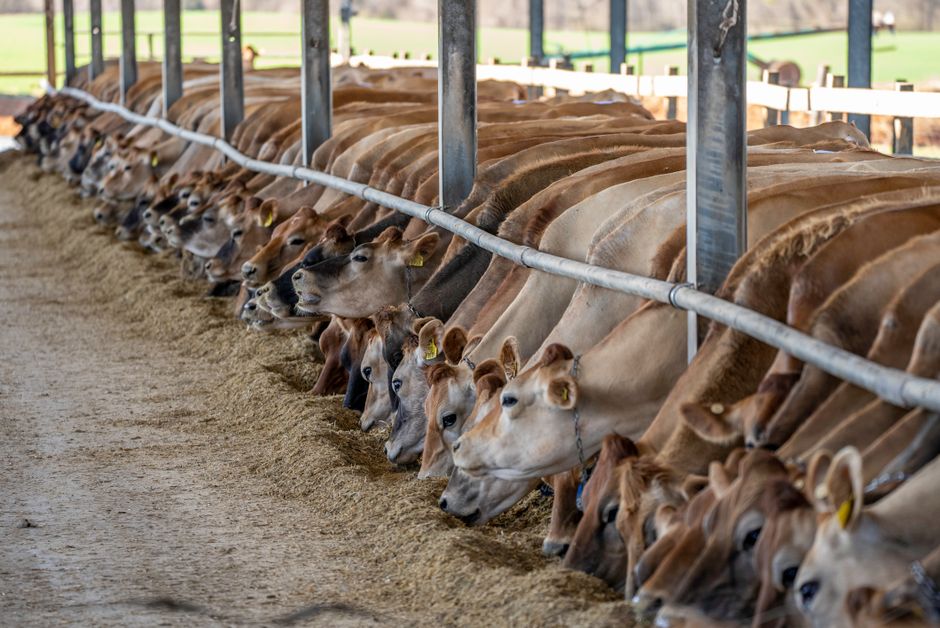
Frequent feed delivery (at least twice daily) and maintaining fresh feed availability encourage higher dry matter intake. Proper bunk space per cow (approximately 60-70 cm) prevents competition and ensures all cows can eat comfortably.
Feed sorting is a common challenge that can reduce fiber intake and increase risk of rumen acidosis. Using Total Mixed Rations (TMR) with appropriate particle size distribution helps minimize sorting. Particle size separators (e.g., Penn State Particle Separator) can be used to monitor forage particle length and adjust ration mixing accordingly.
Additionally, clean and well-maintained feeding areas reduce feed spoilage and mold contamination, which can negatively affect palatability and animal health. Regular feed analysis and ration adjustments based on forage quality fluctuations ensure consistent nutrient delivery.
Monitoring and Adjusting the Feeding Program
Farmers should regularly monitor body condition score (BCS), milk yield, and feed intake to adjust rations accordingly. For instance, cows losing excessive BCS in early lactation may require increased energy density or supplemental fats, while over-conditioned cows in late lactation need ration adjustments to avoid metabolic issues.
Utilizing technologies like near-infrared reflectance spectroscopy (NIRS) to analyze forage quality and milk component testing can help fine-tune feeding strategies for each lactation phase.
In addition to traditional monitoring, automated systems such as electronic feed bins and activity monitors provide real-time data on feed intake and cow behavior, enabling more precise nutritional management. For example, decreased feed intake or altered rumination patterns can serve as early indicators of health problems such as mastitis or subclinical ketosis.
Periodic blood sampling for metabolic profiling (e.g., beta-hydroxybutyrate for ketosis risk) complements nutritional assessment and guides interventions. Collaboration with a nutritionist to interpret data and reformulate rations ensures that changes in forage availability or milk prices are optimally managed.
Summary
Feeding dairy cows according to their lactation stage is essential for maximizing production, health, and reproductive efficiency. Early and peak lactation demand high energy and protein density, while mid and late lactation focus on moderate energy and higher fiber to maintain rumen health and body condition. Regular monitoring and ration adjustments ensure optimal performance across the lactation cycle.
Integrating advances in nutritional science, precision feeding technologies, and herd management practices allows farmers to optimize feed formulation and delivery, improving economic returns while promoting animal welfare and environmental stewardship. A dynamic, stage-specific feeding program not only supports current production goals but also sustains herd longevity and resilience for future lactations.