
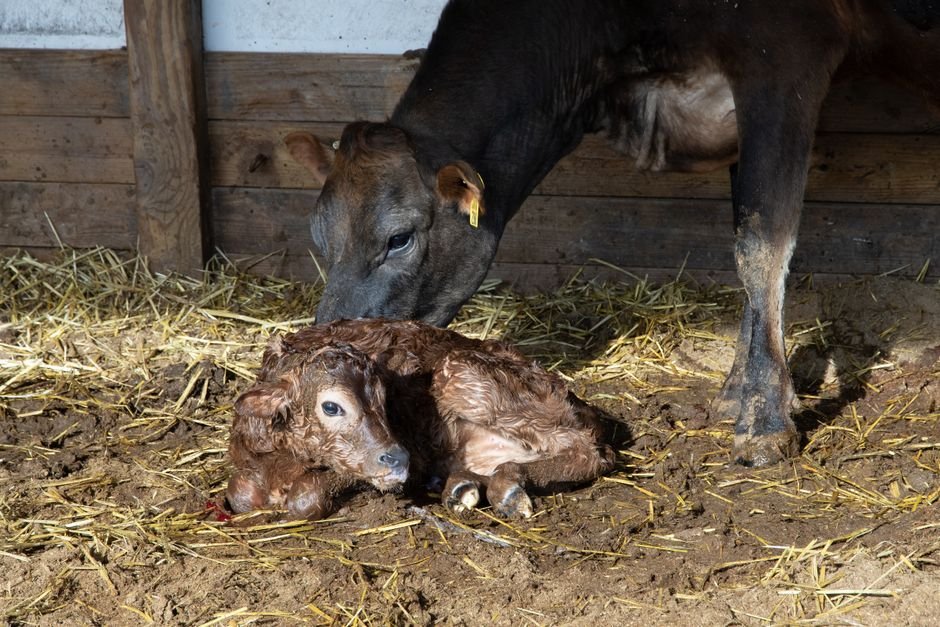
What to do first if the cow has no colostrum
If the cow has no colostrum, feed the calf colostrum from another cow as soon as possible, ideally within the first 2 hours after birth and no later than 6 hours. If clean, tested frozen colostrum is available, thaw and feed it first; if not, use a quality commercial colostrum replacer labeled for calves. The goal is to get enough immunoglobulin-rich colostrum into the calf before the gut closes.
Why this matters in the first few hours
Calves are born without meaningful passive immunity. They depend on colostrum for antibodies, energy, and a quick start to life. The calf’s gut absorbs immunoglobulins best right after birth, then absorption drops sharply over the next several hours. That is why “wait and see” is the wrong answer when the dam has no milk, no colostrum, or poor-quality colostrum. The first feeding is the one that matters most.
Good colostrum management is not just about volume. Quality, cleanliness, and timing all matter. A calf can drink a full belly of thin, low-antibody colostrum and still fail to get enough protection. That is also why many dairy and beef producers keep a backup supply on hand before calving starts rather than trying to solve the problem after a difficult birth.
Best backup options when the dam has none
There are three practical choices, and the best one depends on what you have on hand. The safest backup is tested frozen colostrum from your own herd or a known source. Next best is a commercial colostrum replacer that provides a full antibody dose. A colostrum supplement is not the same thing and usually does not contain enough immunoglobulins to stand alone for a calf that got nothing from the dam.
| Option | When to use it | What to look for | Important caution |
|---|---|---|---|
| Frozen colostrum from a healthy cow | Best choice if stored properly and from a tested, disease-free source | Clean collection, labeled date, frozen in small portions | Thaw gently; overheating destroys antibodies |
| Commercial colostrum replacer | When no safe natural colostrum is available | Label says “replacer,” not “supplement,” and provides a full IgG dose | Choose a product designed to replace colostrum, not just boost it |
| Dam’s milk or transition milk | Only as a last resort if better options are unavailable | Fresh, clean milk from the same cow or another healthy cow | Lower antibody concentration than true colostrum |
How much to feed a newborn calf
A common target is about 10% of the calf’s body weight in the first feeding. For many Holstein calves, that works out to roughly 3 to 4 quarts; smaller beef calves may need less by volume but the same percentage of body weight. If you are using a bottle or esophageal feeder, make sure the calf actually receives the full amount. A weak calf that will not nurse on its own often needs assisted feeding.
Many producers aim for a total of about 150 to 200 grams of IgG in the first feeding when using colostrum replacers or measured high-quality colostrum. Exact needs depend on colostrum quality and calf size, which is why a Brix refractometer is so useful. Fresh bovine colostrum often tests at 22% Brix or higher when it is considered good quality, while lower readings suggest weaker antibody concentration.
How to judge whether colostrum is usable
If you do have some colostrum, test it before feeding if possible. A Brix refractometer is one of the most practical tools on a farm because it gives a quick estimate of quality without sending samples to a lab. Many producers use 22% Brix as a practical cutoff for good colostrum, though exact interpretation can vary by herd and management. A colostrometer is another option, but it is more temperature-sensitive and less convenient in day-to-day use.
For more on this, see our related guide: Proven Tips to Reduce Weaning Stress in Calves During Hot Weather.
Colostrum should also be clean. Dirty colostrum can carry bacteria that interfere with antibody absorption and may increase scours risk. If the colostrum smells sour, has visible dirt, or came from a cow with mastitis, it is a poor choice. Clean collection into sanitized containers and rapid chilling or freezing make a big difference in preserving quality.
How to thaw frozen colostrum without ruining it
Frozen colostrum is only helpful if it is thawed correctly. Use warm water, not boiling water, and avoid microwaving. High heat can damage immunoglobulins and reduce the value of the feed. A typical safe approach is a warm-water bath around 50°C to 55°C (122°F to 131°F), stirring gently until thawed. If you are not sure of the water temperature, keep it comfortably hot to the hand rather than steaming.

Thaw only what you need for one calf if possible. Small containers freeze and thaw more evenly than one large jug. Label each batch with the cow’s ID, date, and quality test result so you can prioritize the best colostrum first. A simple freezer inventory can save a lot of stress during calving season.
When a commercial replacer makes more sense
A true colostrum replacer is the right choice when you do not have safe, tested colostrum on hand. Look for a product specifically labeled as a replacer and designed to supply a full antibody dose, not just nutrients. Replacers are especially useful in herds that do not maintain a colostrum bank or when disease concerns make pooling colostrum a bad idea.
Be careful with the label language. “Supplement” means it is meant to add to maternal colostrum, not replace it. If the calf got none from the dam, a supplement alone is usually not enough. Follow the manufacturer’s mixing directions exactly and feed it promptly after birth. A replacer is not a good product to delay while you search for a bottle or wait for the calf to stand on its own.
What not to do
- Do not wait until the next milking to decide what to feed.
- Do not give untested colostrum from a cow with mastitis, Johne’s disease concerns, or a dirty udder.
- Do not microwave frozen colostrum.
- Do not assume a small amount of milk is “good enough” if the calf got none at birth.
- Do not use a supplement when you actually need a replacer.
These mistakes are common because the calf may look fine at first. But passive transfer failure often shows up later as poor growth, scours, pneumonia, or higher treatment costs. The best prevention is a clear colostrum plan before calving begins, with the freezer stocked and the equipment ready.
If you’re also looking into this, our article on Can Cows Eat Watermelon? How to Safely Feed Cull Fruit to Your Herd covers it in more detail.
How to set up a colostrum backup plan before calving season
A simple farm protocol can prevent emergency feeding decisions. Keep a supply of clean bottles, esophageal feeders, and labels ready. Freeze high-quality colostrum in small, single-feeding portions. Test donor colostrum with a Brix refractometer and only bank the best batches. Many farms also keep at least one commercial replacer on the shelf for true emergencies.
It helps to assign a routine: collect, test, label, freeze, and rotate. Use the oldest frozen batches first and discard anything that was collected from a questionable cow. If you manage both dairy and beef calves, keep records by dam ID, date, and quality score so you can trace problems later. A little organization before calving can make the difference between a healthy calf and a weak one that needs extra care for weeks.
Signs the calf may need more help
Even after a proper feeding, some calves need closer monitoring. Watch for weakness, a poor suck reflex, bloating, dehydration, or failure to stand and nurse. A calf that is cold, slow, or unable to swallow safely may need warming and hands-on support before feeding. If the calf is weak enough that you are unsure about tubing it, get veterinary help rather than guessing.

Producers sometimes check serum total protein in young calves to evaluate passive transfer, especially in dairy systems. That kind of monitoring can show whether your colostrum plan is working. If you are seeing repeated failures, the problem may be with timing, cleanliness, storage, or the quality of the source cows rather than the calf itself.
Frequently Asked Questions
Can a calf survive if the cow has no colostrum?
Yes, if you act quickly. A calf can do well when it receives tested frozen colostrum or a true colostrum replacer soon after birth. The key is speed, cleanliness, and enough antibody intake in the first feeding.
This ties in closely with 26. Best Cattle Breed for Small Acreage: 10 Top Picks for Efficient Farming, worth a look if you want to go deeper.
Is milk a good substitute for colostrum?
No, not as a first choice. Whole milk provides energy and hydration, but it does not supply the same antibody protection as colostrum. If no colostrum is available, a commercial replacer is usually a better option than plain milk.
How long after birth can a calf absorb colostrum?
Absorption is best immediately after birth and declines quickly over the next several hours. That is why many calf programs target feeding within 2 hours and no later than 6 hours after birth.
How do I know if frozen colostrum is good enough?
Use a Brix refractometer if possible and store only clean, tested batches. A reading around 22% Brix or higher is commonly used as a practical benchmark for good-quality bovine colostrum. If the source cow was unhealthy or the sample was dirty, do not use it.
What is the difference between a colostrum supplement and a replacer?
A supplement is meant to add to existing colostrum, while a replacer is meant to stand in for it. If the cow has no colostrum at all, a supplement usually is not enough on its own.
This article is for general information and isn’t a substitute for advice from a qualified veterinarian, especially if a calf is weak, chilled, or not nursing.