New World Screwworm Is Now 31 Miles From the US Border What Every Cattle Farmer Must Do Right Now
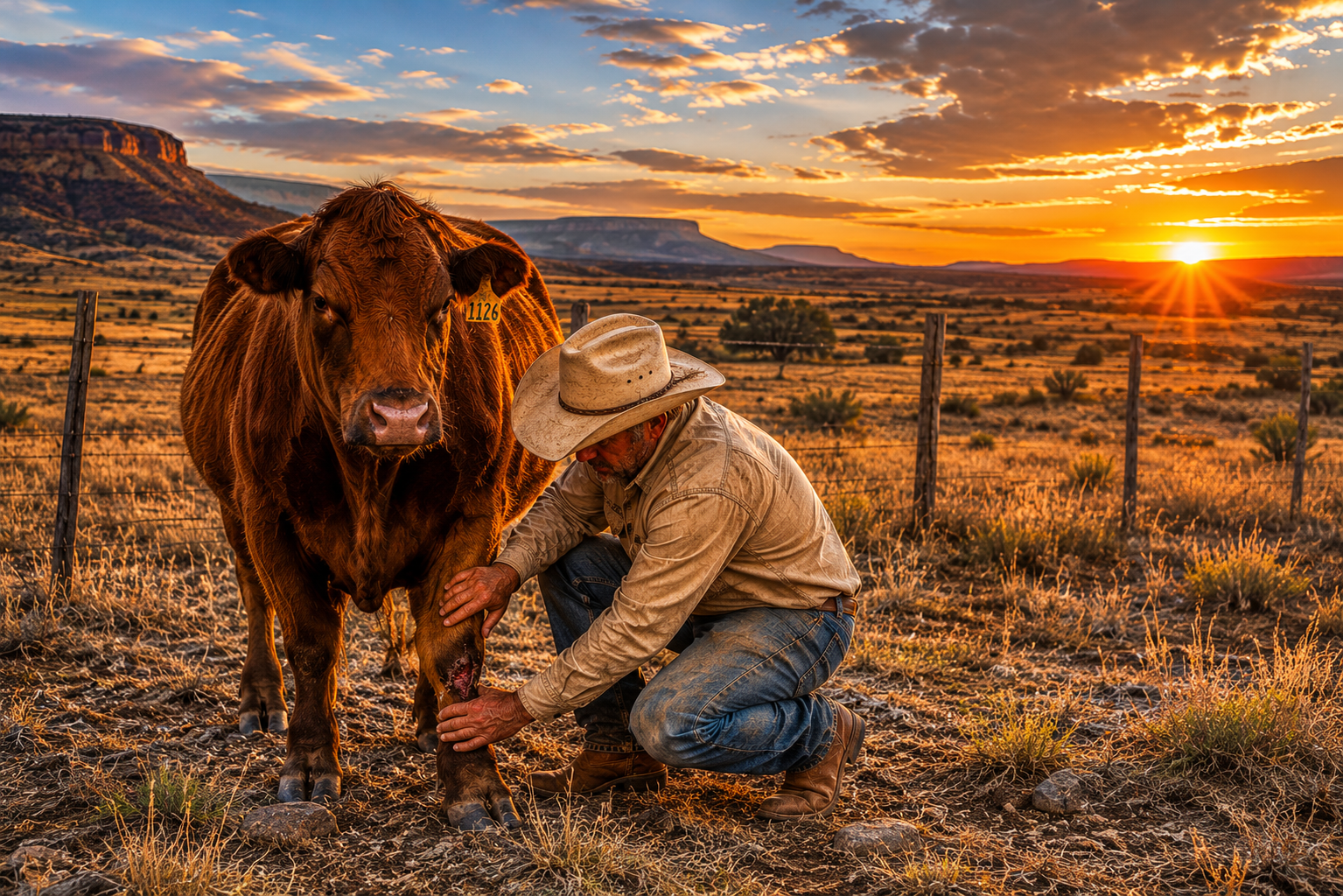
There is a threat moving toward American cattle farms right now that no rancher can afford to ignore.
As of June 2026, confirmed cases of New World Screwworm have been found just 31 miles from the US-Mexico border. The USDA has already suspended all live cattle, horse, and bison imports from Mexico. Texas is mobilizing state emergency resources. And livestock officials across the country are issuing the same warning: this is not a distant risk anymore.
If you raise cattle, this guide is for you. Read it, understand it, and take action today.
What Is New World Screwworm?
New World Screwworm is caused by a parasitic fly called Cochliomyia hominivorax. The name is Latin for "human eater" and it earns that name.
The fly targets warm-blooded animals. It seeks out any open wound, body opening, or soft tissue on your cattle and deposits its eggs directly inside. Once those eggs hatch, the larvae do not behave like ordinary maggots. Normal maggots feed on dead tissue. Screwworm larvae bore deep into living, healthy flesh. They eat from the inside out. They can kill a full-grown cow in as little as seven days if not caught and treated immediately.
This parasite was completely eradicated from the United States in the 1960s through one of the most successful agricultural campaigns in American history. An entire generation of cattle farmers has grown up never having seen it. That is exactly why the current situation is so dangerous. Most farmers today would not recognize it if it showed up in their herd tomorrow.
How Did It Get This Close?
The screwworm's return did not happen overnight. It has been moving steadily northward through Central America for several years.
In 2023, detections surged dramatically in Panama. From there it spread through Costa Rica, Nicaragua, Honduras, Guatemala, Belize, and El Salvador. By November 2024, confirmed cases were reported inside Mexico for the first time. Since then, the northward movement has not slowed. More than 20,000 cases have been confirmed across Mexico, with over 1,295 currently active as of this writing.
The USDA closed the southern border to live cattle imports and launched a $100 million emergency initiative to fund new detection and eradication tools. A new sterile fly production facility in Kerrville, Texas is being built and is expected to produce 100 million sterile flies per stage. The sterile insect technique releases sterile male flies to interrupt breeding. It is the same method that defeated screwworm in the 1960s.
But facilities take time to scale up. The threat is at the border right now.
Why Cattle Farmers Need to Act Before It Arrives
Here is the hard truth about screwworm: by the time most farmers realize what they are looking at, the animal has already been infested for several days.
The fly is small. The eggs are tiny. And in the first 24 hours, an infested wound looks very similar to a normal wound. It is only when the larvae begin burrowing and the wound starts deteriorating rapidly, faster than it should, that most people realize something is seriously wrong.
This is a parasite that rewards preparation and punishes delay. Farmers who understand the warning signs, who check their cattle daily, and who have a response plan already in place will be the ones who protect their herds. Farmers who wait until there is a confirmed case in their county may already be too late for some animals.
The 7 Warning Signs of New World Screwworm in Cattle
Walk your herd every single day. These are the seven signs you are looking for.
Warning Sign 1: A Wound That Gets Worse Instead of Better
This is the most important sign of all. Any wound on any animal that appears to be deteriorating rather than healing, especially in the first three to five days after an injury, should be treated as an emergency. Normal wounds heal. Screwworm wounds get larger, deeper, and more foul-smelling with each passing day.
Warning Sign 2: A Distinctive, Foul Odor
A screwworm infested wound produces a smell that experienced ranchers describe as unlike anything else. It is sharp, rotten, and penetrating. If you approach a wound and the smell is unusually intense, stronger than what you would expect from a normal infected cut, investigate immediately.
Warning Sign 3: Visible Cream-Colored Larvae Inside the Wound
Screwworm larvae are cream to white in color, approximately one centimeter in length when mature, and they move in a characteristic screwing motion deeper into the wound rather than staying near the surface. If you see small, moving larvae inside a wound, do not treat it as a normal fly strike. Report it immediately.
Warning Sign 4: Dark, Bloody Discharge From an Unusual Location
Dark, bloody, or watery discharge seeping from a wound that should be drying and closing is a red flag. Screwworm larvae damage blood vessels as they burrow, causing this type of discharge. A normal healing wound does not bleed this way after the first day or two.
Warning Sign 5: Behavioral Changes
Watch for cattle that suddenly become restless, repeatedly scratch or rub a specific area of their body against a fence post or tree, separate themselves from the herd, or stand with their head lowered and refuse to move normally. Animals instinctively try to relieve the pain of an active infestation, and their behavior will tell you something is wrong before your eyes find the wound.
Warning Sign 6: Loss of Appetite and Rapid Condition Loss
A cow that stops eating and begins losing body condition within a very short period, particularly alongside any of the other signs on this list, is an animal in serious distress. Screwworm infestations are painful and stressful. Affected cattle stop feeding and decline quickly.
Warning Sign 7: Navel Problems in Newborn Calves
Newborn calves are the most vulnerable animals on your operation. The navel, dehorning wounds, castration sites, and ear tag punctures are all prime entry points for the screwworm fly. Check every newborn calf within the first hour of birth. Apply navel dip immediately. Monitor closely for the first 72 hours. A calf that is not nursing normally, is hunched up, or is showing signs of pain around the navel area needs to be examined right away.
The Highest-Risk Situations on Your Farm
Not every animal faces equal risk. Know which situations create the greatest vulnerability.
Fresh wounds from procedures — Any animal that has recently been dehorned, ear-tagged, branded, castrated, or treated for a cut or injury is an immediate target for screwworm flies. Inspect these animals every single day until their wounds are fully closed.
Calving season — Newborns with fresh navels are highly vulnerable. Cows that experienced difficult deliveries and have tissue damage are also at elevated risk. During calving season, daily inspection of every calf and every cow is non-negotiable.
Animals near wooded areas or wildlife — Deer, wild pigs, and other wildlife can carry screwworm. Cattle that range near wooded land or areas with heavy wildlife activity face higher exposure risk if the parasite reaches your region.
Animals from outside your herd — If you attend sales, bring in stockers, or share grazing land with neighboring operations, know the health status of every animal that comes into contact with your herd.
What to Do If You Suspect New World Screwworm
Do not treat this as a routine fly strike and move on. Follow these steps immediately.
Step 1: Isolate the animal. Move it away from the rest of the herd right away. Do not wait for confirmation.
Step 2: Document everything. Take clear, close-up photos of the wound and any visible larvae. Write down the date, the animal's identification, and exactly what you observed.
Step 3: Call before you treat. New World Screwworm is a reportable disease in all US states. Contact your state veterinarian or local USDA APHIS office before attempting treatment on your own. The faster officials are notified, the faster sterile flies and response teams can be deployed to your area.
Step 4: Do not move the animal off your property. Keep the animal isolated on-site until you have received guidance from veterinary or government officials.
The reason you call first is not bureaucratic red tape. It is because early reporting triggers a response that protects not just your herd, but every cattle operation in your county. One call can prevent a county-wide outbreak.
How to Protect Your Herd Starting Today
You do not need to wait for screwworm to reach your state to start protecting your animals.
Daily wound inspection. Make it a non-negotiable part of your daily routine. Every animal with any kind of wound gets checked every single day. Early detection is everything.
Strict post-procedure wound management. After any dehorning, castration, ear tagging, or branding, apply an approved wound treatment as directed by your veterinarian and inspect every treated animal daily until fully healed.
Navel care for every newborn. Dip every calf navel within the first hour of birth. This single step dramatically reduces the entry opportunity for screwworm flies and other pathogens.
Know your contacts before you need them. Save your state veterinarian's number in your phone today. Find the nearest USDA APHIS Wildlife Services office and write down their contact number. Have a plan in place before you are standing in a pasture trying to figure out what to do.
Follow USDA APHIS updates. When this parasite reaches a county near you, you want to know the same day, not a week later.
Frequently Asked Questions
Can New World Screwworm spread from one cow to another?
The screwworm fly does not spread directly between animals the way a contagious disease does. However, if flies are present in your area, any animal with an open wound is at risk. Isolate infested animals immediately to reduce the fly population around your operation.
How quickly does screwworm kill cattle?
An untreated infestation can kill a cow in as little as seven to ten days. Calves and smaller animals can decline even faster. Speed of treatment is critical.
Is New World Screwworm dangerous to humans?
The fly can in rare cases deposit larvae in open wounds in humans. Always wear gloves when handling infested animals and practice good hygiene after any contact with suspected cases.
What treatment is used for screwworm?
Treatment involves removing the larvae and applying approved insecticide products to the wound. Your state veterinarian or USDA APHIS will provide specific treatment guidance. Do not attempt to treat on your own before reporting.
Where is screwworm right now in 2026?
As of June 2026, confirmed cases are 31 miles from the US-Mexico border in northern Mexico. No confirmed cases have been reported inside the United States. USDA APHIS is maintaining active surveillance with more than 7,000 fly traps monitoring the border region.
The Bottom Line
The US cattle industry beat New World Screwworm once before. American ranchers, scientists, and government agencies worked together in the 1960s and eradicated it completely. The tools exist. The knowledge exists. The response systems are being built.
But the farm-level defense starts with you. With your eyes on your herd every single day. With your ability to recognize something that does not look right. And with your willingness to pick up the phone and report it the moment you suspect a problem.
If you are a cattle farmer, you know how much pride goes into your work. Gifticart.com has a collection of cattle themed gifts, apparel, and products made for people who live and breathe this lifestyle. From mugs and t-shirts to blankets and novelty items, it is the perfect place to find something for yourself or a fellow rancher. Visit gifticart.com and take a look.
Know the signs. Check your cattle daily. Have your contacts ready. Report anything suspicious immediately.
Your herd is counting on you to catch this early.
Want practical cattle health guides like this delivered free to your inbox every week? Subscribe to The Cattle Calf newsletter and get your free Cattle Farmer's Emergency Health Guide the moment you sign up. It covers the most critical health situations every cattle farmer needs to handle fast.
Subscribe free at cattlecalf.com