Why Is Beef So Expensive Right Now And What It Means for Cattle Farmers in 2026
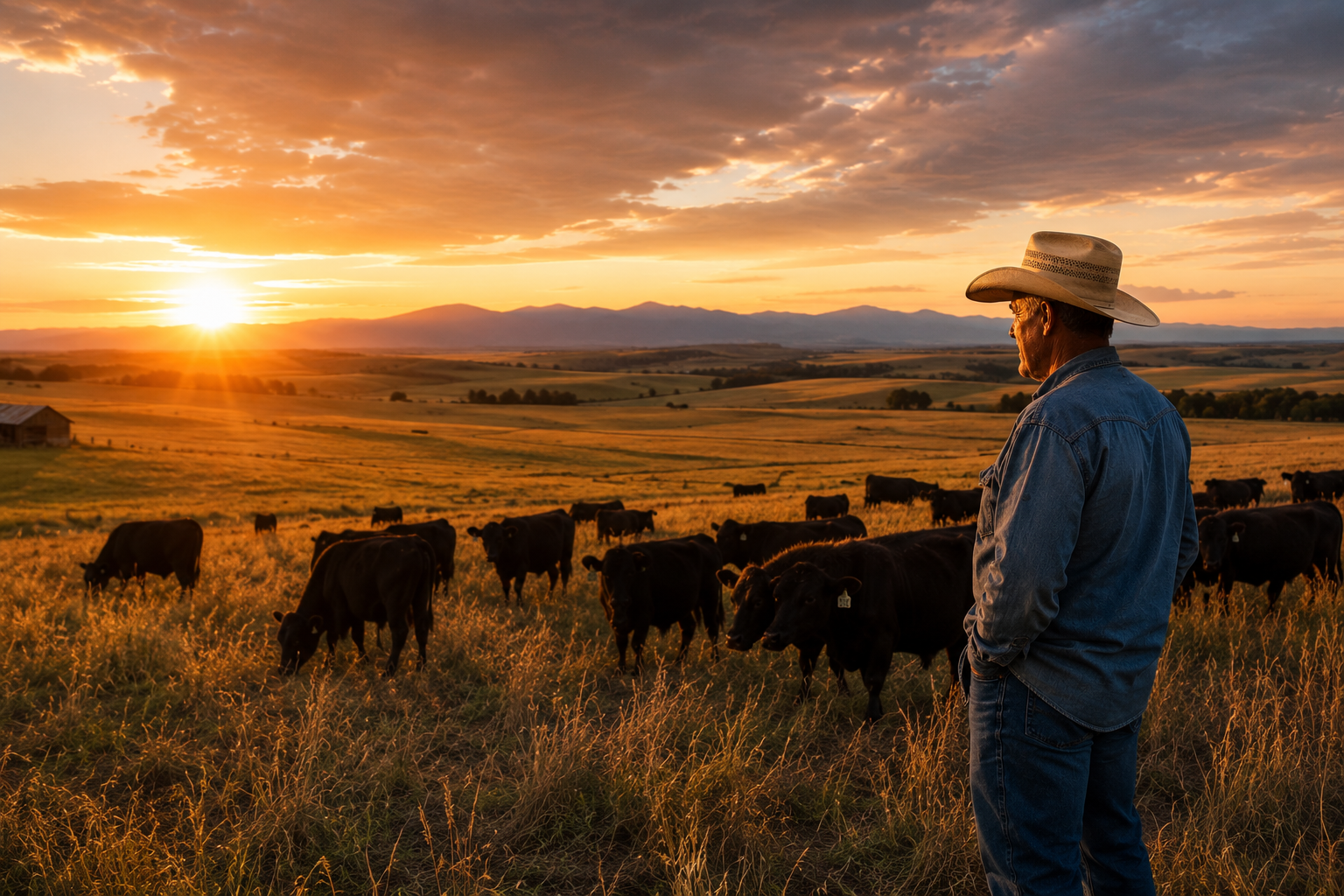
If you have been to a grocery store recently, you already know something is different. Ribeye steak is approaching $22 per pound. Ground beef for a simple burger is over $6.70 per pound. And people buying it are asking the same question everywhere: why is beef so expensive right now?
As a cattle farmer, you are living on the other side of that question. And the answer matters enormously for your operation, your planning, and your future.
This guide breaks down exactly what is happening, why it is happening, and what it means for cattle farmers across America in 2026 and beyond.
The Short Answer: There Are Simply Not Enough Cattle
The United States cattle herd has shrunk to its smallest size since 1951. That is not a typo. America has not had this few cattle since the early 1950s, when the US population was roughly half of what it is today.
As of January 2026, the national cattle inventory stands at 86.2 million head, down from over 94 million just a few years ago. The calf crop is at its lowest point since the mid-1940s. And cattle numbers are not expected to recover until at least 2028.
At the same time, Americans have not stopped eating beef. In fact, they are eating more of it than ever. The number of people who identify as vegan or vegetarian dropped from 14% in 2020 to just 7% in 2025. Demand is at record levels. Supply is at historic lows. Basic economics does the rest.
How Did the Cattle Herd Get This Small?
This did not happen in one season. It has been building for years and the story starts with drought.
Between 2022 and 2025, severe drought swept across the Central Plains and major cattle producing states including Texas, Oklahoma, Kansas, and Nebraska. Pastures dried up. Water sources failed. Hay became scarce and expensive. Ranchers who had spent decades building their herds were forced to make a devastating decision: sell their breeding cows now, or watch them slowly starve.
When a rancher sells a breeding cow, that is not just one animal lost. That is years of genetics, years of calf production, years of herd building gone in a single sale. And once those cows are gone, rebuilding takes years. You cannot simply buy cattle and expect a full herd in one season. The biology will not allow it.
By the time drought conditions began to ease in some regions in early 2026, the damage was already done. The cow herd had been depleted to a point where rapid rebuilding is physically impossible. And right now in June 2026, around 61% of US cattle production areas are still experiencing drought conditions, which means the rebuilding has barely begun.
The Numbers Behind the Price Surge
The price increases happening right now are not small adjustments. These are historic, generational numbers.
The average retail price for all beef reached a record $9.64 per pound in April 2026, up approximately 14.8% from the same month last year. Beef and veal prices are forecast to increase 12.1% for the full year of 2026. Fed steer prices hit $243 per hundredweight in August 2025, a record at the time, and markets have remained near those levels going into summer 2026.
For context, the USDA now projects that ground beef will not return to anything resembling normal pricing before 2028 at the earliest. Some economists are forecasting that cattle prices will remain elevated through the end of the decade, potentially into 2030.
These are not temporary spikes driven by a single event. They are the result of years of herd contraction meeting years of growing consumer demand, and that combination does not resolve itself quickly.
Why the Mexico Border Closure Made Everything Worse
American cattle producers have long relied on live cattle imports from Mexico to supplement domestic supply. Feeder cattle and calves from Mexico typically account for around 1.2 million head annually, animals that flow into US feedlots and eventually into the beef supply.
In late 2024, USDA suspended all live cattle, horse, and bison imports across the southern border due to the threat of New World Screwworm moving northward through Mexico. That suspension is still in effect as of June 2026, with confirmed screwworm cases now just 31 miles from the US border.
Even if imports resume in the near future, economists estimate only 500,000 to 800,000 head would enter in the first year of resumption, well below the pre-closure levels. And those animals still need 300 days of feeding before entering the beef supply. There is no quick fix here.
The border closure removed a critical pressure valve from the US beef supply at exactly the wrong time, adding tightness on top of an already historically tight market.
What This Means for Cattle Farmers Right Now
If you raise cattle, this market is rewarding you in ways that have not been seen in a generation. Here is what the current environment means practically for your operation.
Your cattle are worth more than ever. Five weight steer prices in several states topped $450 per hundredweight earlier in 2026. Feeder cattle and calf values are at record levels. Cow calf producers are capturing a large share of the roughly $690 per head total industry profit that analysts estimate is moving through the beef supply chain right now. If you have cattle to sell, you are selling into one of the strongest markets in the history of American beef production.
Culling decisions have a silver lining. If you have older cows or less productive animals that need to come out of your herd, this is an excellent time to cull. Cull cow prices are at or near record highs. Animals that would have brought modest returns in prior years are bringing strong money right now. Use this window strategically.
Herd rebuilding is expensive but the opportunity is real. Replacement females and bred heifers are also priced at record levels, which makes rebuilding costly. But economists are projecting that favorable prices will persist for several years. Producers who invest in expanding their herds now, despite high input costs, will be positioned to benefit as the market remains strong through the second half of the decade.
Feed and input costs remain a challenge. High cattle prices do not erase the cost pressures that every producer is dealing with. Drought has driven up hay prices in many regions, and input costs across the board remain elevated. Managing your cost of production carefully while capturing strong sale prices is the key to making the most of this market environment.
When Will Beef Prices Come Down?
This is the question every consumer is asking. The honest answer is not anytime soon.
The cattle industry operates on a biological timeline that no policy decision or market signal can shortcut. A producer who starts retaining heifers today will not see those animals produce their first calf for roughly two years. Their offspring will not be ready for the beef supply for another year or more after that. The pipeline is long and it is nearly empty right now.
USDA economists and independent analysts broadly agree that meaningful price relief for consumers is unlikely before 2028. Some are projecting that cattle prices will remain at elevated levels through 2030. The supply side of this market will take the better part of a decade to fully rebuild, and that timeline assumes that drought conditions improve, that screwworm does not cross the US border, and that no additional shocks hit the industry.
For cattle farmers, that is actually a statement about sustained opportunity. For consumers, it means adapting to a new normal for beef prices for the foreseeable future.
What Cattle Farmers Should Be Doing Right Now
The best producers use strong markets to get stronger. Here is what experienced ranchers are doing in this environment.
Lock in forward contracts where possible. Futures markets are offering strong prices for cattle deliveries well into the future. Working with a market adviser to evaluate whether forward pricing makes sense for your operation is worth the conversation right now.
Invest in herd health aggressively. When cattle are worth this much, losing even one animal to a preventable disease or injury is an expensive mistake. Vaccination programs, daily health monitoring, and proper wound management all have a higher return on investment than they did when cattle prices were lower.
Watch the screwworm situation closely. A screwworm entry into the United States would hit an already stressed supply chain at the worst possible time. Stay current on USDA APHIS updates and make sure your biosecurity and wound management protocols are in place before the threat reaches your region.
Control what you can on the cost side. Hay sourcing, grazing management, and feed efficiency all become more important when input costs are high. Producers who manage their cost of production carefully in this environment will capture the most profit from the strong sale prices available right now.
Frequently Asked Questions
Why is ground beef so expensive compared to other proteins?
Ground beef prices have been hit particularly hard because lean beef, which makes up a large portion of ground beef, comes from non-fed cattle such as cull cows and dairy animals. Non-fed beef production has declined more sharply than fed beef since 2022, creating the tightest relative supplies for lean beef and pushing ground beef prices to record highs even faster than steak prices.
Will beef prices go back to what they were in 2020 or 2021?
Almost certainly not in the near term. The structural reasons behind today's prices, a smaller cow herd, strong demand, and slow biological rebuilding timelines, mean that prices are unlikely to return to 2020 or 2021 levels before 2028 at the earliest. Even then, a full return to pre-drought pricing is not guaranteed.
Is now a good time to buy cattle to start or expand a herd?
Replacement females are expensive right now, but the market outlook for cattle producers is strong through the end of the decade. Producers with access to good pasture and the financial capacity to absorb high upfront costs may find that investing in herd expansion now positions them well for the years ahead. This decision depends heavily on individual financial circumstances and access to quality feed and pasture.
Looking for cattle themed gifts, apparel, and products made for people who live and breathe this lifestyle? Visit Gifticart.com and take a look.
How does the Mexico border closure affect my operation?
If you produce feeder cattle or calves, the border closure has removed a significant source of competing supply from the market, which supports stronger prices for your animals. If you are a stocker or backgrounder who relied on Mexican feeder cattle, you are facing tighter supplies and higher acquisition costs. The impact depends on where you sit in the production chain.
Are other countries experiencing the same beef price increases?
The US situation is largely domestic in origin, driven by the US herd contraction and US consumer demand. However, high US beef prices have reduced US beef exports, as American beef has become less competitive in international markets. Some importing countries have shifted toward beef from Australia, Brazil, and other suppliers to fill the gap left by reduced US exports.
The Bottom Line
Beef prices are high because America ran out of cattle. The herd has been shrinking for years under the pressure of drought, high costs, and difficult production conditions. Consumer demand never slowed down. The result is a market that is delivering record returns to cattle producers right now and will likely continue to do so for several years.
If you raise cattle in 2026, you are operating in one of the most favorable producer markets in American agricultural history. The challenge is managing costs, protecting your herd, and making smart decisions that position your operation for the years ahead.
The consumers paying $22 for a ribeye are the reason your cattle are worth more than they have ever been. That is a fact worth understanding clearly.
If you want weekly cattle market updates, herd health guides, and practical farming advice delivered straight to your inbox, subscribe to The Cattle Calf newsletter. You will also get the free Cattle Farmer's Emergency Health Guide the moment you sign up, covering the most critical health situations every cattle farmer needs to handle fast.
Subscribe free at cattlecalf.com