
What Is Total Mixed Ration (TMR)?
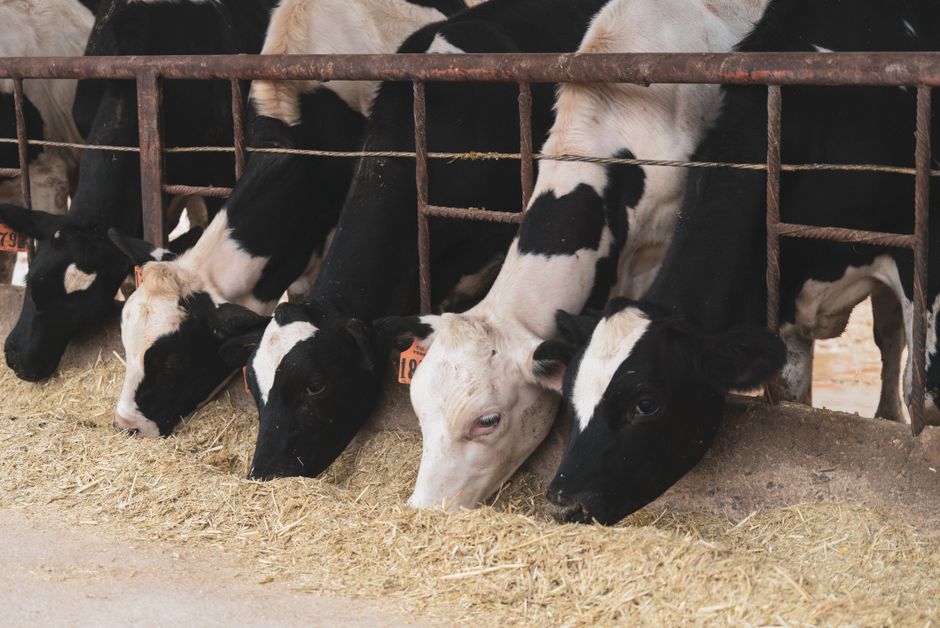
Total Mixed Ration, commonly abbreviated as TMR, is a feeding strategy for dairy cows that combines all feed components — forages, grains, protein sources, vitamins, and minerals — into a single, homogenous mixture. This approach ensures that each bite a cow consumes contains a balanced set of nutrients optimized for milk production, health, and reproductive performance.
Unlike traditional feeding methods where cows are offered separate feed ingredients, TMR allows for precise nutritional control and minimizes selective feeding behavior, which often leads to nutrient imbalances.
By blending all components together, TMR supports stable rumen fermentation, as the microbial populations receive a consistent supply of carbohydrates, fiber, and protein throughout the day. This uniformity is especially important during critical production stages such as early lactation, when nutrient demands peak and the risk of metabolic disorders is elevated.
Moreover, TMR facilitates more efficient use of feed resources, allowing dairy producers to incorporate by-products or alternative ingredients without compromising diet uniformity. This flexibility can reduce feed costs and environmental impact by utilizing locally available materials.
Why Is TMR Important for Dairy Cows?
Dairy cows require a carefully balanced diet to support high milk yields, strong immune systems, and reproductive efficiency. TMR plays a crucial role in meeting these needs by:
- Ensuring Consistency: Each portion of TMR contains the same nutrient profile, reducing fluctuations in energy, fiber, and protein intake.
- Reducing Sorting: Cows tend to sort through separate feeds to select preferred ingredients, but TMR’s uniform mixing prevents this, ensuring balanced consumption.
- Optimizing Digestive Health: Proper fiber content in TMR helps maintain rumen function and prevents disorders like acidosis or displaced abomasum.
- Improving Milk Production: Balanced nutrition supports maximum milk yield and quality, including fat and protein content.
Beyond these key points, TMR also plays a vital role in stabilizing rumen pH. The presence of adequate physically effective fiber stimulates saliva production, which contains bicarbonate buffers that neutralize acids formed during fermentation. This buffering action helps prevent sub-acute ruminal acidosis (SARA), a common metabolic disorder that can severely impact cow health and productivity.
Furthermore, by avoiding nutrient imbalances that may result from selective feeding, TMR reduces the incidence of metabolic diseases such as ketosis and milk fever. These health improvements contribute to longer productive lifespans and lower veterinary costs.
In addition, TMR facilitates herd management by enabling tailored rations for different groups of cows based on lactation stage, body condition, or production level. This grouping approach enhances overall herd performance and optimizes feed efficiency.
Components of a Typical TMR
A well-formulated TMR contains multiple ingredients working together to meet the cow’s nutritional requirements. Below is a breakdown of common components and their roles:
| Component | Purpose | Typical Inclusion Rate (% of Dry Matter) |
|---|---|---|
| Forages (corn silage, haylage, alfalfa) | Provide effective fiber for rumen health and energy | 40-60% |
| Grain (corn, barley, oats) | High-energy source to support milk production | 25-35% |
| Protein sources (soybean meal, canola meal, distillers grains) | Supply amino acids for milk protein synthesis | 10-15% |
| By-products (beet pulp, brewers grains) | Additional fiber and energy with palatability benefits | 5-10% |
| Minerals and vitamins | Support metabolic processes and overall health | 1-3% |
Forages form the foundation of the TMR, contributing not only fiber but also a significant portion of the energy through fermentable carbohydrates. The particle size and fiber digestibility of forages are critical, as they influence chewing activity, rumination time, and rumen mat formation, which aids microbial attachment and fermentation efficiency.
Grains provide dense energy in the form of starch, essential to meet the high demands of lactating cows. However, excessive starch can lower rumen pH, so careful balancing with forages and fiber is necessary.
Protein sources in the ration supply both rumen degradable protein (RDP) and rumen undegradable protein (RUP). RDP supports microbial growth in the rumen, while RUP supplies amino acids directly absorbed in the intestines, both vital for milk synthesis and tissue maintenance.
By-products like beet pulp and brewers grains offer valuable digestible fiber and moderate energy, enhancing palatability and often providing cost-effective alternatives to traditional feedstuffs.
Minerals such as calcium, phosphorus, magnesium, and trace elements like selenium and zinc, along with vitamins A, D, and E, are key to metabolic functions, immune competency, and reproduction.
How TMR Is Formulated
Ration formulation involves evaluating the nutrient requirements of the herd and balancing the feed ingredients accordingly. Typically, dairy nutritionists use software such as CNCPS (Cornell Net Carbohydrate and Protein System) or NRC (National Research Council) guidelines to calculate:
- Energy needs based on milk yield, maintenance, and activity
- Protein requirements for milk protein synthesis and body growth
- Fiber requirements to maintain rumen health
- Mineral and vitamin needs
For example, a high-producing Holstein cow yielding 35 kg of milk daily requires approximately 7,000 kcal of net energy lactation (NEL) and 1,600 grams of metabolizable protein per day. The TMR must deliver these nutrients efficiently.
Formulation also includes attention to effective fiber (peNDF) content, which should generally constitute 20-25% of dry matter to promote rumination and prevent sorting. Physically effective fiber is measured by particle size and contributes to chewing time and saliva production.
Moreover, balancing rumen fermentable carbohydrates, including starch and sugars, with fiber is key to avoiding ruminal acidosis. Nutritionists aim to keep starch levels below 30% of dry matter in high forage diets or adjust accordingly based on forage digestibility.
Mineral balance is critical to prevent disorders such as milk fever, grass tetany, and displaced abomasum. For example, the calcium to phosphorus ratio is typically maintained between 1.5:1 and 2:1, with magnesium levels sufficient to support metabolic functions.
Feed Testing and Monitoring
Accurate formulation depends on regular feed testing for dry matter, crude protein, fiber fractions (NDF, ADF), starch, and minerals. Nutrient values can vary widely between forage batches, so frequent analysis (every 2-4 weeks) is necessary to adjust the TMR accordingly.
Advanced methods like near-infrared spectroscopy (NIRS) allow rapid and cost-effective feed analysis. These tools enable producers to respond quickly to changes in forage quality, adjusting rations before problems arise.
In addition to laboratory testing, on-farm tools such as the Penn State Particle Separator help evaluate forage particle size distribution to ensure adequate physical effectiveness.
Continuous monitoring of cow performance indicators such as milk yield, body condition score, rumination activity, and manure consistency also provides feedback on ration adequacy and helps identify when adjustments are required.
Benefits of TMR in Dairy Operations
Dairy farms adopting TMR often report improvements in several key performance areas. Some documented benefits include:
- Increased Milk Yield: Studies show farms switching to TMR can increase average herd milk production by 5-15% due to optimized nutrient intake.
- Improved Milk Components: Balanced protein and energy in TMR can increase milk fat by 0.1-0.3% and protein content by 0.1-0.2%.
- Better Body Condition and Reproduction: Consistent nutrition reduces metabolic stress, resulting in improved conception rates and shorter calving intervals.
- Reduced Feed Waste: Homogenous mixing minimizes feed sorting and refusals, improving feed efficiency.
- Labor Efficiency: Delivering all feed components simultaneously saves time and simplifies feeding routines.
For example, research at The University of Wisconsin found that dairy herds using TMR feeding consumed 3-5% more dry matter, translating into higher energy intake and improved milk production. Additionally, milk fat depression incidents were lower in TMR-fed herds due to better rumen fermentation stability.
In terms of reproduction, farms using TMR reported conception rates that improved by 5-7 percentage points, attributed to stabilized energy supply and reduced negative energy balance during early lactation.
Feed efficiency gains are notable as well; reduced sorting means cows consume nearly all of the nutrients formulated for them, minimizing feed costs per unit of milk produced. This leads to a lower environmental footprint per liter of milk due to reduced nutrient waste and manure nutrient excretion.
Labor efficiency benefits are particularly relevant for larger operations, where automated mixing and feeding allow for better allocation of farm staff time to other critical tasks such as animal health monitoring and facility maintenance.
Implementing TMR: Equipment and Management Considerations
Effective TMR feeding requires appropriate equipment and management practices. Key considerations include:
Mixing Equipment
Common mixers include vertical mixers, horizontal paddle mixers, and ribbon mixers. The size depends on herd size and feeding frequency. For example:
- Small farms (20-50 cows): Vertical mixers with capacities of 5-10 cubic feet
- Medium farms (50-200 cows): Horizontal mixers with 20-40 cubic feet capacity
- Large farms (200+ cows): Large horizontal mixers that can handle 100+ cubic feet
Mixing time usually ranges between 5-15 minutes to ensure uniform distribution without overprocessing feed particles.
Selection of mixer type has implications for labor and feed particle integrity. Vertical mixers are generally more affordable and easier to operate but may result in longer mixing times. Horizontal mixers provide more uniform mixing and are better suited for large herds but require higher capital investment.
Overmixing can damage forage particle size, reducing rumen effectiveness of fiber, so balancing mixing time and uniformity is crucial. Some farms incorporate in-line scales and computerized control systems to enhance precision in ingredient weighing and mixing.
Feeding Management
- Frequency: Feeding TMR at least twice daily maintains feed freshness and encourages intake.
- Feed Push-Ups: Regularly pushing feed closer to cows encourages consumption and reduces refusals.
- Refusal Monitoring: Checking daily refusals helps identify issues with palatability or ration balance.
In addition to these practices, maintaining clean and dry feed bunks is essential to prevent feed spoilage and contamination. Monitoring feed temperature and moisture content can help identify early signs of spoilage or fermentation problems.
Proper bunk space allocation is important, allowing all cows adequate access to the TMR without competition. Recommended bunk space is approximately 60-70 cm per cow to reduce stress and improve feed intake.
Adjusting rations seasonally is also an important management aspect, as heat stress can reduce dry matter intake, requiring increased energy density or feed additives such as buffers or yeast cultures to promote rumen health.
Challenges and Limitations of TMR
Although TMR offers many advantages, it also presents challenges that must be managed carefully:

- Ingredient Variability: Variations in forage quality can disrupt ration balance if not monitored continually.
- Equipment Costs: Investment in mixers and feed delivery systems can be significant.
- Labor Skill: Proper mixing techniques and ration adjustments require trained personnel.
- Feed Spoilage: Wet or improperly stored ingredients may spoil in the mixer or bunk, reducing feed quality.
Ingredient variability is perhaps the most critical challenge. For example, corn silage harvested at different maturity stages can vary greatly in starch and fiber content, affecting energy availability. Without frequent testing and ration adjustments, production losses may occur.
Capital investment in TMR infrastructure may be a barrier for small-scale producers. Costs include not only mixers but also feed storage, conveyors, and feeding alleys. However, the return on investment can be realized through improved production and feed efficiency over time.
Labor skill plays a pivotal role in successful TMR feeding. Incorrect weighing, poor mixing order, or improper ingredient handling can lead to nutrient segregation or inadequate ration delivery. Training and standard operating procedures are essential to maintain consistency.
Feed spoilage risk increases with wet ingredients or improper storage conditions, potentially leading to mold growth or mycotoxin contamination. Regular cleaning of mixers and feed lines, along with proper inventory management, help mitigate these issues.
Case Study: TMR Impact on a Mid-Size Dairy Farm
Farm Profile: A 150-cow Holstein dairy in Wisconsin transitioned from component feeding to TMR in 2021.
| Performance Metric | Before TMR | After TMR (6 months) |
|---|---|---|
| Average Milk Yield (kg/day) | 29.5 | 33.2 |
| Milk Fat (%) | 3.6 | 3.9 |
| Feed Cost per Liter of Milk ($) | 0.22 | 0.20 |
| Feed Refusals (% of feed offered) | 12% | 5% |
| Calving Interval (days) | 440 | 420 |
This transition demonstrated how TMR improved nutrient delivery, enhanced milk production, improved feed efficiency, and promoted better reproductive performance in a relatively short period.
Specifically, feed refusal reduction from 12% to 5% showed that cows were consuming a more balanced diet without sorting, lowering feed wastage and improving nutrient intake. The increase in milk fat percentage indicated improved rumen health and fiber digestion.
Lower feed cost per liter of milk reflected efficiency gains, partially due to optimal ingredient utilization and reduced nutrient losses. The shortened calving interval suggested better energy balance and reproductive health following the adoption of TMR.
The farm also reported improved cow comfort and ease of ration management, as the centralized mixing system simplified feed delivery and record-keeping. Overall, the case study underscores the tangible benefits of TMR when implemented with appropriate management and monitoring.
Future Trends in TMR Feeding
Technology is advancing TMR feeding management through:
- Precision Nutrition: Automated feed analyzers and ration mixers adjust feed components on-the-fly based on real-time data.
- Robotics: Robotic mixers and feeders reduce labor and improve consistency.
- Data Integration: Combining milk yield, activity monitors, and rumination data with TMR composition to tailor rations per cow group or individual.
Emerging precision feeding technologies include near-infrared sensors mounted on mixers or conveyors that estimate nutrient content during feed preparation, allowing for immediate ration adjustments.
Robotics are increasingly integrated into feeding systems, automating tasks such as mixing, transport, and feed delivery to reduce labor intensity and improve timing consistency, critical for maximizing dry matter intake.
Advanced data analytics platforms synthesize herd performance data—such as milk production, activity levels, rumination time, and body condition—with feed composition to enable dynamic rationing strategies. These systems support grouping cows by parity, stage of lactation, or health status, delivering customized TMR formulations accordingly.
Additionally, inclusion of feed additives like buffers, probiotics, and enzymes is being optimized through precision feeding approaches to further enhance rumen function and animal performance.
Environmental sustainability is also shaping future TMR strategies, with increased focus on reducing nitrogen and phosphorus excretion by fine-tuning dietary protein and mineral levels. Lifecycle assessments of feed ingredients help formulate rations with lower carbon footprints.
Summary
Total Mixed Ration (TMR) represents a fundamental advancement in dairy cow nutrition management. By delivering a balanced, uniform diet that meets cows’ energy, protein, fiber, vitamin, and mineral needs, TMR supports improved milk yield, composition, herd health, and farm profitability. While initial investment and management complexity increase, the benefits realized in production efficiency and animal well-being often outweigh these costs. Regular feed testing, proper equipment selection, and skilled management remain critical to successful TMR implementation.
As the dairy industry evolves, integrating technological innovations and precision nutrition tools will further enhance TMR effectiveness, enabling producers to meet the challenges of increasing production demands, animal welfare expectations, and environmental stewardship.
Related articles
- Dairy Cow Nutrition: Identifying and Managing Common Nutritional Deficiencies
- Essential Water Management for Healthy, Productive Cattle