
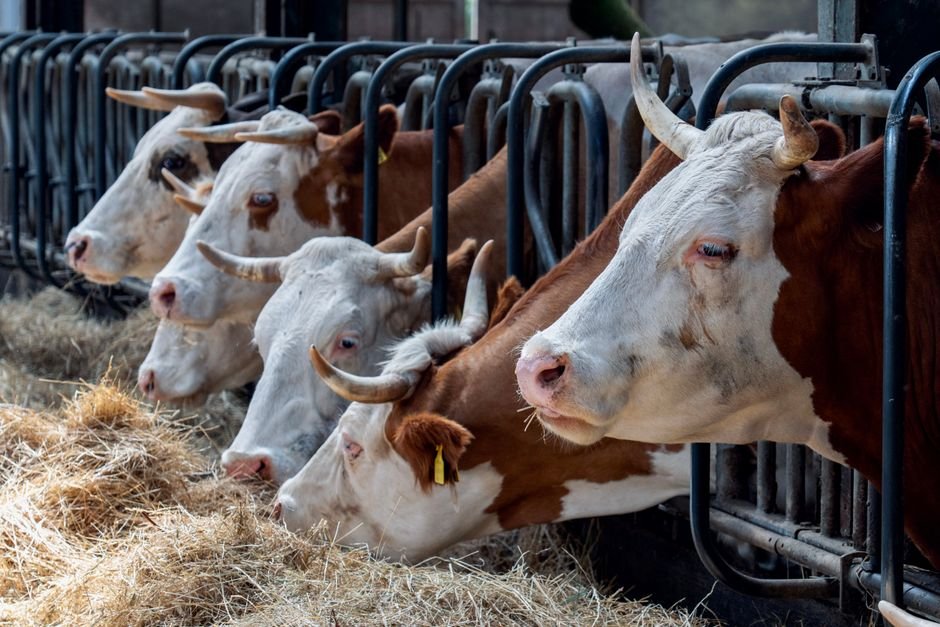
Understanding Hay Consumption: How Much Hay Does a Cow Eat Per Year?
For cattle farmers and ranchers, accurately estimating how much hay a cow eats per year is essential for effective feed management and cost control. Hay is the backbone of winter and dry-season feeding for cows, making up a significant portion of yearly feed expenses. But just how much hay does a typical cow consume annually? And how can you calculate the number of bales needed to meet this demand?
This article breaks down the important factors involved in estimating yearly hay consumption and introduces a straightforward bale calculator to help you plan your supply needs confidently.
Daily Hay Intake of a Cow: Calculating the Basics
The average daily hay intake of a cow depends primarily on its weight, production stage (e.g., dry, lactating, or growing), and hay quality. While variations exist, a useful rule of thumb is that a mature cow consumes roughly 2 to 2.5% of its body weight in dry matter (DM) daily.
Example: For a 1,200-pound mature cow:
- 2% of body weight = 24 pounds dry matter/day
- 2.5% of body weight = 30 pounds dry matter/day
This range accounts for differences in energy requirements. Lactating cows usually consume closer to 2.5%, while dry cows hover near 2%. Additionally, growing or replacement heifers may consume amounts somewhere between these values depending on growth rates and physiological demands.
Translating Dry Matter Intake to Hay Weight
Since hay contains moisture, the as-fed weight (what is actually fed) will be higher than the dry matter weight. Most good-quality hay has a dry matter content of approximately 85% (meaning 15% moisture). However, hay harvested under different conditions can vary significantly, with some hays ranging from 75% to 90% dry matter. This variability can affect feed calculations substantially.
Calculating as-fed hay intake:
As-fed hay (pounds) = Dry matter intake ÷ Dry matter percentage
Using 85% dry matter hay and 24 pounds DM intake:
24 ÷ 0.85 ≈ 28.2 pounds of hay per day
It’s important to note that if hay quality drops, moisture content might increase, reducing dry matter percentage and increasing the as-fed amount needed. For example, hay at 80% dry matter would require:
24 ÷ 0.80 = 30 pounds as-fed per day
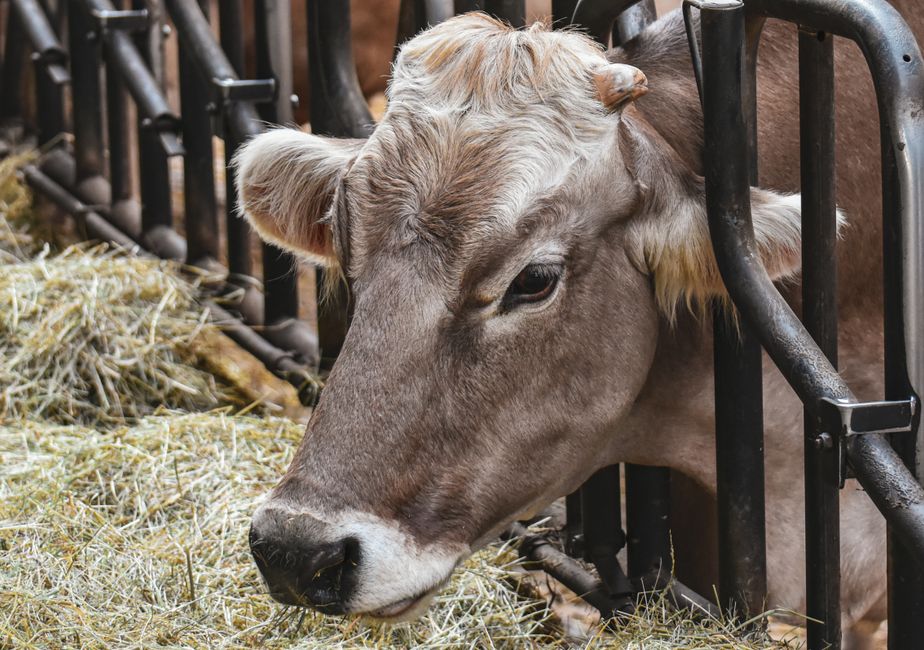
This difference means that poor-quality or wetter hay increases the volume you must feed, impacting storage and transportation logistics.
Annual Hay Consumption per Cow
Once you know the daily hay intake, multiply by the number of feeding days per year. Most cattle are fed hay during winter months or dry seasons, which typically range from 180 to 240 days, depending on climate and pasture availability.
Assuming 200 days of hay feeding annually:
- 28.2 pounds hay/day × 200 days = 5,640 pounds hay per year per cow
This means a single 1,200-pound cow will consume about 2.82 tons (5,640 ÷ 2,000) of hay in a 200-day feeding period.
In colder climates, feeding periods can extend to 240 days or more, especially in northern states or Canada, increasing annual intake proportionally. For example, at 240 days:
28.2 × 240 = 6,768 pounds (3.38 tons) per cow
For more on this, see our related guide: Silage vs Hay: Which Is Better for Dairy Cows?.
Conversely, in mild climates with access to year-round grazing, hay feeding might be limited to only 150 days, reducing annual consumption.
How Many Bales of Hay Does One Cow Need per Year?
Hay bales come in various sizes and weights, which dramatically affect the number of bales required. The most common types are:
- Small square bales: Typically 40 to 60 pounds each
- Large square bales: Generally 800 to 1,200 pounds each
- Round bales: Usually 1,000 to 1,500 pounds each
Using the 5,640 pounds annual hay requirement, here’s how many bales a 1,200-pound cow would need:
| Bale Type | Average Bale Weight (lbs) | Bales Needed per Year |
|---|---|---|
| Small square bale | 50 | 5,640 ÷ 50 = 113 bales |
| Large square bale | 1,000 | 5,640 ÷ 1,000 = 5.6 bales (round up to 6) |
| Round bale | 1,200 | 5,640 ÷ 1,200 = 4.7 bales (round up to 5) |
Clearly, bale size has a big impact on storage needs, feeding logistics, and labor. For example, small square bales require considerably more handling time. A single cow needs over 100 small bales annually, meaning a 50-cow herd would need more than 5,000 small bales, which can be logistically challenging to store and distribute.
In contrast, large square and round bales offer efficiencies in transportation and storage space but may require specialized equipment such as bale spears or loaders. Round bales also typically have more exposure to weather on the edges, increasing spoilage risk if not managed properly. Additionally, round bales can lead to higher wastage if cattle are left to feed directly from them without proper feeders.
Factors That Influence Hay Consumption
Several variables can increase or decrease hay intake:
- Stage of Production: Lactating cows consume significantly more hay than dry cows. For instance, a lactating Holstein cow can consume up to 4% of its body weight in dry matter during peak milk production, while a dry cow’s intake is closer to 2%. This is due to the high energy demands of milk synthesis.
- Body Weight: Larger cows eat more hay on average. For example, a 1,400-pound cow will consume approximately 2.5 to 3 pounds more dry matter daily than a 1,000-pound cow, affecting overall feed budgeting.
- Hay Quality: Lower quality hay with less nutritional value might lead to higher consumption as cows eat more to meet energy needs. For example, cows fed mature, stemmy hay may increase intake by 10-20% compared to feeding leafy, nutrient-dense hay. However, lower quality hay can also limit intake if palatability or digestibility is poor.
- Environmental Conditions: Cold weather increases maintenance energy needs, prompting cows to eat more. For example, for every 10°F drop below the cow’s lower critical temperature (typically around 32°F for mature beef cows), energy requirements can increase by 10-15%. This translates directly into increased hay consumption during harsh winters.
- Availability of Other Feed: Access to pasture or supplements reduces hay intake. If cows can graze on winter-hardy forages or receive energy/protein supplements, hay consumption may decrease by 15-30%, depending on forage availability and quality.
- Health and Stress: Illness, parasites, or stress can reduce feed intake temporarily, while heat stress may lower consumption during summer months.
How to Use a Bale Calculator for Your Herd
To determine your total hay needs, multiply the per-cow annual hay consumption by your herd size and adjust for factors like wastage and feeding methods.
Step-by-step Bale Calculator formula:
- Estimate average cow weight (lbs) in your herd.
- Determine daily dry matter intake (2% to 2.5% of body weight, adjusting for production stage).
- Convert DM intake to as-fed hay weight using hay dry matter percentage.
- Multiply daily hay intake by the number of feeding days per year.
- Multiply by herd size.
- Divide by average bale weight to find total bales needed.
- Add 5-10% extra for losses due to weather, spillage, and spoilage.
Example for a 50-cow herd:
- Average cow weight: 1,200 lbs
- Daily DM intake: 2% × 1,200 = 24 lbs
- Hay DM: 85% (as-fed intake = 24 ÷ 0.85 = 28.2 lbs)
- Feeding days: 200
- Total hay per cow: 28.2 × 200 = 5,640 lbs (2.82 tons)
- Herd total: 5,640 × 50 = 282,000 lbs (141 tons)
- Using large square bales (1,000 lbs): 282,000 ÷ 1,000 = 282 bales
- Add 10% for loss: 282 × 1.10 = 310 bales
This calculation assumes uniform cow weights and production status. If your herd includes multiple weight classes or production stages, perform separate calculations and sum totals for greater accuracy. Also, consider adjusting days fed based on your local climate and pasture conditions.
Feeding methods influence wastage rates significantly—feeding hay in covered bunks or rings can reduce waste to 5-10%, while feeding loose hay on the ground may increase waste to 15-20% or more.
Tips to Optimize Hay Usage and Reduce Waste
- Store hay properly: Keep bales under cover and off the ground to prevent spoilage. Moisture infiltration can degrade hay quality rapidly, leading to mold growth and nutrient loss. Using pallets or gravel pads and tarps or barns can extend hay shelf life by months.
- Use efficient feeders: Hay rings, cone feeders, and bale feeders reduce trampling and wastage by containing the hay and limiting access by non-target animals. Studies show that using feeders can decrease hay waste by up to 50% compared to ground feeding.
- Feed balanced rations: Supplement hay with minerals, protein blocks, or energy-dense feeds (like grains or silage) to lower total hay requirements. Balanced nutrition improves feed efficiency and animal health, potentially reducing overall hay intake by 10-15%.
- Monitor body condition: Adjust feeding based on cow health and production status. Regular body condition scoring helps identify under- or over-feeding early, allowing timely ration adjustments.
- Test hay quality: Regularly analyze nutrient content (protein, fiber, energy) to fine-tune feeding rates. Knowing hay quality prevents over- or under-feeding and informs supplement needs.
- Plan feeding schedules: Distribute hay in smaller, more frequent feedings to minimize waste and maintain feed freshness.
- Manage pasture effectively: Maximize grazing opportunities to reduce hay dependence. Rotational grazing and overseeding can extend pasture availability.
Summary Table: Estimated Annual Hay Consumption for Different Cow Weights
| Cow Weight (lbs) | Daily Hay Intake (as-fed lbs) | Feeding Days | Annual Hay per Cow (lbs) | Approx. Small Bales (50 lbs each) | Approx. Large Bales (1,000 lbs each) |
|---|---|---|---|---|---|
| 1,000 | 23.5 | 200 | 4,700 | 94 | 5 |
| 1,200 | 28.2 | 200 | 5,640 | 113 | 6 |
| 1,400 | 32.9 | 200 | 6,580 | 132 | 7 |
Note that these values assume 85% dry matter hay and 2% intake for dry cows. Lactating or growing animals may require 10-25% more feed, and feeding days can vary by region.
Final Thoughts
Knowing exactly how much hay your cows require per year is key to running an efficient, cost-conscious operation. Using the bale calculator method outlined here will help you avoid both over-purchasing and shortages. Tailoring your estimates to your herd’s specific weights, production stages, and feeding days will increase accuracy.
Ultimately, combining good hay management practices with precise calculations will boost herd health and farm profitability. Keeping detailed records of feed usage and herd performance over multiple seasons allows continuous refinement of your feeding program, ensuring your operation remains resilient amid changing feed costs and weather patterns.
Beyond just quantity, focusing on hay quality, storage, and feeding efficiency can save thousands of dollars annually and improve animal well-being. Whether you are a small-scale producer or managing a large commercial herd, investing time in understanding hay consumption pays dividends in operational success.