
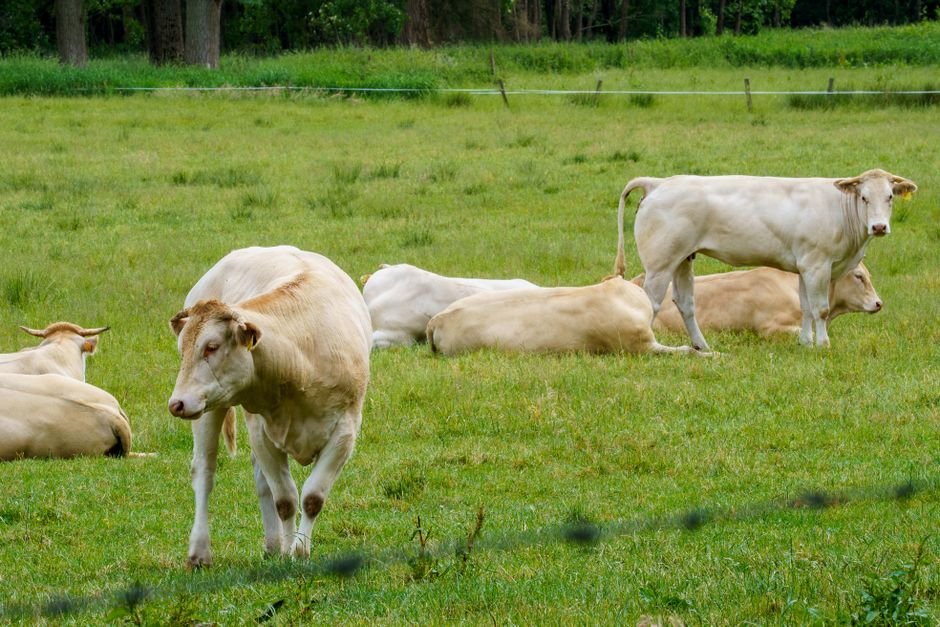
How to Tell When a Cow Is in Heat: The 7 Most Reliable Signs
A cow in heat, or estrus, exhibits distinct behavioral and physical changes that signal she is fertile and ready to conceive. The most reliable indicators include increased restlessness, mounting other cows, clear mucus discharge from the vulva, and swelling of the vulva. Accurately detecting these signs within the 12 to 18-hour estrus window allows farmers to optimize artificial insemination timing or natural breeding success. Understanding these signals is a fundamental skill in dairy and beef cattle management, as successful reproduction directly affects herd productivity, milk production, and profitability.
Understanding Cow Estrus Cycles: Why Timing Matters
Estrus, the period when a cow is receptive to breeding, typically lasts between 12 and 18 hours every 21 days in a non-pregnant Holstein or Angus cow. This cycle can vary slightly depending on breed, nutrition, age, and environmental conditions. For example, Bos indicus breeds such as Brahman often have longer and less intense estrus periods, making detection more challenging. The hormonal changes during this period cause distinct behaviors and physical signs, mainly triggered by a surge in luteinizing hormone (LH) that induces ovulation.
Missing this narrow window can delay pregnancy, extending the calving interval and impacting herd productivity significantly. A prolonged calving interval means fewer calves born per year and reduced milk output, which can lead to financial losses. According to the University of Wisconsin-Madison’s Dairy Herd Management guidelines, effective heat detection is crucial for maintaining optimal reproductive efficiency, with a recommended heat detection rate of at least 70% to 80% to sustain profitability.
Moreover, the timing of artificial insemination (AI) relative to estrus onset is critical. Research shows that insemination performed approximately 12 hours after the first signs of heat yields the highest conception rates, as this aligns with ovulation occurring shortly thereafter. Therefore, accurate heat detection not only helps in natural breeding but also maximizes the success of AI programs, which are increasingly used to enhance genetics in commercial herds.
1. Behavioral Changes: Restlessness and Increased Activity
One of the earliest and most obvious signs of heat is an increase in activity. Heat cows move more, frequently walking and changing locations in the pen or pasture. This heightened restlessness is caused by rising estrogen levels that stimulate the central nervous system. According to research published by the Council on Dairy Cattle Breeding (CDCB), cows in estrus show a 30% to 50% increase in movement measured by pedometers or activity monitors like SCR Heatime or Allflex SenseHub.
In practical terms, this means a cow that usually spends much of her time lying down may stand more often, walk longer distances, or repeatedly change positions. Some farmers notice that cows in heat pace back and forth along fences or gates. Vocalizations, such as frequent bellowing, are also common as cows call out to potential mates. Increased social interactions, including nudging or sniffing other cows, often accompany these changes.
Interestingly, restlessness tends to peak during the late afternoon or early evening, which can guide farmers on when to conduct heat checks. Some studies suggest that heat behaviors may be more pronounced during certain times of day, influenced by environmental factors such as temperature and lighting. Because of this variability, continuous monitoring using automated activity trackers has become increasingly popular, especially in larger herds where individual observation is impractical.
2. Mounting and Standing to Be Mounted
Mounting behavior is a classic heat sign. Cows in heat often mount other cows or allow themselves to be mounted. The “standing to be mounted” behavior is the most definitive sign: if a cow stands still while another cow mounts her, she is likely in peak estrus. This behavior is so critical that many dairy producers use continuous video surveillance or leg-mounted pressure sensors to catch this sign, which is present in about 85-90% of estrous cycles.
Mounting activity usually escalates as the heat progresses, with some cows mounting multiple herd mates. This social behavior is absent during most other times in the cycle, making it a reliable indicator. The intensity and frequency of mounting can also vary with factors such as parity (number of calvings) and health status. For instance, first-calf heifers may show less obvious mounting behavior compared to mature cows.
For more on this, see our related guide: Proven Tips to Reduce Weaning Stress in Calves During Hot Weather.
Leg-mounted pressure sensors, such as those integrated into pedometers, detect the characteristic pressure changes when a cow is mounted. This technology provides objective data and reduces human error in heat detection. Additionally, video monitoring systems equipped with artificial intelligence can analyze cow movements and alert farmers in real time, improving the timing accuracy of inseminations.
3. Physical Signs: Swollen, Reddened Vulva
Physical changes in the vulva are also telling. During heat, the vulva appears visibly swollen and more reddish due to increased blood flow and estrogen-induced tissue engorgement. The swelling can sometimes cause the vulva lips to part slightly, and the tissue may feel warm or turgid upon palpation. According to the National Dairy FARM Program, examining the vulva twice a day can help catch these subtle changes before the behavioral signs peak.
These vulvar changes can be subtle in some cows, especially those with thick hair coats or under poor lighting, so regular inspection is essential. Some producers use a grading scale to assess vulva swelling, ranging from none to severe, to standardize observations. In addition, vulvar changes may occasionally be accompanied by mild redness or irritation, but any excessive discharge with foul odor could indicate infection rather than estrus.
Though physical signs alone are less reliable than behavioral ones, combining vulva observations with other indicators enhances detection accuracy. This is particularly important in beef cattle operations where close observation may be less frequent, and individual cow behavior is harder to monitor.
4. Clear Mucus Discharge
Cows in heat often have a clear, stringy mucus discharge from the vulva. This mucus is produced by the cervix and serves as a lubricant during mating. The discharge typically appears about 12 to 24 hours before ovulation and is a key sign used by many farmers employing natural breeding. The presence of mucus can be checked during routine health inspections or when cows are brought into the handling area.
The mucus is usually translucent to slightly cloudy, sticky, and elastic. It may appear as a thin trail or stringy strands hanging from the vulva. This cervical mucus is estrogen-induced and facilitates sperm transport within the reproductive tract. Some herds experience a greater frequency of clear mucus during estrus, while others may show minimal or brief discharge, depending on individual cow variation and environmental factors.
Farmers often use artificial insemination in headlocks or chutes, which provides an excellent opportunity to check for mucus presence without stressing the animals. However, it’s important to distinguish this natural discharge from pathological discharges caused by infections such as metritis or vaginitis, which may be yellowish, green, or foul-smelling.
5. Changes in Milk Production and Feed Intake
Some cows show a temporary drop in milk yield or a change in appetite during heat. While this sign is less obvious and varies by individual, monitoring milk meters or feed bunk activity can offer supporting data. The University of Minnesota Extension notes that such changes alone are unreliable but can supplement other heat detection methods.

If you’re also looking into this, our article on Can Cows Eat Watermelon? How to Safely Feed Cull Fruit to Your Herd covers it in more detail.
Specifically, a mild reduction in feed intake may occur due to the hormonal fluctuations and restlessness associated with estrus. This can lead to a short-term dip in milk production lasting 1 to 2 days. In large commercial dairies equipped with automated feeding and milking systems, data analytics can flag cows with atypical feed or milk patterns, prompting closer behavioral observation.
However, it’s important to differentiate these changes from those caused by illness, stress, or environmental heat stress that can also affect feed intake and milk yield. Therefore, this sign should be interpreted in context with other estrus indicators to avoid false positives.
6. Using Technology: Activity Monitors and Tail Paint
Modern heat detection is often enhanced by technology. Activity monitors such as pedometers, accelerometers, or GPS collars detect increased movement associated with estrus. Products like the CowManager SensOor or Heatime Pro can send alerts to farmers’ smartphones when a cow enters heat. These devices not only increase detection sensitivity but also help track individual cow health and well-being.
Studies show that farms using activity monitors can improve heat detection rates by up to 15-20% compared to visual observation alone. They also reduce the labor intensity of heat checks and provide precise timing for insemination. Some systems integrate with herd management software to record estrus events and breeding dates automatically.
Alternatively, tail paint or chalk is applied to cows’ tails. When a cow is mounted by others, the paint rubs off, signaling heat. This is a low-cost, low-tech method widely used in beef and dairy herds. However, it relies on careful observation, ideally twice daily. Tail paint is often combined with a heat detection patch that changes color or flakes off when subjected to mounting pressure, enhancing reliability.
While tail paint is simple and affordable, it requires consistent application and timely observation to be effective. It is less practical in large herds or extensive grazing systems where daily visual checks are challenging.
7. Hormonal Tests and Ultrasonography
For precise detection, veterinarians or breeding specialists use hormonal assays or ultrasonography. Blood or milk progesterone tests can determine if a cow is in heat or pregnant. Progesterone levels are typically low during estrus and high during the luteal phase. On-farm progesterone test kits can provide results within hours, assisting in timed AI programs or diagnosing silent heats.
This ties in closely with Unpacking the Disadvantages of Cow Behavior: Challenges for Farmers and the Environment, worth a look if you want to go deeper.
Ultrasonography allows visualization of ovarian follicles and the corpus luteum to confirm estrus phases. Experienced operators can identify dominant follicles ready to ovulate and assess uterine tone, which increases during estrus. This technology is invaluable in cases of irregular cycles, repeat breeders, or cows with reproductive disorders.
In addition to confirming estrus, ultrasound can help detect early pregnancy, reducing the interval between calving and rebreeding. Advanced reproductive management programs often integrate ultrasonography with hormonal synchronization protocols to optimize herd fertility.
Summary Table: Key Signs of a Cow in Heat
| Sign | Description | Detection Method | Reliability |
|---|---|---|---|
| Increased Activity | More walking, restlessness, vocalizations | Visual observation, activity monitors | High |
| Mounting Behavior | Mounting and standing to be mounted | Visual, video surveillance, pressure sensors | Very High |
| Swollen Vulva | Red, enlarged vulva with possible warmth | Physical inspection | Medium |
| Clear Mucus Discharge | Stringy, translucent vaginal mucus | Physical inspection during handling | High |
| Milk/Feed Changes | Drop in milk or appetite changes | Milk meters, feed monitoring systems | Low |
| Tail Paint | Paint rubbed off during mounting | Visual daily observation | Medium to High |
| Hormonal Testing | Progesterone levels detect estrus | Lab tests or on-farm kits | Very High |
Frequently Asked Questions
How long does a cow stay in heat?
A cow typically stays in heat for about 12 to 18 hours. This short window is when she is most fertile and receptive to breeding. However, the duration can vary slightly due to factors like breed, age, nutrition, and environmental stressors. Heat signs usually begin 6 to 12 hours before ovulation, with the peak fertility occurring near the end of the heat period.
Can a cow show heat signs at night?
Yes, many cows exhibit heat signs during nighttime. Studies have found that mounting behavior and activity peaks often occur during dusk and nighttime hours, possibly because of cooler temperatures or reduced disturbances. This can make heat detection challenging for farmers relying solely on daytime observations, which is why 24-hour monitoring or activity sensors are valuable tools for farmers aiming to catch these less obvious heat periods.
What is the most reliable sign that a cow is in heat?
The most reliable sign is the “standing to be mounted” behavior, seen in roughly 85% to 90% of cows during estrus, indicating peak fertility. This behavior directly reflects the cow’s receptivity to mating and is less likely to be confused with other activities. When this sign is observed, it provides the best opportunity for timed insemination with high conception rates.
How can technology improve heat detection?
Activity monitors, pressure sensors, and tail paint help detect subtle or missed heat signs by continuously tracking movement or mounting behavior, improving breeding success rates. These technologies reduce labor intensity, increase detection accuracy, and provide real-time alerts, enabling timely insemination. Integration of sensor data with herd management software also allows for better record-keeping, fertility tracking, and decision-making.
What should I do if I miss the heat period?
If heat is missed, wait for the next cycle, usually about 21 days later. Rechecking for heat signs regularly is essential to avoid prolonged intervals between breedings. Alternatively, consult a veterinarian about hormonal treatments such as prostaglandins or GnRH-based protocols that can synchronize estrus, allowing for timed artificial insemination. These synchronization protocols are especially useful in large herds to improve reproductive efficiency and reduce the reliance on heat detection alone.