
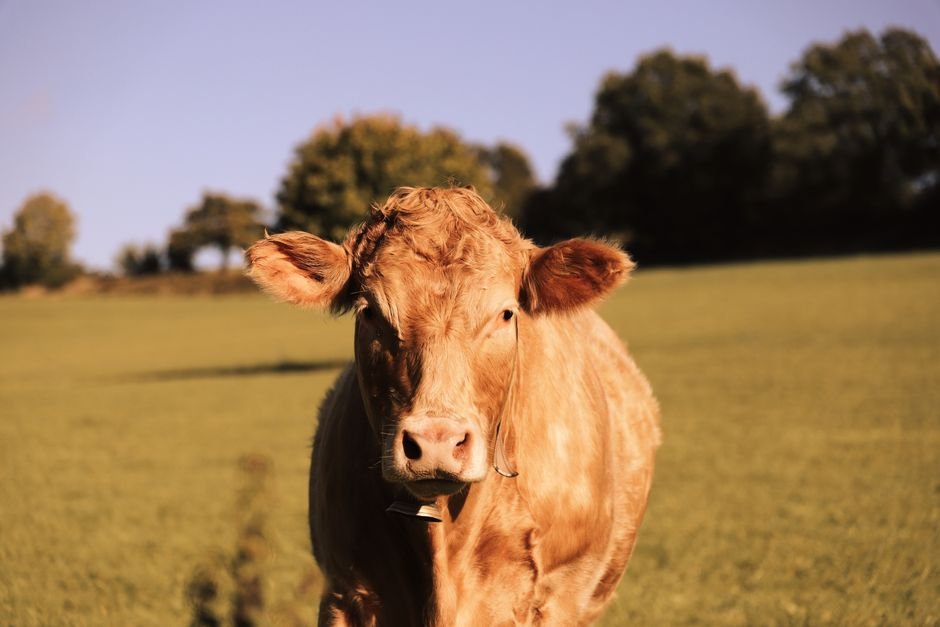
What most people don’t know about cows
Cows are far more complex than they look. They have four stomach compartments, a wide field of vision, strong social memory, and a chewing pattern called cud-chewing that helps them digest grass efficiently. Some breeds are built for milk, others for beef, and their behavior changes with herd structure, handling, and even stress. If you only know cows as pasture animals, the facts below will change how you see them.
1. Cows don’t have four stomachs exactly — they have one stomach with four compartments
People often say cows have “four stomachs,” but that’s not quite right. A cow has one stomach divided into four compartments: the rumen, reticulum, omasum, and abomasum. The rumen is the largest and works like a fermentation vat, housing microbes that break down tough plant fiber. This is why cows can turn grass into energy in a way humans cannot. The system is so efficient that cows can digest rough forage, crop residues, and silage that many other animals would struggle to use.
2. A cow’s eyes give it a nearly panoramic view
Cows have eyes on the sides of their heads, which gives them a very wide field of view. In practical terms, they can see almost all around themselves without turning their heads, though they do have blind spots directly behind them and in front of their noses. That side placement helps them detect predators or movement in open pasture. Their vision is useful for survival, but it also means sudden gestures, shadows, and fast approaches can startle them more easily than people expect.
3. Cows are color blind in the way many people imagine
Cows do not see the world in the same bright, full-color way humans do. Research on bovine vision shows they are dichromatic, meaning they perceive fewer color ranges than people with typical trichromatic vision. They respond well to contrast, movement, and light changes, which is one reason a dark doorway, a flapping tarp, or a sharp shadow can make them hesitate. This matters in handling facilities: smooth lighting, visible exits, and low-stress movement are more effective than loud pushing or unpredictable motion.
4. They remember places, routines, and other cows
Cows are not short on memory. They can remember feeding locations, milking routines, and social relationships within the herd. Studies have shown cattle can recognize familiar individuals and retain learned tasks over time. That’s one reason consistent handling matters so much on farms. If a cow has had a bad experience in a chute or parlor, she may react to that place later. Cows also form stable social groups, and disruptions in herd order can raise stress and change behavior.
5. Chewing cud is a built-in recycling system
When a cow seems to be “doing nothing,” she may actually be chewing cud. After partially fermenting feed in the rumen, cows regurgitate it, chew it again, and swallow it a second time. This process increases particle breakdown and helps microbes do their work. A healthy cow can spend several hours a day ruminating. If you see a cow lying down and rhythmically chewing, that’s usually a good sign that digestion is working as it should.
For more on this, see our related guide: Can Cows Eat Watermelon? How to Safely Feed Cull Fruit to Your Herd.
6. A dairy cow can produce far more milk than people realize
Milk output varies by breed, genetics, diet, lactation stage, and management. High-producing Holstein cows can yield well over 20,000 pounds of milk in a 305-day lactation under modern dairy conditions, and top animals can exceed that. That number surprises many people because it’s far beyond what a calf would need. The reason is selective breeding and nutrition management designed for commercial dairy production. Jerseys generally produce less volume than Holsteins but often have higher butterfat and protein percentages.
| Breed | Common use | Notable trait |
|---|---|---|
| Holstein | Dairy | Very high milk volume |
| Jersey | Dairy | Rich milk with higher butterfat |
| Angus | Beef | Known for marbling and carcass quality |
| Hereford | Beef | Hardy, adaptable, efficient on pasture |
7. Cows have their own social hierarchy
Within a herd, cows establish a pecking order. Dominant animals may claim preferred feeding spots, while younger or lower-ranking cows yield space. This social structure can affect how much food an animal gets, where she rests, and how often she interacts with others. Farmers pay attention to this because overcrowding or mixing unfamiliar groups can increase pushing, stress, and injuries. In well-managed herds, stable group composition often means calmer cattle and smoother daily routines.
8. They communicate with more than just mooing
Cows vocalize, but mooing is only one part of their communication system. They also use body posture, ear position, tail movement, and spacing to signal comfort or tension. Calves and cows can recognize each other’s voices, and individual vocal patterns can carry different meanings. A low, steady call may sound very different from a distressed or searching one. For people working with cattle, learning to read these signals is often more useful than focusing on sound alone.
9. Cows can climb, but they are not built for steep terrain
Cattle are surprisingly capable on uneven ground, but their body structure is better suited to stable footing than steep climbing. Their hooves are designed for weight distribution and traction on pasture, mud, and packed lanes, not for scrambling like goats. That’s why ranchers and farmers think carefully about slopes, drainage, and footing in yards and handling areas. Good surface design helps prevent slips, sore feet, and stress, especially in dairy barns where cows move several times a day.
10. Their sense of smell is stronger than most people expect
Cows rely heavily on scent to identify feed, detect other animals, and assess their environment. Their sense of smell helps them recognize familiar calves, investigate new objects, and respond to changes in feed quality. This is one reason cattle may hesitate around new equipment or strange odors. Strong disinfectants, unfamiliar bedding, or abrupt changes in the environment can affect how they move and behave. Smell is a bigger part of bovine life than many visitors to a farm realize.
11. Cows can be surprisingly sensitive to stress
Stress changes how cattle eat, move, and produce milk. Loud noise, rough handling, heat, dehydration, and crowded conditions can all affect performance. In dairy cattle especially, stress may reduce milk letdown and make milking more difficult. Low-stress handling methods—such as calm movement, predictable routines, and proper facility design—are standard in modern cattle management for good reason. A cow that feels safe is usually easier to work with and more productive over time.

If you’re also looking into this, our article on Proven Tips to Reduce Weaning Stress in Calves During Hot Weather covers it in more detail.
12. Not all cows are the same size, color, or purpose
“Cow” is often used as a general word, but cattle include many breeds with very different traits. Some are bred for milk, some for beef, and some for traits like heat tolerance, fertility, or disease resistance. A mature Jersey can look very different from a mature Charolais or Angus. Even within the same breed, size and temperament can vary widely. That diversity is one reason cattle farming looks different from one region to another.
13. Calves can stand and nurse very quickly after birth
Newborn calves are more capable than many people expect. In normal circumstances, they should stand within a short time after birth and begin nursing soon after. That early movement is important because colostrum—the first milk—contains antibodies that help protect the calf. Farmers monitor this period closely since getting enough colostrum early can make a major difference in calf health. The first hours of life are a critical window in cattle care.
14. Cattle helped shape human agriculture for thousands of years
Cows and other cattle have been central to farming for a very long time. They provided milk, meat, manure for fertilizer, and in some regions draft power for plowing and transport. Their role in agriculture is one reason cattle appear in history, religion, and rural economies around the world. Modern farms may use tractors instead of oxen, but cattle still remain a major part of food production and land management in many countries.
15. A cow’s daily life is more structured than it looks
A healthy cow’s day often follows a predictable rhythm: eating, ruminating, resting, walking, and socializing. Dairy cows may also follow a milking schedule that repeats at the same times every day. That routine matters because cattle do best when feeding and handling are consistent. What looks like a simple animal standing in a field is actually a creature with strong habits, a detailed digestive system, and a social life built around the herd.
Frequently Asked Questions
Do cows really have four stomachs?
Not exactly. Cows have one stomach with four compartments: the rumen, reticulum, omasum, and abomasum. People shorten that to “four stomachs,” but the more accurate description is a four-compartment stomach.
This ties in closely with What Are the Benefits of Beginner Basics in Cattle Farming?, worth a look if you want to go deeper.
Why do cows chew cud?
Cows chew cud to reprocess partially digested feed. They bring it back up, chew it again, and swallow it again so microbes in the rumen can break down plant fiber more efficiently. It’s a key part of how ruminants digest grass.
Are cows intelligent?
Yes, in ways that matter for herd animals. Cows can recognize familiar individuals, remember places and routines, and learn from experience. They are not problem-solvers in the same way as dogs or primates, but they are far from simple.
What is the most surprising fact about cows?
For many people, the most surprising fact is how complex their digestion is. A cow can turn coarse grass into energy and milk because of the microbes in its rumen and the repeated cud-chewing process. That system is one of the most efficient in the animal world.
This article is for general information and isn’t a substitute for advice from a qualified veterinarian or livestock specialist.