
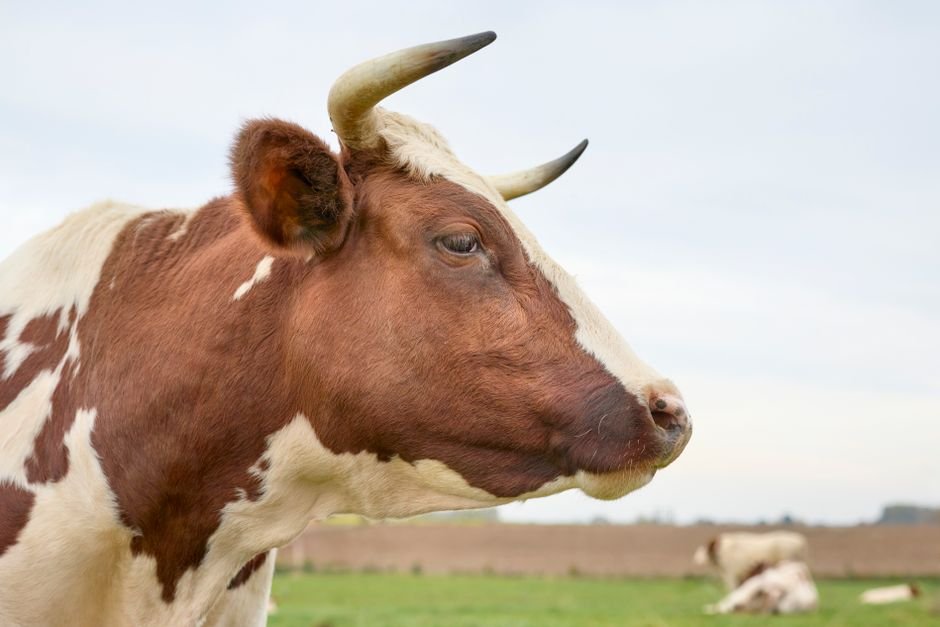
What is the anatomy of a cow’s head?
A cow’s head is built for grazing, smelling, seeing predators, and chewing tough forage for long periods. It includes the skull, jaw, teeth, tongue, eyes, ears, nostrils, muzzle, and several glands and nerves that support feeding and sensing the environment. The most distinctive features are the broad muzzle, side-set eyes with wide peripheral vision, and a lower jaw designed for side-to-side grinding rather than the up-and-down bite of humans.
Understanding the anatomy of a cow’s head helps explain how cattle eat, why they behave the way they do, and what signs of illness or injury to watch for. It also matters in practical settings such as handling, dehorning, dental checks, and diagnosing infections around the eyes, ears, or sinuses.
The main structures in a cow’s head
The cow’s head is a compact but highly specialized structure. The skull protects the brain and supports the facial bones, while the upper and lower jaws anchor the teeth and chewing muscles. The muzzle contains large nasal passages and the nostrils, which are important for smell and airflow. Around the face are the eyes, eyelids, tear ducts, ears, tongue, lips, and salivary structures that work together during grazing and rumination.
Compared with many other mammals, cattle have a head that is adapted more for continuous feeding than for tearing meat or grasping objects. The jaw shape, tooth arrangement, and muzzle width all reflect that herbivorous lifestyle. Horns, when present, are also attached to the skull and are part of the head structure in horned breeds, though many dairy and beef cattle today are polled or dehorned for management reasons.
Skull and facial bones
The cow skull is made up of several bones that protect the brain and form the face, including the frontal, parietal, nasal, maxillary, and mandibular bones. The frontal bone is especially noticeable because it forms the forehead area and, in horned cattle, supports the horn cores. The skull is broad and strong because it must withstand the forces of chewing fibrous feed and, in some animals, horn-related impact during social interactions.
The maxilla forms the upper jaw and holds the upper dental pad, while the mandible forms the movable lower jaw. Cattle do not have upper front incisors; instead, the upper front of the mouth has a tough dental pad that presses against the lower incisors when the animal crops grass. The skull also houses the eye sockets, nasal cavity, and openings for important nerves and blood vessels. In an adult cow, these bony landmarks are often easier to feel than to see because of the thick skin and muscle covering the head.
Teeth and chewing mechanics
Cattle have a dental pattern that is very different from humans. Adult cows typically have 32 teeth: no upper incisors or upper canine teeth, eight lower incisors, and a dental pad on the top jaw instead of front teeth. Behind the front teeth are premolars and molars, which do the real grinding work. Calves have deciduous teeth first, and permanent teeth replace them as they grow.
For more on this, see our related guide: Proven Tips to Reduce Weaning Stress in Calves During Hot Weather.
The lower jaw moves in a circular, side-to-side motion during chewing, which helps break down coarse forage. This is why cattle spend so much time ruminating. They swallow plant material quickly, then regurgitate cud later and chew it more thoroughly. The tooth surfaces are ridged and suited to shredding grass, hay, and silage rather than cutting soft foods. As cows age, wear patterns on the incisors can help estimate age, although this is only an approximate guide and is influenced by diet and management.
Eyes, vision, and facial expression
A cow’s eyes sit on the sides of the head, giving it a broad field of view that helps detect movement from many directions. This is useful for prey animals, because it allows cattle to spot threats without constantly turning their heads. The tradeoff is less binocular vision straight ahead than humans have, so depth perception is different. Cows can still judge distance well enough for walking, grazing, and avoiding obstacles, but they may react strongly to sudden contrast, shadows, or quick movement.

The eyelids, eyelashes, and tear ducts help protect the eyes from dust and debris. Healthy eyes should be bright, moist, and free of heavy discharge. Because the cow’s eyes are prominent, eye injuries and infections can become obvious fairly quickly. Pinkeye, commonly associated with infectious bovine keratoconjunctivitis, is one of the better-known cattle eye problems and can affect comfort, appetite, and weight gain if not managed promptly.
Ears, smell, and the muzzle
The cow’s ears are mobile and sensitive to sound, but they also serve as a visible sign of alertness and health. Ear position can change with attention, relaxation, irritation, or illness. Cattle hear a wide range of sounds and are often sensitive to sudden noise, which is why calm handling matters in the barn, chute, or pasture. Ear tags are commonly used for identification, especially in herd management and traceability systems.
The muzzle is the broad, moist area around the nostrils and mouth. It is one of the most recognizable features of a cow’s head. The nostrils open into a large nasal cavity that helps with smell, breathing, and warming incoming air. Cattle rely heavily on scent to recognize feed, other animals, and environmental changes. A dry, cracked, or unusually hot muzzle can be a clue that something is wrong, although muzzle moisture alone is not a complete health indicator. The lips and tongue do the final work of gathering feed before it is swallowed.
Tongue, lips, and salivary function
The cow’s tongue is long, muscular, and highly mobile. It helps wrap around grass and pull it into the mouth, especially when grazing short forage. The tongue works with the lips and dental pad to crop plants efficiently. Unlike animals that use front teeth to bite off food, cattle often use their tongue and lower incisors together to gather forage in a sweeping motion.
If you’re also looking into this, our article on Can Cows Eat Watermelon? How to Safely Feed Cull Fruit to Your Herd covers it in more detail.
Saliva is a major part of head anatomy in functional terms because it lubricates feed and buffers the rumen after swallowing. Cattle produce large amounts of saliva during eating and chewing cud, which supports fermentation in the rumen. This is one reason roughage works so well for cattle: their head and mouth are built not just to take in feed, but to process it for repeated chewing and digestion. Any injury to the tongue, mouth, or jaw can reduce feed intake quickly, so oral health directly affects body condition and milk or meat performance.
Horns, poll, and breed differences
Not every cow has horns, and horn presence depends on breed, genetics, and management. Horns are bony projections from the frontal bone, covered by a keratin sheath in young animals. They are not the same as antlers, which are shed and regrown by deer. In cattle, horns are permanent unless removed through dehorning or disbudding. Polled cattle are naturally hornless.
The poll is the area at the top of the head between and behind the ears. It is an important landmark when handling cattle, fitting halters, or evaluating head posture. Horned breeds such as Texas Longhorns, Ankole-Watusi, and Highland cattle can have striking head shapes, but the basic anatomy remains the same. When horns are present, they must be considered during handling because they change the risk of injury in chute work, sorting, and transport.

| Head feature | Main function | Practical note |
|---|---|---|
| Skull | Protects the brain and supports facial structures | Strong bony framework, especially around the forehead and jaw |
| Dental pad and incisors | Crop forage and hold feed in place | No upper front incisors in adult cattle |
| Molars and premolars | Grind feed for rumination | Wear patterns can help estimate age |
| Eyes | Wide-angle vision and movement detection | Prone to irritation, injury, and pinkeye |
| Ears | Hearing and communication | Often used for ear tags and identification |
| Muzzle and nostrils | Smell and airflow | Useful health clue when checking moisture, discharge, or swelling |
| Tongue and lips | Gather and move forage | Important for grazing and feed intake |
| Horns or poll | Breed-specific head structure and handling consideration | Horned cattle require extra caution in close contact |
How the head supports feeding and rumination
The anatomy of a cow’s head is closely tied to the digestive system. A cow does not simply bite, swallow, and digest the way many animals do. Instead, the head is part of a feeding system that includes grazing, swallowing, regurgitating cud, and re-chewing. The lips and tongue gather feed, the teeth grind it, and the jaws move in a pattern that supports fiber breakdown. This design is especially effective for grasses and other rough forage.
Because cattle are ruminants, the head and mouth must handle feed many times before it is fully processed. That is why oral problems can have such a noticeable effect on performance. A sore mouth, damaged tooth, or jaw injury can reduce intake, slow rumination, and lead to weight loss or lower milk production. When evaluating a cow’s head, farmers often look at symmetry, chewing behavior, drooling, nasal discharge, eye clarity, and ear posture as part of a broader health check.
This ties in closely with Beginner Basics for Cattle: A Practical Guide to Starting Your Herd, worth a look if you want to go deeper.
Frequently Asked Questions
Do cows have upper front teeth?
No. Adult cattle do not have upper front incisors. Instead, they have a hard dental pad on the top jaw that works against the lower incisors to crop grass and other forage.
How many teeth does a cow have?
Adult cows typically have 32 teeth. That includes eight lower incisors, premolars, and molars for grinding, but no upper incisors or upper canine teeth in the front of the mouth.
Why are a cow’s eyes on the sides of its head?
Side-set eyes give cows a wide field of vision, which helps them detect movement and possible danger from many directions. This is a useful adaptation for a prey animal living in open spaces.
What is the muzzle on a cow?
The muzzle is the broad area around the nose and mouth, including the nostrils and upper lip region. It helps with smelling, breathing, and gathering feed during grazing.
Are horns part of the cow’s skull?
Yes. In horned cattle, the horns grow from the frontal bone of the skull. Polled cattle are naturally hornless, while dehorned animals have had the horn growth removed early in life or later by management.