
Which livestock makes the most sense on a small farm?
If you want the shortest answer: goats and pigs are usually the easiest entry points for a small farm with limited acreage, while sheep and cattle make more sense when you already have good pasture, stronger fencing, and a plan for handling bigger animals. The best choice depends less on “which animal is best” and more on your land, labor, fencing, and whether you want meat, brush control, milk, or breeding stock.
A small farm can support any of these species, but each one asks for something different. Cattle reward you with scale and simpler daily routines, sheep offer efficient grazing, goats excel at brush control, and pigs turn feed into meat quickly but need strong management. The right fit is the one you can keep healthy, contained, and profitable without burning out.
Quick comparison: cattle vs sheep vs goats vs pigs
| Species | Best for | Space needs | Fencing | Main challenge |
|---|---|---|---|---|
| Cattle | Beef, grazing, low daily handling | More pasture per head | Very strong perimeter fencing | Land cost and winter feed |
| Sheep | Grazing, meat, wool, smaller frames | Moderate pasture use | Secure woven wire or electric | Predator pressure and parasite control |
| Goats | Brush control, meat, milk, small acreage | Lower than cattle, but not “easy” | Excellent fencing required | Escapes and browsing damage |
| Pigs | Meat, quick turnover, land clearing | Small areas, rotated often | Strong electric or hog panels | Rooting, mud, and feed dependence |
Cattle: best if you have pasture and patience
Cattle are usually the simplest “big livestock” to manage day to day, but they are the hardest on small budgets and small fences. A cow-calf pair or a few feeder cattle need enough forage to stay in condition, and once pasture quality drops, hay bills rise fast. Beef cattle also need handling facilities that are safe for both people and animals, including a solid corral, chute, and headgate if you plan to vaccinate, deworm, or sort cattle yourself.
For a small farm, cattle make the most sense if you already own or can lease decent pasture and want a lower-drama animal than goats. Popular beef breeds for small farms include Angus, Hereford, and low-maintenance crosses. If you want dairy instead of beef, the management level jumps significantly, because milking adds daily labor twice a day and requires more sanitation and equipment.
Sheep: efficient grazers with a few hidden costs
Sheep are often a strong fit for small acreage because they are smaller than cattle and can make good use of pasture that would be awkward for larger animals. They’re a practical choice if you want lamb, wool, or a manageable herd size. Breeds like Katahdin, Dorper, and Hair sheep crosses are popular on small farms because they shed wool and reduce shearing needs, which can simplify management.
The catch is that sheep are not “set and forget” animals. They are highly vulnerable to predators, especially coyotes and stray dogs, so fencing and guardian strategies matter. They also require parasite control that is more active than many new owners expect. Internal parasites, especially barber pole worm, can become a major issue in warm, humid regions. Small farms that rotationally graze sheep and use tools like FAMACHA scoring tend to do better than farms that leave animals on one pasture too long.
For more on this, see our related guide: 24 Best Cattle Breeds for Beginners: Calm, Hardy, and Easy to Manage.
Goats: ideal for brush, but not for weak fences
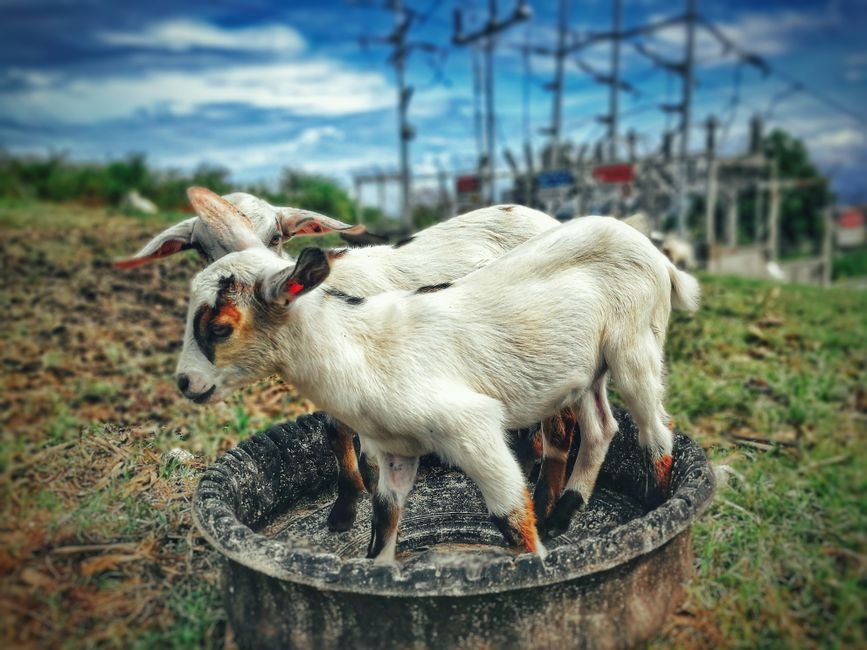
Goats are usually the most misunderstood option in the group. They are excellent if your property has brush, briars, poison ivy, or invasive plants, and they can thrive on rougher land than cattle need. Meat breeds like Boer and Kiko, along with dairy breeds like Nubian, Alpine, and Saanen, are common choices depending on your goal. If you want milk, goats can be a good small-farm option because they are smaller and less intimidating to handle than cattle.
But goats are escape artists. They climb, squeeze, test fences, and seem determined to find the weakest corner. They also prefer browsing shrubs and leaves over grass, so a pasture full of short turf is not the same as a browse-rich property. If you choose goats, invest in strong fencing from the start, not after the first escape. A woven-wire perimeter with hot wire, or well-managed electric netting for smaller setups, can save a lot of frustration.

Pigs: fastest path from feed to freezer
Pigs are often the best meat animal for a small farm that wants quick turnover and less pasture pressure. They do not require the same acreage as cattle or sheep, and they can be raised in a smaller area if you manage manure, mud, and feed well. Many small farms raise feeder pigs for pork and use portable shelters or simple pens that can be moved between paddocks.
The tradeoff is that pigs are not grazers in the same way sheep and cattle are. They are efficient at converting grain into meat, but that means feed costs matter a lot. They also root, which can be useful for clearing ground but destructive if you want a clean lawn or permanent pasture. For fencing, hog panels, woven wire with hot wire, or strong electric systems are common. If you want a short production cycle and are comfortable with a messier animal, pigs are hard to beat.
What to compare before you choose
The right species depends on five practical questions: how much land you have, how good your fencing is, whether you want meat or milk, how much daily labor you can give, and whether predators are a serious issue. A farm with 5 acres of decent pasture and strong perimeter fencing might handle a few sheep or a small beef project well. A farm with brush, woods, and limited grass may do better with goats. A farm with access to cheap grain and a small pen setup may find pigs the most efficient meat option.
If you’re also looking into this, our article on How to Choose the Right Land and Acreage for Cattle Farming covers it in more detail.
It also helps to think about infrastructure before animals. Cattle usually need the biggest handling setup. Sheep need good parasite management and predator defense. Goats need the best fence. Pigs need durable pens and a plan for manure and rooting damage. If one of those requirements sounds impossible on your place, that species is probably a poor fit for now.
Side-by-side: land, labor, and risk
| Factor | Cattle | Sheep | Goats | Pigs |
|---|---|---|---|---|
| Daily labor | Lower once set up | Moderate | Moderate to high | Moderate |
| Fence difficulty | High | Moderate to high | Very high | High |
| Pasture efficiency | Lower on small acreage | Good | Variable | Low for grazing, good for confinement |
| Predator concerns | Lower for adults | High | High | Moderate |
| Meat speed | Slowest | Moderate | Moderate | Fastest |
Which animal is cheapest to start?
Startup cost is usually driven more by fencing, water, and handling equipment than by the animal itself. Cattle are expensive because you need sturdier infrastructure and more forage. Sheep and goats can be cheaper to buy, but goats especially can become expensive if you skimp on fencing and lose animals. Pigs may look affordable at first, but feed, bedding, and pen construction add up quickly.
If you want the lowest-risk start, buy fewer animals than you think you need. One common mistake is filling the farm too quickly and then discovering that the grass, fence, or feed budget cannot support the herd. A small, well-managed group of animals usually produces better results than a bigger group that forces constant repairs and emergency feeding.

A practical recommendation by farm type
- Choose cattle if you have real pasture, strong fences, and want a lower-interaction beef system.
- Choose sheep if you want efficient grazers and are prepared to manage parasites and predators.
- Choose goats if your land is brushy, you want milk or meat, and your fencing is excellent.
- Choose pigs if your goal is meat production on a smaller footprint and you can handle feed and mud.
If you are truly undecided, many small farms do best by starting with the species that matches the land already in front of them. Grass-heavy pasture points toward sheep or cattle. Brush and mixed cover point toward goats. A compact, well-fenced area with reliable feed access points toward pigs.
Frequently Asked Questions
Are goats or sheep better for a small farm?
Sheep are usually easier to contain and often better on pasture, while goats are better for brush and rough forage. If your land is mostly grass, sheep usually fit better. If your property has woody weeds, briars, or overgrown edges, goats often make more sense.
This ties in closely with How to Homestead Planning for Cattle: A Step-by-Step Guide for Sustainable Success, worth a look if you want to go deeper.
How many acres do I need for cattle, sheep, goats, or pigs?
There is no universal acreage rule because pasture quality, rainfall, stocking density, and supplemental feed all matter. In general, cattle need the most land per animal, sheep and goats need less, and pigs can be kept on the smallest area if you are feeding them grain and rotating pens. Your local extension office can help you estimate carrying capacity for your region.
Which animal is easiest for beginners?
For many beginners, sheep are a balanced starting point if fencing and predator pressure are manageable. Cattle are simpler in temperament but harder on infrastructure. Goats are often the most frustrating for beginners because of escape behavior. Pigs are straightforward to feed and grow, but they require careful pen management and a tolerance for mess.
Can I keep more than one of these species together?
Yes, but mixed-species grazing works best when the fencing, feed, and parasite plan are organized ahead of time. Sheep and cattle often complement each other well on pasture because they graze differently. Goats can fit into a multi-species system if fencing is strong. Pigs are usually kept separately because they root and need different handling.
Which animal gives the fastest return on a small farm?
Pigs usually have the fastest production cycle because they grow quickly and reach market weight sooner than cattle, sheep, or goats. That said, “fastest” does not automatically mean “best,” because feed costs, local demand, and processing access can change the economics. The best return is the one your farm can raise consistently and sell or use well.