
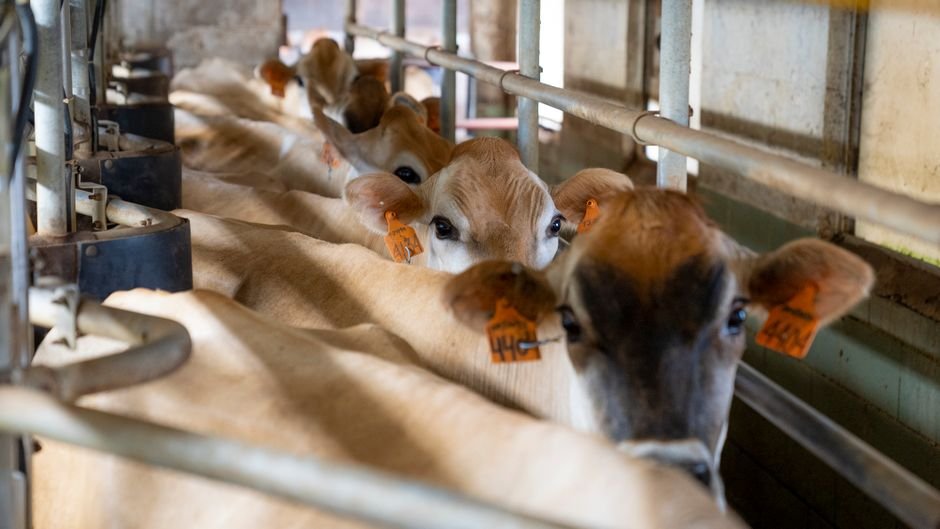
Jersey cattle are a small dairy breed known for rich milk, efficient feed use, and a generally calm temperament.
If you want a beginner-friendly dairy cow, the Jersey is one of the best-known options. Jerseys are smaller than Holsteins, usually easier to handle, and their milk is prized for high butterfat and protein, which makes it especially useful for butter, cheese, and cream. They are not the highest-volume milkers, but they often convert feed efficiently and do well on smaller farms.
What makes Jersey cattle different?
Jersey cattle originated on the Isle of Jersey in the English Channel and are now found worldwide. The American Jersey Cattle Association and Jersey Canada both recognize the breed as a distinct dairy type. Jerseys are typically fawn, light brown, or nearly black, with a refined head, dark muzzle, and large eyes. Mature cows are usually lighter than many other dairy breeds, often around 900 to 1,200 pounds, which is one reason they are popular with smallholders.
That smaller frame does not mean small impact in the milk pail. Jerseys are known for milk with notably high solids. Their milk often tests around 4.8% butterfat and roughly 3.7% protein, though exact figures vary by herd, diet, and genetics. If your goal is cheese yield or rich drinking milk, those solids matter as much as total volume.
Jersey cattle at a glance
| Trait | Typical Jersey range | Why it matters |
|---|---|---|
| Adult cow weight | About 900–1,200 lb | Smaller size often means easier handling and lower maintenance feed needs |
| Milk butterfat | Roughly 4.8% | Useful for butter, cream, and cheese making |
| Milk protein | About 3.7% | Improves cheese yield and milk solids |
| Temperament | Usually calm, but can be alert and quick | Good handling still matters, especially for beginners |
| Body size | Smaller than Holsteins and many dual-purpose breeds | Fits well on smaller farms and homesteads |
Why beginners often choose Jerseys
Jerseys appeal to new dairy keepers because they combine manageable size with strong dairy performance. A smaller cow is easier to fit into a barn, trailer, or parlor built for family-scale use. Jerseys also tend to eat less than larger dairy breeds, which can help when pasture or stored feed is limited. For many beginners, that lower upkeep is as valuable as the milk itself.
Another practical advantage is that Jerseys are often productive for their body size. If you are milking for household use, a Jersey can produce more than enough milk without the sheer volume of a high-output Holstein. That can be easier for a small family to use up, and it reduces waste. Many owners also appreciate the breed’s reputation for a more docile nature, though individual animals still vary a lot.
Milk quality and what you can make with it
Jersey milk stands out because it is rich in butterfat and protein, not because it is the highest in raw volume. That difference matters if you plan to make butter, yogurt, kefir, clotted cream, or cheese. Higher solids usually mean better separation and better cheese yield. Many homesteaders specifically seek Jersey milk for mozzarella, cheddar, and farmhouse butter because the finished products feel fuller and more flavorful.
The milk also has a naturally creamy appearance, which many families like for drinking. If you are comparing breeds, a Jersey may give fewer gallons than a Holstein, but each gallon can be more concentrated. For a beginner, that can be a good tradeoff: less milk to handle, but milk with more value in the kitchen. If your household wants raw drinking milk, keep in mind that handling, cooling, and food safety practices still matter just as much as breed choice.
For more on this, see our related guide: 24 Best Cattle Breeds for Beginners: Calm, Hardy, and Easy to Manage.
Temperament, handling, and daily management
Jerseys are often described as gentle, but “gentle” does not mean effortless. A cow that is smart, sensitive, and aware of her surroundings can still be challenging if she has not been trained to lead, stand tied, or accept milking. Many Jersey owners find they respond well to consistent routines and calm handling. First-calf heifers especially may be nervous until they learn the process.

For beginners, the best approach is simple: handle calves early, use a secure halter or headgate, and keep milking times consistent. Jerseys may be smaller, but they still need the same basics as any dairy cow: clean water, quality forage, minerals, hoof care, parasite control, and a dry, draft-free shelter. A cow that feels safe and knows the routine is far easier to manage than one that is rushed or startled every day.
Feeding Jersey cattle without overcomplicating it
Jerseys do well on good pasture, hay, and a balanced dairy ration when they are in milk. Because they are smaller than many dairy breeds, they often need less total feed, but they still need enough energy, protein, minerals, and salt to stay in condition and maintain production. Underfeeding quickly shows up in milk volume, body condition, and fertility. Overfeeding concentrates can also cause problems, especially if you push a cow too hard with grain and not enough fiber.
A practical beginner rule is to base the ration on forage first, then add grain or a dairy concentrate according to production level and body condition. Clean water is essential; lactating cows can drink a surprising amount, especially in hot weather. If you are grazing, rotate pastures to keep grass short, clean, and productive. Jerseys can thrive on smaller acreage than some larger breeds, but they still need enough quality feed to keep their milk flowing and their rumen healthy.
Breeding, calving, and herd planning
Jerseys are popular in part because they are a manageable size at calving, but no breed is risk-free. Heifers should be bred only when they are large enough and healthy enough to calve safely, which is why body size and maturity matter more than age alone. A good breeding plan includes tracking heat cycles, using a trusted bull or artificial insemination, and planning for a 9-month gestation, which is typical for cattle.
If you’re also looking into this, our article on Optimizing Dairy Cow Feeding Schedule by Lactation Stage for Peak Milk Production covers it in more detail.
When calving time approaches, have a clean pen, bedding, colostrum plan, and a way to call for help if labor stalls. Jerseys usually produce smaller calves than some larger dairy breeds, but dystocia can still happen. Beginners should learn the signs of normal labor, when to intervene, and when to contact a veterinarian. If you want a family milk cow, choose breeding stock with sound udders, good feet and legs, and a calm disposition rather than focusing only on show-ring appearance.
Health issues beginners should watch for
Like all dairy cattle, Jerseys can face mastitis, lameness, reproductive problems, metabolic stress after calving, and parasite pressure. Their milk quality makes udder health especially important, so clean bedding, proper milking routine, and regular observation are non-negotiable. A swollen quarter, clots in milk, heat in the udder, or a drop in appetite should be taken seriously. Hoof care matters too; a sore cow will eat less, move less, and milk less.
Because Jerseys are efficient milkers, they can sometimes lose body condition quickly if feed quality drops or if they are producing heavily. Beginners should learn to score body condition, watch manure consistency, and note changes in behavior. A cow that stops chewing cud, separates from the group, or stands hunched may be signaling illness. Good records help too: breeding dates, vaccination history, milk yield, and treatments should all be written down so you can spot patterns early.
Is a Jersey the right breed for your farm?
A Jersey is a strong choice if you want a smaller dairy cow, rich milk, and a breed that fits well on a modest farm or homestead. They are especially appealing for families making butter, cheese, or cream-heavy dairy products. They can be less intimidating than larger dairy breeds, and many beginners find their size easier to manage in barns, stanchions, and trailers.
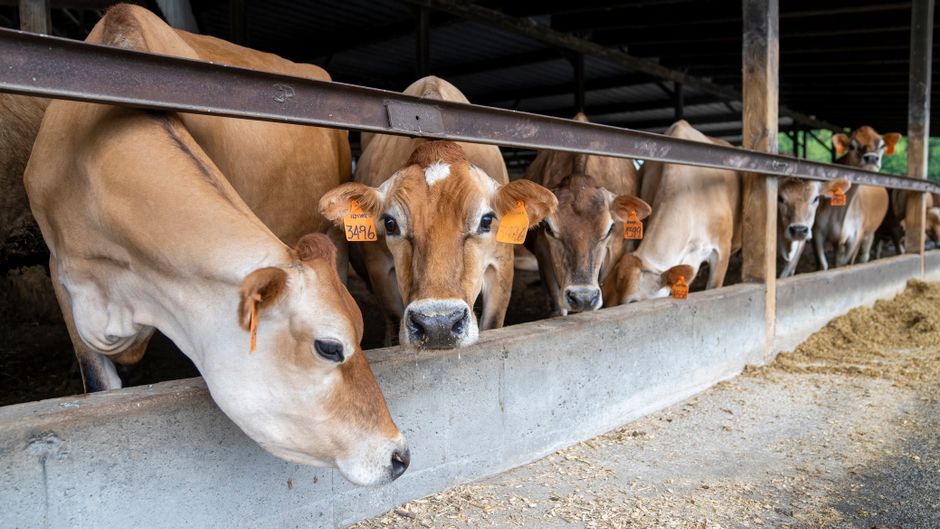
They are not the best choice if your only goal is maximum milk volume. If you want sheer gallons, Holsteins usually outproduce Jerseys. If you want a cow that is productive, efficient, and well suited to smaller-scale dairying, Jerseys are hard to beat. The best results come from good genetics, regular handling, solid nutrition, and consistent daily care rather than breed name alone.
Frequently Asked Questions
Are Jersey cattle good for beginners?
Yes, especially for people who want a smaller dairy cow and are willing to learn routine handling. Jerseys are often easier to manage than larger breeds, but they still need consistent milking, proper feeding, and good health care.
This ties in closely with Understanding Total Mixed Ration (TMR) for Dairy Cows: A Complete Guide, worth a look if you want to go deeper.
How much milk does a Jersey cow give?
Milk output varies by cow, stage of lactation, diet, and management. Jerseys usually produce less total milk than Holsteins, but their milk is richer in butterfat and protein, which makes it valuable for home dairy use and cheesemaking.
Do Jersey cows need less feed than other dairy breeds?
Usually yes, because they are smaller than many dairy breeds. That said, a lactating Jersey still needs enough high-quality forage, water, minerals, and energy to support milk production. Cutting feed too much can quickly reduce body condition and milk yield.
Are Jersey cows friendly?
Many Jerseys are calm and people-oriented, but temperament varies by individual and by handling history. A well-raised Jersey that is trained to lead, stand tied, and accept milking is often pleasant to work with. Poor handling can make even a gentle cow difficult.
What is Jersey milk best used for?
Jersey milk is especially popular for butter, cheese, cream, yogurt, and rich drinking milk because of its higher butterfat and protein. It is a favorite on homesteads and small dairies where milk quality matters as much as quantity.