
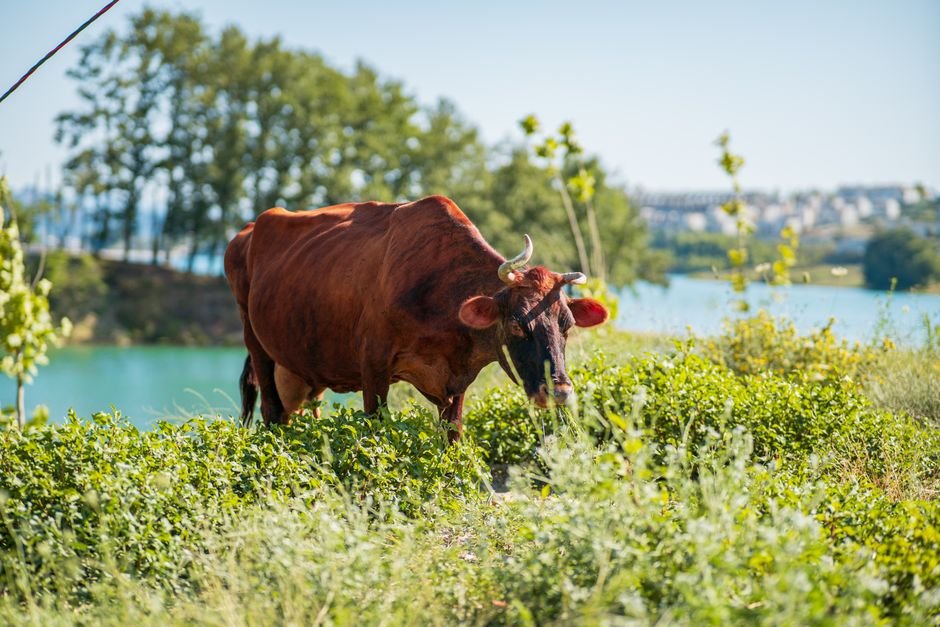
Yes, cattle can eat grain, and many do well on it when it is fed in the right amount and balanced with forage. Grain is energy-dense and useful for growth, finishing, milk production, and body condition, but too much grain too fast can trigger acidosis, bloat, or laminitis. The key is not whether cattle can eat grain; it is how much, how often, and what else is in the ration.
What grain does in a cow’s diet
Grain is mainly a source of starch and readily available energy. Common feed grains for cattle include corn, barley, oats, wheat, sorghum, and feed-grade triticale. Compared with pasture, hay, or silage, grain delivers more calories in a smaller volume, which is why feedlots and dairy rations rely on it. The National Research Council’s nutrient guidelines for beef and dairy cattle have long recognized grain as a standard energy feed, not a novelty ingredient.
That energy can be useful at several stages: growing calves need it for frame and muscle gain; lactating cows need it to support milk output; and thin cows may need it to regain condition. But grain does not replace long-stem forage. Cattle are ruminants, and their rumen needs fiber to keep chewing, saliva production, and fermentation working normally.
How much grain can cattle eat?
The safe amount depends on the animal’s size, age, forage quality, and how quickly grain is introduced. A mature beef cow on good hay may need little or no grain. A high-producing dairy cow may eat a large grain component as part of a total mixed ration. For beef cattle, grain is usually added gradually, and many feeding programs keep concentrate levels moderate unless the ration is specifically formulated for finishing.
As a practical rule, grain should be increased slowly over 10 to 14 days so the rumen microbes can adapt. Sudden jumps from mostly hay to heavy grain feeding are one of the most common causes of digestive upset. If cattle are on pasture, grain is often used as a supplement rather than a main feed, especially when grass is short, dry, or low in energy.
Grain versus forage: why the balance matters
| Feed type | Main role | Strengths | Common risks if overfed |
|---|---|---|---|
| Grain | High-energy supplement | Supports growth, milk production, and weight gain | Acidosis, bloat, loose manure, laminitis |
| Forage | Rumen function and fiber | Keeps chewing and rumen motility normal | May be too low in energy for high production alone |
Forage and grain work best together. Forage provides physically effective fiber, which helps the cow ruminate and buffer the rumen. Grain raises the energy density of the ration. When grain crowds out too much forage, the rumen pH can drop, especially if the grain is finely ground or fed in large meals. That is why balanced rations use both roughage and concentrate rather than relying on one feed alone.
What happens if cattle eat too much grain?
Overfeeding grain can cause rumen acidosis, a condition where fermentation becomes too acidic. Early signs include reduced cud chewing, appetite loss, soft manure, and a drop in milk fat or performance. More severe cases can lead to dehydration, weakness, and even death. The Merck Veterinary Manual and veterinary extension services consistently list grain overload as a major cause of acidosis in cattle.
For more on this, see our related guide: Proven Tips to Reduce Weaning Stress in Calves During Hot Weather.
Another problem is bloat, especially when cattle gorge on rapidly fermentable feed. Excess grain can also contribute to laminitis, an inflammatory hoof problem linked to digestive upset. In dairy cattle, high-grain diets that are not properly balanced can reduce butterfat and increase the risk of metabolic disorders. In beef cattle, poor grain management can slow gains instead of improving them, because the animal spends energy coping with digestive stress.

Signs grain is helping — or hurting
Good grain feeding usually shows up as steady weight gain, a healthy coat, normal cud chewing, and manure that is soft but not watery. Cattle should remain active and show a consistent appetite. In dairy cows, grain can support milk production without sharply dropping butterfat when the ration is balanced correctly.
Warning signs appear when grain is doing more harm than good. Watch for reduced appetite, reluctance to move, loose or foamy manure, a bloated left side, repeated grinding of teeth, or cattle standing apart from the group. If several animals are affected after a feed change, the ration is likely too rich, too fast, or too low in effective fiber. Early correction matters more than waiting for a severe case to develop.
Which grains are commonly fed to cattle?
Not all grains behave the same way in the rumen. Corn is widely used because it is energy dense and palatable. Barley ferments faster than corn and can be more risky if overfed. Oats are usually safer but less energy dense. Wheat is highly fermentable and should be used carefully. Sorghum can work well, especially in drier regions, but processing matters because whole kernels may pass through undigested.
Feed form matters too. Cracked, rolled, or steam-flaked grain is more digestible than whole grain, but it also ferments faster. That means processed grain can improve feed efficiency while increasing the need for careful ration control. The best choice depends on the animal class, the rest of the diet, and the feeding system being used.
If you’re also looking into this, our article on Can Cows Eat Watermelon? How to Safely Feed Cull Fruit to Your Herd covers it in more detail.
Common grain types for cattle
| Grain | Typical use | Digestibility / fermentation | Management note |
|---|---|---|---|
| Corn | Beef finishing, dairy rations | High energy, moderate fermentation | Often rolled or cracked for better use |
| Barley | Energy supplement | Faster fermentation | Feed cautiously to avoid acidosis |
| Oats | Safer supplement for some cattle | Lower energy, slower impact | Useful when a gentler grain is needed |
| Wheat | Energy source in balanced rations | Very fermentable | Higher risk if fed in large amounts |
| Sorghum | Dryland feeding programs | Varies with processing | Often needs cracking or rolling |
How to feed grain safely to cattle
Start by introducing grain slowly, especially if cattle are moving from forage-only feeding. Split grain into two or more meals if possible, rather than offering one large feeding. Keep fresh water available at all times. Make sure the ration still contains enough forage to support rumen function, and avoid feeding moldy, spoiled, or dusty grain. If you are using a supplement tub, pellet, or mixed ration, read the tag and follow the manufacturer’s feeding directions carefully.
For many operations, a nutritionist or extension specialist can help balance the ration by animal class. That matters because a growing steer, a lactating Holstein, and a mature beef cow do not need the same grain level. The University of Wisconsin-Madison Extension, Penn State Extension, and other land-grant programs regularly emphasize matching grain intake to production goals rather than feeding by guesswork.
When grain is a good idea — and when it is not
Grain makes sense when cattle need extra energy that forage alone cannot supply. That includes finishing beef cattle, high-producing dairy cows, thin cows recovering condition, and growing calves in managed programs. It can also help when pasture quality drops in late season or during drought.
Grain is a poor choice when cattle are already getting enough energy from high-quality forage, when feed access is inconsistent, or when the herd has a history of digestive problems. It is also risky to feed large amounts to hungry cattle all at once, such as after transport or a weather event. In those situations, the safest approach is to reintroduce feed gradually and keep the ration simple and consistent.

Frequently Asked Questions
Can cows eat whole grain?
Yes, but whole grain is often less efficient than processed grain because more kernels may pass through the digestive tract undigested. Corn, barley, and sorghum are commonly rolled, cracked, or steam-flaked to improve use. The tradeoff is that processing also makes grain ferment faster, so the ration has to be managed more carefully.
Is grain bad for cattle?
No, grain is not inherently bad for cattle. It becomes a problem when too much is fed too quickly or when it replaces too much forage. In the right ration, grain supports growth and milk production. In the wrong ration, it can trigger acidosis, bloat, and other digestive issues.
This ties in closely with What Is the Best Way to Understand and Manage Cow Behavior?, worth a look if you want to go deeper.
How do I know if my cattle need grain?
Look at body condition, forage quality, production goals, and seasonal feed availability. If cattle are losing condition, growing slowly, or producing more milk than forage can support, grain may help. If they are maintaining condition on good pasture or hay, extra grain may not be necessary.
Can calves eat grain?
Yes. Calves often start on starter grain as they transition from milk to solid feed. A palatable calf starter helps rumen development and supports growth, but it should be introduced gradually and paired with clean water and quality forage. Overfeeding grain to young calves can still upset the rumen.
What should I do if cattle get into a grain bin or spill?
Treat it as an emergency. Remove access to grain, avoid forcing the animals to move too much, and contact a veterinarian immediately if they have eaten a large amount. Grain overload can become severe quickly, and prompt treatment improves the chance of recovery.
This article is for general information and isn’t a substitute for advice from a qualified veterinarian or livestock nutrition professional.