
How Does Cattle Breeding Work? A Direct Answer
Cattle breeding works by selecting bulls and cows with desirable traits to produce offspring with improved genetics, using methods like natural mating or artificial insemination (AI). Breeders carefully manage breeding cycles, monitor animal health, and apply reproductive technologies such as estrus synchronization to optimize conception rates and genetic progress. The goal is to enhance traits like milk production, growth rate, feed efficiency, fertility, and disease resistance, depending on the production system—whether dairy, beef, or dual-purpose.
In practice, breeders combine traditional knowledge with modern science. They evaluate animals using performance records, pedigree analysis, and increasingly genomic information to make informed decisions. Managing breeding also involves attention to environmental factors such as nutrition, housing, and stress reduction, all of which influence reproductive success. Additionally, biosecurity practices are integrated to minimize disease transmission during breeding activities, ensuring a healthy herd and sustainable operation.
Key Goals of Cattle Breeding
The primary goals of cattle breeding vary by operation but revolve around improving productivity, efficiency, and profitability. In dairy herds, breeders emphasize increasing milk yield per cow and improving milk components such as fat and protein percentages, which affect cheese and butter production quality. Udder health is another critical focus, as it influences somatic cell counts and mastitis incidence, directly impacting milk quality and cow longevity.
Beef cattle breeding targets faster growth rates, superior feed conversion efficiency (the ability to turn feed into body mass), enhanced carcass quality (including marbling and tenderness), and robust disease resistance. For example, the American Angus Association actively selects for genetic markers linked to marbling, a key quality trait that improves meat flavor and tenderness, which justifies premium pricing in beef markets.
Beyond production traits, fertility and calving ease are universal priorities across operations. Difficult calvings can increase calf mortality and harm cow health. Breeders also consider adaptability to local climates and management systems, selecting breeds or lines that thrive under specific environmental conditions—such as heat tolerance in southern U.S. states or resistance to parasites in tropical regions.
Economic sustainability is often integrated into breeding goals through selecting animals with longevity and reproductive efficiency. A study from the University of Wisconsin found that increasing cow longevity by just one lactation can reduce replacement costs by up to 20%, highlighting the financial impact of genetic improvements focused on durability.
Breeding Methods: Natural Mating vs. Artificial Insemination
Natural mating involves allowing a bull to breed directly with cows in estrus. It is a straightforward method requiring minimal technical input, making it common in extensive grazing systems or small-scale operations. However, natural mating has limitations: bulls require significant space, feed, and management, with upkeep costs ranging from approximately $1,500 to $2,500 yearly, depending on region, feed prices, and health care. Additionally, bulls can inflict injuries during aggressive breeding activities or fights for dominance within the herd.
Genetic diversity is also limited by the number of bulls maintained on a farm. This constrains the potential to introduce superior genetics, slowing genetic progress compared to modern reproductive technologies.
Artificial insemination (AI) is the predominant breeding method in commercial dairy herds and increasingly in beef production systems. AI allows producers to access semen from genetically elite bulls worldwide, facilitating rapid genetic improvement. For instance, a single Holstein sire with proven high milk production genetics can sire thousands of calves globally through AI, something impossible with natural mating.
For more on this, see our related guide: 27 Proven Steps to Raising Beef Cattle for Profit on a Small Farm.
The cost per semen straw varies widely, generally between $15 and $30, but can exceed $100 for bulls with exceptional pedigrees or novel traits such as disease resistance. AI requires skillful estrus detection or synchronization to ensure timing aligns with ovulation, as well as trained personnel or veterinarians to perform insemination accurately. When done correctly, AI can improve conception rates, reduce the risk of venereal diseases, and enable selective breeding for specific genetic traits like polled (hornless) cattle or coat color.
Some advanced AI programs incorporate sex-sorted semen, which separates X- and Y-chromosome-bearing sperm, allowing farmers to produce predominantly female calves for dairy operations or males for beef production. Although more expensive and with slightly lower conception rates, sex-sorted semen enhances herd management and market targeting.
Estrus Detection and Synchronization
Accurate estrus detection is fundamental to maximizing pregnancy rates in cattle breeding. Estrus, or heat, is the period when a cow is sexually receptive, typically lasting 12 to 24 hours within a 21-day cycle. Behavioral signs include increased restlessness, vocalization, mounting other cows or standing to be mounted, clear vaginal mucus discharge, and swelling or reddening of the vulva.
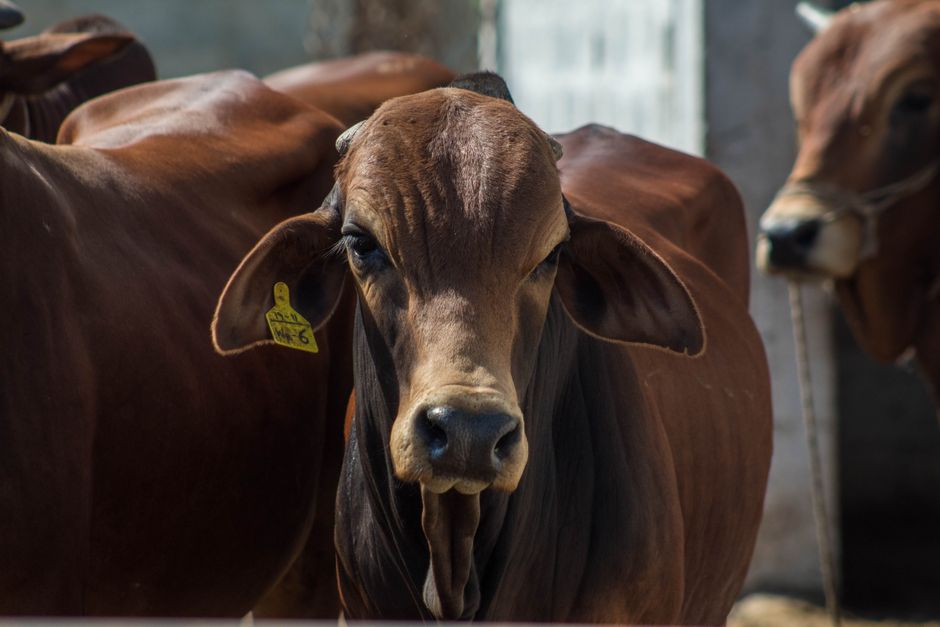
Despite these signs, heat detection remains a challenge, especially in large herds or extensive grazing systems where close observation is difficult. Missed heats can delay breeding, extending calving intervals and reducing lifetime productivity. To address this, many producers implement estrus synchronization protocols, which use hormonal treatments to regulate and synchronize reproductive cycles across groups of cows.
One widely used synchronization protocol is Ovsynch, which combines gonadotropin-releasing hormone (GnRH) and prostaglandin F2 alpha (PGF2α) injections over a 7- to 10-day period. GnRH induces ovulation or follicular development, while PGF2α causes regression of the corpus luteum (the hormone-producing structure on the ovary), resetting the cycle. This enables timed artificial insemination (TAI) without the need for heat detection.
Research has demonstrated that synchronization protocols like Ovsynch can improve pregnancy rates to between 50% and 60%, compared to 35% to 40% for traditional heat detection. This efficiency reduces labor costs and maximizes genetic gain by allowing scheduled inseminations. Other synchronization methods include controlled internal drug release (CIDR) devices, which release progesterone to mimic pregnancy and then are removed to induce estrus.
Emerging technologies, such as automated activity monitors and hormone sensing devices, enhance heat detection accuracy. Wearable pedometers and accelerometers track increases in activity associated with estrus, while biosensors can detect hormonal fluctuations in saliva or milk. Integration of these technologies in herd management software further optimizes breeding decisions.
Breed Selection and Genetic Improvement
Breed selection is a cornerstone of successful cattle breeding. Purebred breeders focus on maintaining and improving breed standards, emphasizing traits characteristic of the breed’s utility and market demands. For example, the Holstein-Friesian breed is renowned for high milk volumes, often exceeding 22,000 pounds per lactation in elite herds, while Jersey cattle are preferred for higher milk fat content and efficient feed conversion.
Commercial producers frequently employ crossbreeding strategies to combine desirable traits from multiple breeds, leveraging heterosis (hybrid vigor). For instance, crossing Angus bulls with Hereford cows produces offspring with enhanced growth rates, fertility, and adaptability compared to purebreds. Similarly, crossing Brahman cattle with British breeds produces heat-tolerant, parasite-resistant progeny suited for tropical climates.
If you’re also looking into this, our article on 26. Best Cattle Breed for Small Acreage: 10 Top Picks for Efficient Farming covers it in more detail.
Advanced genetic evaluation tools have revolutionized selection accuracy. Estimated Breeding Values (EBVs) quantify an animal’s genetic merit for specific traits by analyzing progeny data, phenotypes, and pedigrees. Genomic selection uses DNA marker information from single nucleotide polymorphisms (SNPs) to predict genetic potential even before animals reach maturity.
Programs like the National Dairy Herd Information Association (NDHIA) and breed-specific databases collect large datasets to support genetic evaluations. For example, genomic testing can identify carriers of deleterious recessive traits such as bovine leukocyte adhesion deficiency (BLAD) or complex vertebral malformation (CVM), allowing breeders to avoid at-risk matings.
Genetic progress is often measured in terms of annual genetic gain. In dairy cattle, the use of genomic selection has increased genetic gain by approximately 50% compared to traditional methods, accelerating improvements in milk yield and fertility.
Reproductive Technologies Beyond AI
Beyond AI, reproductive technologies such as embryo transfer (ET) and in vitro fertilization (IVF) offer powerful tools to multiply elite genetics rapidly. ET involves superovulating donor cows using hormones to produce multiple eggs, which are fertilized either naturally or via AI. The resulting embryos are collected nonsurgically and transferred to recipient cows, which carry the pregnancies to term.
This process enables a single superior cow to produce many offspring per year rather than just one calf, dramatically accelerating genetic dissemination. ET costs vary widely but typically range between $500 and $1,000 per procedure, including veterinary services and hormone treatments. Success rates depend on donor and recipient quality, with pregnancy rates per transferred embryo averaging 50% to 70%.

In vitro fertilization (IVF) involves collecting oocytes (eggs) from a donor cow’s ovaries and fertilizing them in a laboratory setting using capacitated sperm. Embryos are cultured to a specific development stage before transfer. IVF is particularly useful for donors with genetic defects that preclude natural mating or AI and allows genetic rescue of valuable animals.
Genomic editing technologies such as CRISPR-Cas9 are experimental in cattle breeding but hold promise for introducing or eliminating specific genetic traits, such as disease resistance or polledness, without the need for multiple generations of selective breeding. However, regulatory, ethical, and consumer acceptance issues currently limit widespread use.
Managing Breeding Records and Data
Effective herd management relies on meticulous record-keeping to track breeding events, pregnancy diagnoses, calving dates, and genetic information. Digital herd management software platforms like CattleMax, FarmWizard, and BoviSync streamline data entry and analysis, providing alerts for upcoming heats, optimal insemination timing, and health interventions.
This ties in closely with 33 Best Cattle Breeds for Grass Fed Beef: Top Picks for Small Farms, worth a look if you want to go deeper.
These systems often integrate with wearable technologies and sensors, enabling real-time monitoring of reproductive status and health parameters. Accurate records help prevent inbreeding by monitoring relatedness and allow genetic progress tracking by correlating pedigree and performance data.
Moreover, breeding records assist in identifying subfertile animals, enabling timely culling decisions that improve herd reproductive efficiency. Such data also support compliance with certification programs and traceability systems increasingly demanded by consumers and regulators for food safety and animal welfare assurance.
Common Challenges in Cattle Breeding
- Heat Detection Errors: Detecting estrus is labor-intensive and subjective. Missed heats delay breeding and reduce pregnancy rates. Automated activity monitors, such as pedometers or neck-mounted accelerometers, have been shown to increase detection accuracy by up to 20%, improving herd fertility management.
- Inbreeding Depression: High levels of inbreeding reduce fertility, calf survival, and overall vigor, a phenomenon known as inbreeding depression. Regular genetic evaluations and planned matings that maintain adequate genetic diversity are essential to avoid these negative effects. Tools like pedigree analysis software and genomic relationship matrices assist in monitoring inbreeding coefficients.
- Nutrition and Health: Body condition score (BCS) directly affects reproductive success; cows in poor condition or overconditioned are less fertile. Diseases such as Bovine Viral Diarrhea (BVD), leptospirosis, and brucellosis can impair fertility or cause abortions. Vaccination programs, biosecurity, and balanced nutrition are critical to maintaining reproductive health.
- Environmental Stress: Heat stress during summer months can reduce conception rates by altering hormone levels and embryo viability. Providing shade, ventilation, and adequate water access mitigates these effects.
- Labor and Skill Requirements: Advanced breeding techniques require trained personnel. Small or resource-limited farms may struggle to adopt technologies like AI or ET without external support.
Summary Table of Breeding Methods
| Method | Description | Cost Range | Advantages | Limitations |
|---|---|---|---|---|
| Natural Mating | Bull mates with cow directly during estrus. | $1,500 – $2,500/year (bull upkeep) | Simple, no special equipment needed; well-suited to extensive systems. | Less control over genetics, risk of injury, limited genetic diversity. |
| Artificial Insemination (AI) | Semen from selected bulls inseminated artificially. | $15 – $30 per straw (can be higher for elite or sexed semen) | Access to superior genetics worldwide, controlled breeding timing, safer. | Requires heat detection, skilled inseminators, and infrastructure. |
| Embryo Transfer (ET) | Embryos from donor cows implanted into recipients. | $500 – $1,000 per procedure | Rapid multiplication of elite genetics; increases offspring from valuable cows. | High cost, veterinary expertise needed; variable success rates. |
Frequently Asked Questions
How can I tell when a cow is in heat?
Cows in heat exhibit behavioral changes such as increased restlessness, mounting or standing to be mounted by other cows, frequent urination with a distinctive odor, bellowing, and swelling or redness of the vulva. Some cows also show mucus discharge from the vulva. To improve detection, many farmers use heat detection aids like activity monitors, pressure-sensitive heatmount detectors, or color-change heat patches placed on the tailhead, which can provide objective confirmation of estrus.
What is the best breed for beef cattle breeding?
The “best” breed depends on your production goals and environment. Angus cattle are popular for superior marbling and meat quality, making them a top choice for premium beef markets. Herefords are valued for their hardiness, docile temperament, and adaptability to various climates. Charolais cattle are noted for their rapid growth and lean, muscular carcasses. Many producers utilize crossbreeding systems—such as rotational or terminal crosses—to combine growth, fertility, and adaptability traits while exploiting heterosis for improved performance.
Is artificial insemination suitable for small-scale farms?
Yes, AI is often advantageous for small-scale operations by providing access to high-quality genetics without the expense and risk of keeping bulls. Although there is a learning curve, many extension services and veterinarians offer training and support for AI techniques. Additionally, AI allows smallholders to select bulls with traits aligned to their specific market or environmental conditions.
How often can a cow be bred in a year?
Cows have a gestation period averaging 283 days (about 9.5 months). After calving, most producers aim to breed cows again within 60 to 90 days to maintain an annual calving interval, resulting in one calf per year. Continuous good nutrition, health, and reproductive management enable cows to maintain this rhythm over several productive years. However, intervals can vary due to breed, management, and environmental factors.
What factors affect pregnancy rates in cattle breeding?
Pregnancy rates are influenced by multiple interconnected factors including accurate estrus detection, timing of insemination relative to ovulation, animal health status, body condition score, nutrition, genetics, and environmental conditions. Synchronization protocols combined with timed AI improve rates by reducing errors in timing. Additionally, reducing stress, controlling diseases, providing balanced diets rich in energy, protein, vitamins, and minerals, and ensuring appropriate calving intervals all contribute to higher conception rates and overall herd reproductive efficiency.