
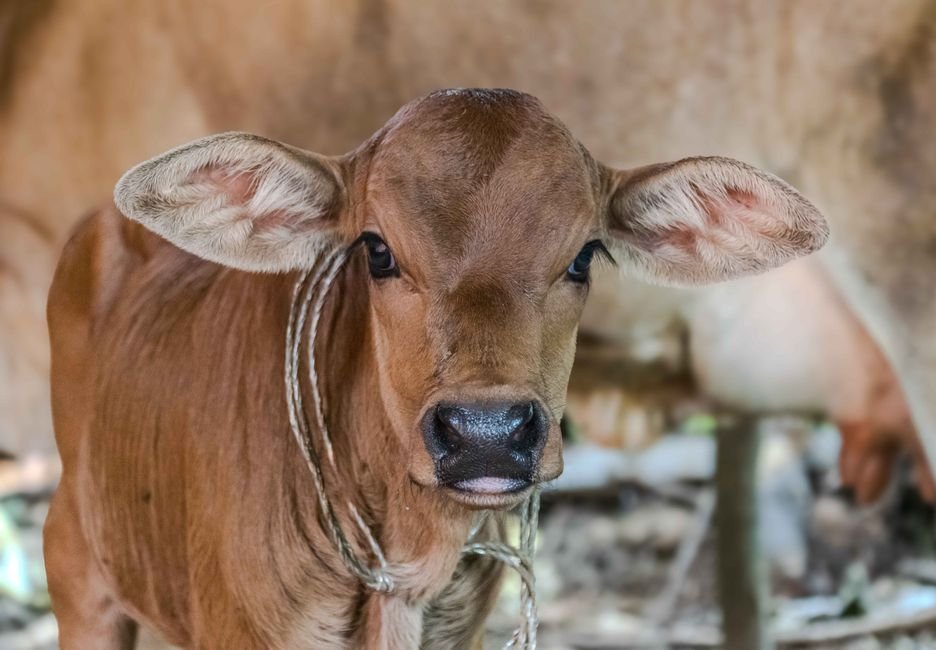
Why cows protect their calves
Cows protect their calves because maternal instinct pushes them to keep newborns alive during their most vulnerable hours and days. Right after calving, a cow is highly alert to smells, sounds, and movement around her calf, and she may defend it aggressively if she thinks a person, dog, or other animal is a threat. This behavior is normal cattle biology, not “bad temperament,” and it is strongest in the first days after birth.
In practical terms, a mother cow’s protectiveness is her way of reducing the risk of predation, injury, separation, and cold stress. Even calm cows can become defensive when their calf is nearby, especially if the calf is weak, new, or not yet fully able to keep up with the herd.
Maternal instinct is doing the work
At the center of this behavior is a hormonal shift around calving. As birth approaches and after the calf is born, hormones such as oxytocin and prolactin support bonding, nursing, and caregiving. The cow learns the calf’s smell and vocalizations quickly, and that recognition helps her identify “her” calf in a herd setting. If something disrupts that bond, she may react by circling, bellowing, head-lowering, or even charging.
This protective response is especially important in beef cattle systems, where calves may be born in open pasture and face weather, uneven ground, and predators. A mother cow’s behavior helps keep the calf close, dry, and fed. In nature and on farms alike, the cows that defend their young are more likely to raise a surviving calf, so the trait persists across generations.
Why the first 24 to 72 hours matter most
The first few days after birth are the time when cows are usually most defensive. During this window, calves are still weak, unsteady, and dependent on colostrum, the first milk that provides antibodies. A cow often stays unusually close during this period, and many will not tolerate people walking directly into the calf’s space.
That intensity usually fades as the calf becomes stronger and more mobile, though some cows remain protective for weeks. The exact length depends on the cow’s personality, breed, environment, and whether she has had previous calving experience. First-calf heifers are often more nervous and reactive than mature cows because they are still learning what normal handling feels like.
For more on this, see our related guide: Can Cows Eat Watermelon? How to Safely Feed Cull Fruit to Your Herd.
What cows are trying to defend against
Protective behavior is not random aggression. A cow is responding to perceived risks that could harm the calf. Common threats include predators, unfamiliar livestock, dogs, loud equipment, and people getting too close too quickly. Even a routine farm task can feel threatening if the cow is already on edge.
| Trigger | Why the cow reacts | Typical body language |
|---|---|---|
| People approaching the calf | She may think the calf is being taken or handled roughly | Staring, pawing, bellowing, stepping between you and the calf |
| Dogs or coyotes | Predator threat | Head lowered, ears forward, fast approach, charging |
| Noise and machinery | Sudden movement may startle the calf or separate it from the cow | Restlessness, calling, moving the calf away |
| Other cows crowding in | Risk of calf confusion or trampling | Blocking behavior, pushing, aggressive nudging |
How breed, age, and experience change the response
Not every cow protects her calf in the same way. Beef breeds such as Angus, Hereford, Charolais, and Simmental are often selected for maternal ability, but individual temperament still varies widely. Dairy breeds like Holstein and Jersey can also show strong maternal behavior, although many dairy systems separate calves from dams early, which changes how long that bond remains active in daily management.
Age matters too. Mature cows usually know the calving routine and may be calmer around normal activity, while first-calf heifers are more likely to panic or overreact. Previous handling also matters: cows that are used to quiet, consistent human contact often show less extreme defensive behavior than cattle that are chased, crowded, or handled roughly. In other words, protectiveness is normal, but stress can make it sharper.
Signs a cow is warning you to back off
Before a cow charges, she often gives clear warning signs. Learning those signals can prevent a dangerous encounter. A protective cow may pin her ears, fix her eyes on you, paw the ground, swing her head, snort, or position herself between you and the calf. If she repeatedly steps toward you instead of away, she is likely escalating.
One useful rule in cattle handling is to pay attention to the cow’s comfort zone. If she moves to keep the calf hidden or pushes the calf away from your path, you are too close for her comfort. It is much safer to stop, give her space, and let her settle before attempting any work near the calf. Never assume a quiet cow is harmless if she is standing directly over a newborn.
How to handle a protective cow safely
The safest approach is calm, predictable movement. Avoid sudden gestures, loud voices, direct staring, and tight cornering. If you must work near a newborn calf, keep an escape route open and never position yourself between the cow and the calf. If possible, use a gate, panel, or vehicle as a barrier rather than walking into open space with no protection.

If you’re also looking into this, our article on Proven Tips to Reduce Weaning Stress in Calves During Hot Weather covers it in more detail.
Here are a few practical habits that lower risk:
- Approach slowly from the side, not straight at the calf.
- Keep dogs away from calving areas unless they are trained working dogs and used appropriately.
- Give first-calf heifers extra room.
- Do routine checks when cattle are calm, not when they are already agitated.
- Leave immediately if the cow starts pawing, lowering her head, or repeatedly advancing.
If a cow becomes aggressive, do not try to “win” the standoff. Back away, use a barrier, and return only when assistance or a better setup is available.
Why some cows seem calmer than others
Some mothers tolerate more human contact because they trust their environment. Cows that calve in low-stress conditions, with enough space, minimal noise, and regular handling, often show less extreme defensive behavior. A cow that has already bonded strongly with her calf but feels secure may simply stand guard rather than charge.
By contrast, stress amplifies protectiveness. Hunger, pain, poor footing, bad weather, or a difficult birth can make a cow more reactive. A cow that is exhausted or sore may still defend her calf, but she may do it with less patience and more sudden aggression. That is why calving management matters: the better the environment, the less likely protective behavior is to turn into dangerous behavior.
Frequently Asked Questions
How long will a cow stay protective of her calf?
Most cows are most protective during the first few days after calving, when the calf is weakest and the bond is newest. Some remain defensive for several weeks, especially if the calf is still young or the cow is naturally protective. The behavior usually softens as the calf becomes stronger and more independent.
This ties in closely with Essential Cattle Farm Checklist for Handling Basics: A Practical Guide, worth a look if you want to go deeper.
Will a cow attack if you touch her calf?
She might, especially if she thinks the calf is in danger or being separated from her. Some cows only watch closely, while others charge quickly. If you need to handle a calf, do it with caution, ideally with a barrier or extra help, and be prepared for the cow to object.
Are heifers more protective than older cows?
Often, yes. First-calf heifers are commonly more nervous and less predictable than mature cows because they have less experience with calving and handling. Older cows may still be highly protective, but they are often more settled and easier to read.
Why do cows lick and nudge their calves so much?
Licking helps dry the calf, stimulates circulation, encourages breathing and standing, and strengthens the mother-calf bond through smell and touch. Nuzzling and nudging also help the cow guide the calf toward nursing and keep it close.
What is the safest way to check on a newborn calf?
Use a calm approach, keep a barrier nearby if possible, and avoid standing between the cow and calf. Watch from a distance first, then move in only if the cow stays relaxed. If she becomes tense, backs up, or lowers her head, give her more space and try again later.