

Understanding the Importance of Proper Cow Handling
Handling cows effectively is a cornerstone of successful cattle management. Beyond facilitating routine tasks like feeding, vaccination, and milking, proper handling directly impacts animal welfare, worker safety, and operational efficiency. Mishandling can cause stress to the animals, leading to lower milk production, weight loss, and even injury to both cattle and handlers.
According to the University of Nebraska-Lincoln, stress during handling can decrease milk yield by up to 15% and reduce weight gain, making calm and skilled handling an economic priority as well as an ethical one.
Furthermore, poorly handled cattle tend to develop behavioral issues such as balking and balking, which can complicate movement and increase labor requirements. Stress can also suppress the immune system, making animals more susceptible to disease outbreaks that could impact entire herds. In contrast, well-handled cows are more docile, easier to manage, and contribute to a safer working environment. The cumulative benefits extend beyond immediate productivity gains, influencing long-term herd health, reproductive performance, and farm profitability.
Research published in the Journal of Animal Science highlights that stress reduction during handling reduces cortisol levels in blood—a key stress hormone—by up to 40%, which correlates with improved reproductive success and longevity in dairy cows. This underscores that proper handling is not merely about short-term management but plays a critical role in sustaining herd resilience and genetic potential over time.
Key Principles for Handling Basics
1. Prioritize Safety for Both Handler and Animal
Safety is the foundational principle when dealing with cattle. Even docile cows can react unpredictably under stress or pain. Handlers should always:
- Wear appropriate personal protective equipment (PPE) like sturdy boots, gloves, and sometimes helmets.
- Maintain awareness of cow behavior and body language to anticipate movements.
- Use well-maintained facilities designed to reduce injury risk, such as non-slip flooring and rounded corners.
In addition, handlers must be trained on safe handling postures and positioning to avoid being trapped or kicked. For example, standing close to a cow’s shoulder area rather than directly behind or in front reduces the chance of being kicked or knocked over. Research shows that the majority of cattle-related injuries occur when handlers are in blind spots of the animal or when animals are startled unexpectedly.
Regular maintenance of handling equipment and facilities cannot be overstated. Broken gates, sharp edges, or slippery surfaces significantly increase risk for both handlers and cows. Investing in ergonomic design and regular safety audits can reduce workplace injuries by up to 60%, according to the National Cattlemen’s Beef Association.
2. Use Low-Stress Handling Techniques
Cows are prey animals with a strong flight zone—a personal space that triggers movement when entered. Skilled handlers use this knowledge to guide cattle calmly:
- Approach cows slowly and from the side rather than head-on to minimize alarm.
- Work with the animal’s natural flight zone, pushing from just behind or beside it, rather than applying force from the front.
- Limit loud noises and sudden movements, which can startle cattle.
Implementing low-stress handling techniques has been shown to reduce cortisol spikes in cattle by 30-50%, which not only improves animal welfare but also enhances meat quality by reducing the incidence of dark, firm, and dry (DFD) beef. These handling methods also lower the risk of bruising, which can cause significant economic losses at slaughter. According to a USDA report, bruising can result in carcass downgrades costing producers an estimated $3 to $5 per animal.
Handlers can also use the principle of “point of balance,” typically located at the animal’s shoulder, to direct movement efficiently. By positioning themselves just behind the point of balance, handlers can encourage the animal to move forward, while standing in front of it signals the animal to stop or move backward. This understanding minimizes the use of physical force and increases handling efficiency.

Essential Equipment for Basic Cow Handling
Proper equipment can facilitate safer and more efficient handling. Some of the most common and effective tools include:
- Head gates and squeeze chutes: Restrain animals safely for veterinary care and procedures.
- Sorting pens: Allow handlers to separate individual animals or groups with minimal stress.
- Non-slip flooring and alleyways: Prevent slips and injuries during movement.
- Flags or plastic paddles: Used as visual guides to encourage movement without touching the animal.
Additional equipment such as cattle prods should be avoided or used sparingly as they increase stress and risk injury. Instead, tools like sorting boards or panels can help guide animals calmly. Furthermore, adjustable gates and modular pen systems allow for flexible handling configurations that can be tailored to different herd sizes or specific animal behaviors.
In larger operations, electronic identification (EID) systems integrated with handling equipment can streamline processes by automatically registering animals as they enter chutes or pens, improving record-keeping and reducing manual handling time.
Example: Designing a Low-Stress Handling Facility
The Temple Grandin livestock handling system is a widely adopted design focusing on curved chutes and solid-sided alleyways, which prevent cows from seeing distractions and reduce balking. Studies show that cattle handled in Grandin-designed facilities exhibit 50% less stress behaviors and move through handling systems 25% faster than in traditional setups.
These designs take advantage of cattle’s natural behavior, using curves to mimic a natural herd movement, eliminating sharp corners where animals tend to hesitate or panic. Solid sides block visual distractions, such as people or equipment outside the chute, which can startle the animals and cause balking.
Additionally, facilities incorporating adjustable lighting and noise control have been demonstrated to further reduce stress. For instance, dimmed lighting in holding pens reduces agitation, while soft background noise can mask sudden sounds that might alarm cattle. In a practical example, a large dairy farm in Wisconsin retrofitted their cattle facility to incorporate Grandin’s design principles and reported a 35% reduction in handling time and a 20% decrease in injury rates within the first year.
Step-by-Step Guide to Handling Basic Cattle Tasks
| Task | Best Handling Practices | Common Mistakes to Avoid |
|---|---|---|
| Moving Cows Between Pens |
|
|
| Vaccinating or Medical Treatment |
|
|
| Feeding |
|
|
Recognizing and Responding to Cow Behavior
Understanding cow body language is critical for safe handling. Cows communicate stress, discomfort, or aggression through:
- Ear position: Forward ears indicate curiosity; pinned back ears suggest agitation.
- Tail movement: Rapid flicking can signal irritation or flies; a raised tail may indicate alarm.
- Vocalizations: Frequent or loud mooing can denote discomfort or separation anxiety.
- Movement: Restlessness or pawing the ground can be signs of distress.
- Eye expression: Wide eyes with visible whites can indicate fear or heightened alertness.
- Head position: Lowered head may signal submission or illness, while raised head can show alertness or aggression.
Handlers should pause when they observe signs of agitation and use slow, deliberate movements to calm the animals before proceeding. Providing the animals with short breaks during handling tasks can also reduce stress, especially in prolonged procedures such as vaccinations or hoof trimming. Additionally, maintaining a quiet environment and avoiding sudden noises like banging gates or shouting helps maintain calmness.
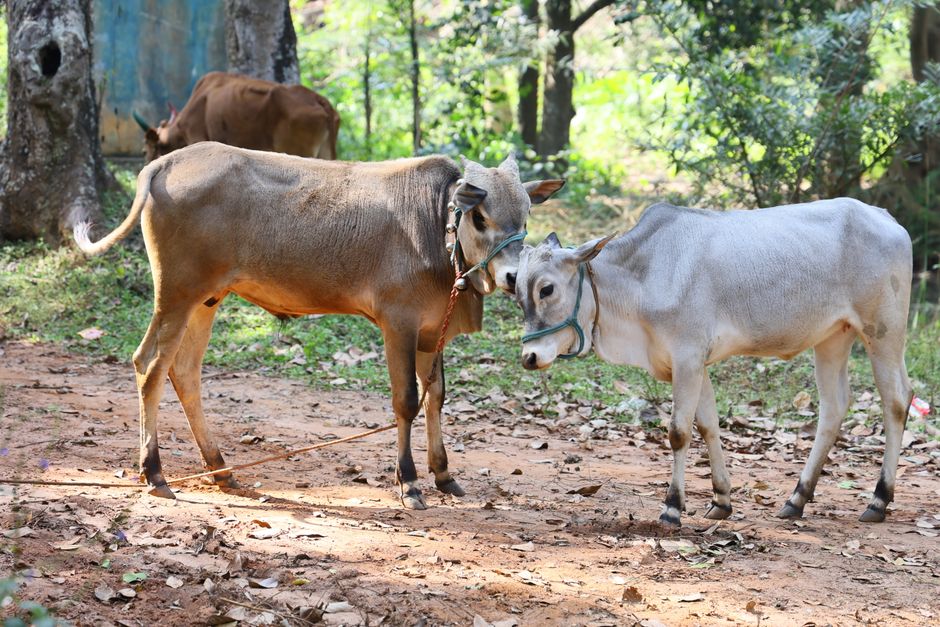
Recognizing individual animal temperament is also beneficial. Some cows are naturally more nervous or reactive and may require additional time or alternative handling approaches. Keeping detailed records of animal behavior can help handlers anticipate challenges and improve overall management strategies.
Training and Consistency: The Backbone of Effective Handling
Handler expertise and animal familiarity go hand in hand. Regular training sessions for staff ensure everyone understands the same protocols and techniques. For the animals, consistency in handling routines reduces unpredictability and stress.
For example, dairy farms that implement daily, consistent handling routines report up to 30% fewer incidents of bruising and injury during milking and handling, according to a 2020 study published in the Journal of Dairy Science.
Training programs that incorporate hands-on demonstrations, video analysis, and feedback significantly improve handler confidence and skill. Some operations employ “behavioral audits” where handlers are observed and coached on their techniques, leading to measurable improvements in animal ease of movement and reduced stress signals.
Furthermore, cross-training staff on animal behavior and handling equipment maintenance fosters a culture of safety and care. This is especially critical in larger operations where multiple employees interact with cattle daily, ensuring that handling standards are uniformly applied.
Technological Advances Enhancing Cow Handling
Modern technology is increasingly integrated into cattle management to improve handling efficiency and safety:
- Automated Sorters: Systems like the DeLaval VMS can identify individual cows and sort them automatically for milking or treatment, reducing manual handling. These systems use RFID ear tags to track individual animal health data, enabling targeted interventions and reducing unnecessary handling stress.
- Wearable Sensors: Devices track movement, rumination, and stress levels, alerting handlers to health or behavioral changes early. Advanced sensors can detect lameness, estrus, or early onset of illness, allowing for timely treatment that minimizes invasive handling.
- Remote Monitoring Cameras: Allow observation of cattle behavior in real-time without disturbing the animals. Integrated with AI algorithms, these systems can flag abnormal behaviors or welfare concerns, enabling proactive management.
Emerging technologies like virtual fencing use GPS-enabled collars to guide animals without physical barriers, reducing the need for crowding and stressful movements. Automated feeding systems also tailor feed portions to individual animals, improving nutrition and reducing competition at feeding times.
Investments in such technologies have been shown to increase farm profitability by reducing labor costs and increasing animal performance. For instance, farms using automated sorting and monitoring report up to a 20% increase in milk yield and 15% improvement in reproductive metrics due to reduced stress and early health interventions.
Summary Table: Handling Techniques vs. Benefits
| Technique | Primary Benefit | Example Situation |
|---|---|---|
| Low-Stress Approach | Reduces animal anxiety and injury risk | Moving cattle between pastures |
| Proper Restraint in Chutes | Ensures handler safety and effective treatment | Vaccination or hoof trimming |
| Consistent Routine | Improves animal predictability and cooperation | Daily milking and feeding |
| Use of Visual Aids (Flags/Paddles) | Guides movement without physical contact | Sorting or penning operations |