
Introduction to Age and Sex Benefits in Cattle
Age and sex are two critical biological factors that significantly affect the management and productivity of cattle. Recognizing how these elements influence growth, reproduction, milk production, and overall health can empower farmers and ranchers to make informed decisions. This article delves into the concrete benefits that age and sex bring to various aspects of cattle husbandry, backed by specific data and examples.
The Role of Age in Cattle Productivity and Health
Growth and Weight Gain Patterns by Age
Cattle growth follows a predictable pattern, impacting meat yield and feed conversion efficiency. Calves grow rapidly in their first year, often reaching 60-70% of their mature weight by 12-18 months, depending on breed and nutrition. For example, Angus steers typically weigh around 450 kg at 12 months, progressing to 600-700 kg at maturity.
Age influences optimal slaughter timing. Younger cattle (12-18 months) are preferred for tender meat, while older cattle may develop tougher muscle fibers but yield more total meat mass.
Beyond just weight, the growth phases are associated with changes in muscle fiber type and fat deposition. During the early stages (pre-weaning to 12 months), there is rapid hypertrophy of Type II muscle fibers which contribute to tenderness. After 18 months, intramuscular fat (marbling) begins to accumulate more significantly, especially in breeds predisposed to higher fat content like Wagyu or Angus, enhancing flavor profiles.
Specific growth curve models, such as the Gompertz or Richards models, help producers predict weight gain and plan feed regimens accordingly. In feedlot environments, cattle typically exhibit their highest feed conversion efficiency between 6 and 12 months of age, with efficiency declining as animals approach maturity. Research shows feed conversion ratios (FCR) of about 6:1 (6 kg of feed per 1 kg of gain) in young steers versus 8:1 or higher in older animals.
Breed also interacts with age in determining growth. For instance, Brahman-influenced cattle develop more slowly compared to British breeds, reaching market weight later but often showing better heat tolerance and disease resistance, which can influence management strategies based on local environmental conditions.
Immune System Development and Disease Resistance
Age also affects immune system maturity. Calves possess maternal antibodies for the first few months, but their active immunity develops gradually. By 6-8 months, young cattle show improved resistance to common infections like bovine respiratory disease complex (BRDC).
The window between loss of maternal immunity and full development of the calf’s own immune system—often called the “immunity gap”—is critical. During this period, calves are highly susceptible to pathogens, and management practices such as vaccination schedules, biosecurity measures, and minimizing stress are essential to prevent outbreaks.
Older cattle may have stronger immunity but can face challenges like decreased resilience to stress or chronic health issues such as arthritis in aged cows or bulls. Studies suggest that immune senescence in cattle, similar to other mammals, results in reduced production of key immune cells and cytokines after 7-8 years of age. This can increase susceptibility to infections including mastitis in dairy cows and hoof diseases in older beef cattle.
Additionally, age-related changes in the gut microbiome influence overall health and nutrient absorption. Younger animals have more volatile gut flora, making them vulnerable to digestive disturbances, whereas mature cattle develop a stable rumen microbiota that enhances fiber digestion efficiency.
Implementing age-specific health interventions—such as tailored vaccination protocols, deworming schedules, and nutritional supplementation—can mitigate disease risks and improve longevity. Research from the University of Nebraska shows that calves vaccinated before 3 months of age and boosted prior to weaning have a 30% lower incidence of respiratory disease during feedlot entry.
Reproductive Maturity and Fertility
Age marks key reproductive milestones. Heifers typically reach puberty between 9 and 12 months, with fertility peaking between 2-6 years of age in most breeds. Fertility generally declines after 8 years, accompanied by increased calving difficulties.
Puberty timing can be influenced by breed, nutrition, and environmental factors. For example, Bos indicus breeds (such as Brahman) tend to reach puberty later, around 12-15 months, compared to Bos taurus breeds (such as Angus or Holstein). Proper nutrition during the pre-pubertal phase, including protein and energy balance, is critical to avoid delayed sexual maturity.
Fertility parameters such as conception rate, estrous cycle regularity, and calving interval are age-dependent. A study in commercial herds across the Midwest United States demonstrated conception rates of 85-90% in cows aged 3-5 years, dropping to 60-70% in cows over 8 years.
Older cows are also more prone to dystocia (difficult calving), which increases mortality risks for both cow and calf. Maintaining detailed reproductive records and culling based on reproductive performance can help maintain herd fertility efficiency.
For more on this, see our related guide: The Essential Guide to Understanding Cattle Registration Certificates.
Additionally, age influences follicular dynamics and oocyte quality. Research indicates that oocyte cytoplasmic maturation and mitochondrial integrity decline with age, contributing to reduced embryo viability in older cows.
In males, semen quality peaks between 2 and 5 years, with volume, concentration, and motility declining after 6 years. Bulls older than 7 years may require more frequent semen evaluation to ensure breeding soundness.
The Impact of Sex on Cattle Performance
Differences in Growth and Meat Quality
Sexual dimorphism in cattle results in notable performance differences. Bulls usually grow faster and heavier than steers or heifers due to testosterone’s anabolic effects. For instance, a mature Angus bull can weigh 900-1,200 kg, compared to 600-700 kg for steers of the same age.
Steers (castrated males) often deposit more intramuscular fat (marbling), improving meat tenderness and flavor, making them preferred for premium beef markets.
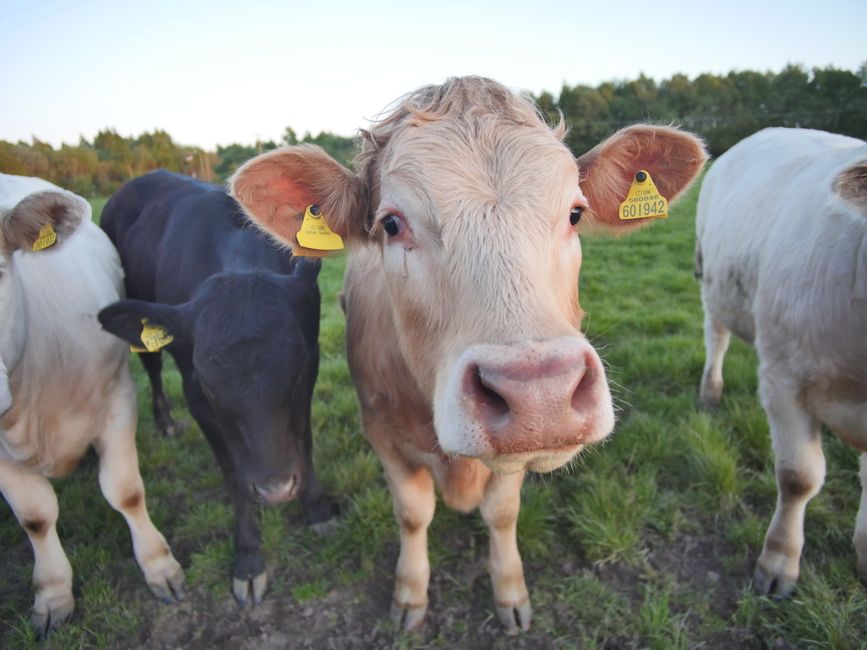
Heifers, while generally smaller and slower growing than bulls, tend to deposit fat earlier relative to their weight, which can enhance meat quality by improving marbling and juiciness. For example, in feedlot trials, heifers reached marbling scores 10-15% higher than steers at similar weights.
Sex differences also impact carcass composition. Bulls typically have a higher lean-to-fat ratio, favored in markets demanding lean meat, whereas steers and heifers provide more marbled cuts, preferred in premium markets such as Wagyu or Kobe-style beef.
The impact of sex hormones on muscle fiber characteristics is well documented. Testosterone promotes hypertrophy and increased muscle cross-sectional area, particularly of Type II fibers, contributing to greater strength and size in bulls. Castration reduces testosterone and slows growth speed but enhances fat deposition, which positively affects palatability.
Additionally, sex influences animal behavior, which indirectly affects growth. Bulls can exhibit more aggressive interactions, leading to increased energy expenditure and potential injury, whereas steers and heifers generally display more docile behavior, facilitating better feed efficiency and weight gain.
Milk Production Advantage of Females
Only females produce milk, and their sex is directly tied to dairy productivity. Age and sex together shape lactation curves: first-calf heifers produce less milk in their initial lactation compared to mature cows aged 4-6 years, which reach peak milk yield.
For example, a Holstein cow produces approximately 22,000 to 25,000 pounds of milk per year at peak maturity, whereas first-lactation heifers produce about 75-85% of that.
Milk production is influenced not only by age but also by parity (number of calvings). Peak lactation typically occurs during the 2nd or 3rd lactation, with yields plateauing or declining thereafter. High-producing dairy herds often retire cows after 6-7 lactations due to declining productivity and increased health risks.
Age-related changes in mammary gland physiology play a role. Younger cows have less developed alveolar tissue and lower secretory cell numbers, limiting milk volume. In contrast, mature cows have fully developed glands capable of higher milk synthesis.
Sex also affects metabolic demands: female cattle supporting lactation have increased nutritional requirements for energy, protein, minerals, and vitamins, requiring carefully formulated rations to avoid negative energy balance, which can cause metabolic disorders like ketosis or displaced abomasum.
If you’re also looking into this, our article on Essential Cattle Terminology: A Beginner’s Guide to Understanding and Managing Your Herd covers it in more detail.
Genetics influence the interaction of sex and milk production. Breeding programs emphasize selecting females with high milk yield and components (fat and protein), while male calves from dairy breeds are often less economically valuable and are typically sold for beef or veal production.
Behavioral Traits and Handling Considerations
Sex influences cattle behavior: bulls tend to be more aggressive and require careful management, especially as they age. Heifers and cows are generally calmer but can become protective during calving.
Bulls display territorial and dominance behaviors that can escalate during breeding seasons or in confined spaces. According to a study by Texas A&M University, handling-related injuries occur 2-3 times more frequently with bulls than with steers or cows, underscoring the need for specialized facilities such as strong, reinforced pens and safe exit routes.
Heifers and cows, while less aggressive, can become defensive around their calves, showing protective behaviors that may pose risks to handlers if proper caution is not observed. Training and acclimating cattle to human presence from a young age can reduce stress and improve safety.
Sex-based differences also affect social hierarchy and group dynamics. Bulls often dominate groups and may isolate themselves when in rut, while females establish more stable herd structures. Understanding these behavioral patterns helps in grouping animals appropriately to minimize stress and aggression, which can negatively impact growth and reproductive performance.
Handling protocols should consider sex and age. For example, mature bulls benefit from handling in smaller groups and use of sedatives if necessary during veterinary procedures. Meanwhile, young calves and heifers may require gentler handling to avoid fear responses that can have lasting effects on temperament.
Practical Benefits of Understanding Age and Sex in Herd Management
Optimizing Breeding Programs
Knowing the reproductive age range and sex-specific fertility helps optimize breeding schedules. Selecting bulls in their prime (3-6 years) maximizes conception rates, while culling older or infertile females improves herd genetic quality.
Reproductive technologies such as artificial insemination (AI) and embryo transfer (ET) also rely on age and sex data to time interventions effectively. For example, the success of fixed-time AI protocols depends on synchronization of estrus in females, which is more predictable in animals within optimal reproductive ages.
Sex selection techniques, including sperm sorting and sexed semen technology, allow producers to bias offspring sex ratios, maximizing herd replacement efficiency or beef production depending on enterprise goals. These technologies require understanding the reproductive physiology of animals at various ages to improve conception success.
Genomic testing now enables early identification of fertility traits associated with both sexes, allowing breeders to select bulls with superior semen quality and cows with better calving ease or milk production, enhancing herd performance over generations.
Enhancing Nutrition and Feed Efficiency
Feed requirements vary by both age and sex. Younger cattle need nutrient-dense rations to support rapid growth, whereas mature bulls require higher energy intake to maintain body condition and reproductive function. Heifers transitioning into first lactation need balanced nutrition to support both growth and milk production.
For example, nutrient formulations for growing calves typically target a crude protein content of 14-16%, with energy levels sufficient to support average daily gains (ADG) of 1-1.5 kg. In contrast, mature bulls require diets higher in energy density (up to 75% TDN – total digestible nutrients) to maintain libido and muscle mass.
Precision feeding approaches, using near-infrared spectroscopy (NIRS) and ration software, help customize diets based on age, sex, physiological status, and production goals. Studies show that optimizing nutrition by age and sex can improve feed efficiency by up to 15%, reducing costs and environmental impact.
Mineral and vitamin supplementation also needs adjustment. For instance, heifers require higher calcium and phosphorus during skeletal growth, while mature cows have increased demands for trace minerals like selenium and copper to support immune function and reproduction.
This ties in closely with Essential Cattle Handling, Feeding, and Health Equipment for Every Herd, worth a look if you want to go deeper.
Water intake, critical for rumen function and thermoregulation, varies with age and sex. Mature bulls consume up to 50 liters per day, compared to 20-30 liters for young calves, necessitating appropriate water infrastructure.
Maximizing Economic Returns Through Targeted Marketing
Farmers can improve profitability by marketing cattle based on age and sex categories. For example:
- Young steers at 18-24 months for premium beef markets.
- Mature bulls for breeding stock sales.
- Heifers timed for first calving to replenish dairy herds efficiently.
Targeted marketing ensures animals meet buyer specifications for weight, carcass quality, and reproductive status, maximizing price premiums. For instance, USDA Choice or Prime grades are often achieved by steers marketed between 18-24 months, while older bulls are valuable for stud purposes but less so for meat.
Seasonal fluctuations also influence marketing decisions. Marketing bulls before the breeding season ensures availability of proven sires, while culling older cows after peak lactation or reproductive decline optimizes herd turnover.
Value-added programs, such as certified organic or grass-fed beef, require adherence to strict age and sex criteria to meet quality standards, providing niche market opportunities.
Economic modeling tools can integrate age and sex data with market trends to forecast optimal sale timing, improving cash flow and reducing holding costs.
Comparative Overview: Age and Sex Effects on Key Cattle Traits
| Trait | Age Influence | Sex Influence |
|---|---|---|
| Growth Rate | Rapid in first 18 months, slows near maturity | Bulls grow faster than steers and heifers |
| Meat Quality | Younger animals produce tender meat | Steers have better marbling than bulls |
| Milk Production | Increases with maturity up to 4-6 years | Only females produce milk |
| Reproductive Capacity | Peaks 2-6 years, declines after 8 years | Bulls and females differ in fertility traits |
| Behavior | Older animals may be less agile, more at risk for health issues | Bulls are more aggressive, females more maternal |
Case Study: Implementing Age and Sex Strategies on a Commercial Beef Farm
On a 500-head commercial beef farm in Texas, managers analyzed herd data over five years to optimize slaughter age and bull retention periods. By culling bulls older than 7 years and targeting steers for market at 20 months, they increased average daily weight gain by 10% and improved meat quality complaints by 15%. Additionally, better segregation of heifers by age reduced calving complications by 8%, illustrating the tangible benefits of applying age and sex knowledge.
The farm implemented a data-driven breeding program, selecting bulls aged 3-5 years with proven fertility and calving ease genetics, reducing dystocia rates by 12%. Nutritionists adjusted rations to provide higher energy densities for growing steers and balanced minerals for older cows, improving overall herd health and reducing veterinary costs by 9%.
Behavioral management strategies included separating aggressive bulls during the breeding season and acclimating heifers to handling facilities prior to calving. This approach decreased injury incidents by 20% and improved labor efficiency.
Marketing efforts were refined by creating age-sex categorized sales groups, allowing the farm to access premium markets for young steers and high-quality breeding bulls, increasing revenue per head by approximately 18%. The farm also incorporated genomic testing in selection decisions, accelerating genetic improvement and herd uniformity.
Conclusion: Incorporating Age and Sex Data for Superior Cattle Management
Age and sex are fundamental biological variables that influence nearly every facet of cattle production, from growth rates to reproduction and meat quality. Leveraging detailed understanding of these factors allows producers to tailor nutrition, breeding, and marketing strategies precisely. This targeted approach leads to better animal welfare, improved productivity, and enhanced economic outcomes.
By integrating age and sex-specific data into herd management protocols, farmers can optimize resource allocation, anticipate health challenges, and meet market demands more effectively. Continued research and application of technological advances such as precision nutrition, reproductive technologies, and data analytics will further enhance the benefits derived from these critical biological factors.