
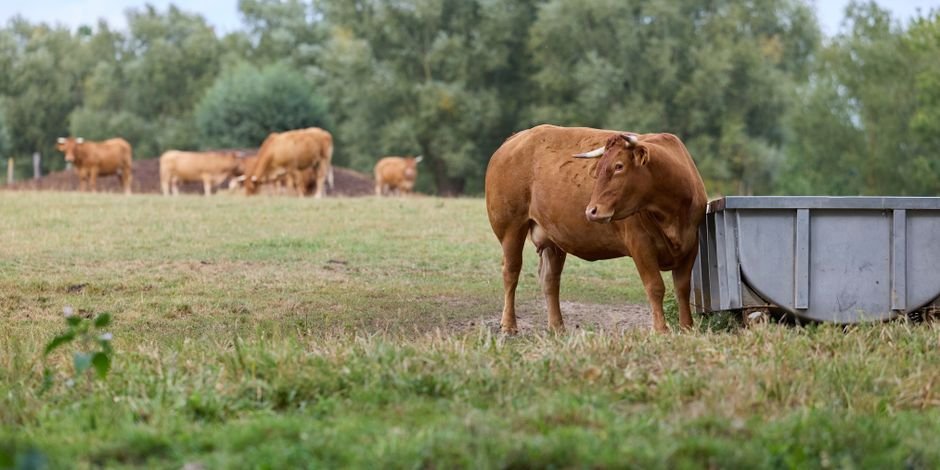
The main types of cattle feeders available are hay rings, cone feeders, bunk feeders, fence-line feeders, bale feeders, self-feeders, and calf feeders. The right choice depends on whether you’re feeding round bales or processed rations, how many cattle you have, and how much hay waste you can tolerate. Some designs are built to slow cattle down and reduce spoilage, while others are made for controlled grain or silage delivery.
Common types of cattle feeders
Cattle feeders are usually grouped by what they hold and how cattle access feed. A simple hay ring works well for feeding round bales on pasture, while a bunk feeder is better for daily ration feeding in a drylot or feedlot. Self-feeders are used when you want feed to remain available longer, and calf feeders are designed for smaller animals that need easier access and less competition. Materials also vary: galvanized steel, powder-coated steel, and heavy-duty polyethylene are all common in commercial and farm-use equipment.
1. Hay rings
Hay rings are the familiar circular feeders placed around a round bale. Their main job is to keep cattle from pulling hay onto the ground and trampling it into mud or manure. They are popular for beef herds on pasture because they are simple, movable, and relatively affordable. Many models are built with bars or panels at shoulder height so cows can reach the bale without climbing into it. For farms feeding round bales in winter, a hay ring is often the first feeder people buy because it is easy to move with a tractor or loader.
2. Cone feeders
Cone feeders are a variation on the hay ring concept, but the center cone helps the bale settle and limits how much hay cattle can drag out at once. That design can reduce waste compared with a basic open ring, especially when animals are eager eaters. They are often used for round bales in outdoor feeding areas where weather exposure is a concern. The cone also helps keep the bale centered as it breaks apart, which can make feeding more orderly. If your main goal is to stretch hay and cut down on cleanup, cone feeders are worth a close look.
3. Bunk feeders
Bunk feeders are long troughs or feed bunks used for grain, silage, commodity blends, or total mixed rations. Unlike hay rings, bunk feeders are designed for measured feeding and easier ration management. They are common in feedlots, backgrounding operations, and dairy settings where feed is delivered daily. Bunks may be concrete, steel, or heavy plastic, and many are paired with fence-line feeding so cattle eat from one side while feed is delivered from the other. Bunk feeders are the best choice when consistency matters more than simplicity.
For more on this, see our related guide: How Many Cows Can You Raise Per Acre in North Carolina? Pasture and Hay Breakdown.
4. Fence-line feeders
Fence-line feeders are not a separate feed form so much as a placement style for bunks, hay, or mixed ration delivery. The feeder sits along a fence, and cattle eat from one side while feed is loaded from the other. This setup improves traffic flow and can reduce the amount of time people and machinery spend inside the pen. It is especially useful on larger farms where feed trucks, skid steers, or tractor-mounted mixers need room to move efficiently. Fence-line feeding is common in beef finishing yards and dairies because it keeps feeding lanes organized and easier to manage.
5. Bale feeders
Bale feeders are built specifically to hold large round or square bales in a stable position. Some are low-profile frames that keep a bale off the ground, while others are enclosed designs that limit how much cattle can pull out at once. These feeders are useful when you want to feed large forage bales without letting them spread across the pen. They also help reduce mud contamination around the bale site. For producers feeding square bales, a bale feeder can be more practical than a hay ring, especially if the herd is larger or the bale shape makes ring feeding awkward.

6. Self-feeders
Self-feeders store feed in a hopper or bin and release it gradually as cattle eat. They are commonly used for grain, pellets, or creep feed, and in some cases for mineral or supplement delivery. The advantage is convenience: the feeder can hold enough feed to last several days, which reduces labor. The tradeoff is less control over intake than with a bunk-fed ration, so self-feeders are best when animals are on a stable diet and you want steady access rather than tightly measured portions. They are especially useful for backgrounding calves or supplementing cattle on pasture.
7. Calf feeders
Calf feeders are designed for young animals that cannot comfortably use standard cattle equipment. They often sit lower to the ground and include smaller openings or covered compartments that reduce waste and competition. In dairy systems, calf feeders may also refer to bucket-style or automatic milk feeders, but in beef and replacement-heifer settings the term usually means starter feed or creep feeders. The point is to make feed accessible without allowing larger cattle to dominate the feeder. If you are raising calves, feeder height and opening size matter as much as the feed itself.
Which feeder type works best for your setup?
| Feeder type | Best for | Main advantage | Main drawback |
|---|---|---|---|
| Hay ring | Round bales on pasture | Simple and affordable | More waste than enclosed designs |
| Cone feeder | Round bales in outdoor feeding areas | Reduces hay loss | Usually heavier and costlier |
| Bunk feeder | Grain, silage, TMR, daily rations | Best ration control | Needs regular filling and cleaning |
| Fence-line feeder | Large pens and feedlots | Efficient traffic flow | Requires planned layout |
| Bale feeder | Round or square bales | Stable bale support | Less flexible than a ring in some pens |
| Self-feeder | Supplement or grain access | Low labor demand | Less precise intake control |
| Calf feeder | Young calves | Sized for smaller animals | Not suitable for mature cattle |
How to choose the right cattle feeder
Start with the feed you plan to offer. If you are feeding round bales, a hay ring, cone feeder, or bale feeder makes sense. If you are feeding mixed rations, silage, or grain, a bunk feeder or fence-line system is the better match. Next, consider herd behavior. Horned cattle, aggressive feeders, and mixed-size groups may need a design that limits crowding and protects smaller animals. Finally, think about location: pasture feeders need to stand up to mud, snow, and tractor movement, while drylot feeders should be easy to clean and refill. The best feeder is usually the one that matches your feeding method, labor budget, and waste tolerance.
If you’re also looking into this, our article on 34. Round Bale Feeder: Which Type Wastes the Least Hay and Saves You Money? covers it in more detail.
Materials and construction details that matter
Most cattle feeders are built from steel, but the details make a difference. Heavy-gauge galvanized steel resists rust well in wet climates. Powder-coated steel can look cleaner but may chip if equipment is dragged or scraped often. Some modern feeders use polyethylene or composite panels because they are lighter and easier to handle. Look at weld quality, bar spacing, and the base design before buying. A feeder should stay stable when cattle push against it, and it should not have sharp edges that catch hide or damage horns. For portable use, check whether the feeder can be moved with a loader or tractor without bending the frame.
Practical buying tips for farmers and ranchers
Before buying, measure the space where the feeder will sit and leave enough room for equipment to approach safely. Check whether the feeder is sized for your cattle class: mature cows, stockers, and calves all need different clearances. If you feed in winter, choose a model that can be repositioned as ground conditions change. It also helps to compare the feeder’s capacity against your feeding schedule. A feeder that holds too little can increase labor, while one that is oversized may encourage spoilage if feed sits too long. For many operations, the smartest purchase is not the most expensive feeder but the one that fits the way the herd actually eats.

Frequently Asked Questions
What is the most common cattle feeder for hay?
The most common option is the hay ring. It is widely used for round bales because it is simple, portable, and easy to set around a bale in pasture or winter feeding areas.
Do cattle feeders really reduce hay waste?
Yes, especially compared with feeding a bale on the ground. Rings, cone feeders, and enclosed bale feeders can keep hay cleaner and reduce trampling, though the amount saved depends on the design and the ground conditions.
This ties in closely with How Many Cows Per Acre in Missouri? Stocking Rates for Different Pasture Types Explained, worth a look if you want to go deeper.
Are bunk feeders only for feedlots?
No. Bunk feeders are common in feedlots, but they are also used on dairies, backgrounding lots, and smaller farms that feed grain, silage, or total mixed rations on a regular schedule.
What feeder is best for calves?
Calf feeders or creep feeders are usually best because they are lower, smaller, and easier for young animals to use. Standard cow feeders are often too tall or too open for calves to use efficiently.
Which cattle feeder is easiest to move?
Basic hay rings are usually the easiest to move because they are simple and light compared with enclosed bale feeders or concrete bunks. If mobility matters, choose a design that can be handled safely with your tractor or loader.